1. Delta-v by Daniel Suarez
Rating: 7/10
The first half felt lackluster, but the second half significantly picked up the pace. It’s a fun read, particularly appealing for those interested in space mining. A solid choice for an airplane book—combining space and mining is a win in my book!
2. Count Zero by William Gibson
Rating: 8/10
I found this much more engaging than Gibson’s more famous work, Neuromancer. While the setting was slightly less captivating, the plot was much easier to follow, making for a rewarding read.
3. Cyberpunk 2077: No Coincidence by Rafał Kosik
Rating: Did not complete
4. Negroni by Matt Hranek
Rating: 10/10
If you love negronis, this book is a must-read. It offers a delightful mix of history, entertaining quotes, and recipes.
5. Amaro by Parsons
Rating: 10/10
Similar to Negroni, this book is perfect for amaro enthusiasts. It delves deeper with more engaging stories and intriguing information about the various amari around the world, including the fascinating fernet-branca coin.
6. Democracy in America by De Tocqueville
Rating: Did not complete
7. The Luxury Strategy by Kapferer
Rating: Did not complete
8. World of Edena by Moebius
Rating: 10/10
The artwork alone earns this a solid 10/10.
As for the plot, it’s less about structure and more about the vibes—which, honestly, is exactly what I was looking for. It all worked beautifully.
9. 2600: The Hacker Quarterly Winter Edition
Rating: 5/10
This one was worth a read for the vibes alone. I expected more technical content; instead, it resembled a Hacker News comment section—interesting but not something I’d seek out again.
10. American Affairs Winter 2023
Rating: Did not complete
11. Assembling California by John McPhee
Rating: Did not complete
12. Move Your DNA by Katy Bowman
Rating: 6/10
I find it necessary to separate my review of the book from its ideas. As a book, it’s merely serviceable, but as a vehicle for the principles of Nutritious Movement, it shines. I wholeheartedly agree with the ideas presented—10/10 for that! It serves as a compelling “why” to the “what” of Bowman’s blogs.
13. Reamde by Neal Stephenson
Rating: Did not complete
14. All Systems Red by Martha Wells
Rating: 7/10
A decent sci-fi offering that feels a bit pulpy and short. It fits nicely into the competence porn category and has the vibe of a well-crafted video game tie-in novel.
15. The Prize: The Epic Quest for Oil, Money, and Power by Daniel Yergin
Rating: Did not complete
16. Rereading Dragon’s Banker
Rating: 10/10
It’s just a ton of fun, you know? There need to be more books like this—combining fiction and banking. I wholeheartedly second @patio11’s recommendation. Plus, if you’re after a quick and entertaining intro to how banks work, this book has you covered!
17. Book of Disquiet by Pessoa
Rating: Did not complete
So far, it’s making me want to head back to Lisbon.
18. The Great Gambler by YRSD NYDU
Rating: 7/10
This was quite the ride! The beginning felt inspired by Stephenson, but it veered into deep philosophical territory too quickly. Still, it was an interesting read and aligned with my tastes.
19. Redacted by Redacted
Rating: Did not complete
20. Mastery by Robert Greene
Rating: Did not complete
21. Average Is Over by Cowen
Rating: Did not complete
I felt like I got the point pretty quickly.
22. The Creative Act by Rick Rubin
Rating: Did not complete
It felt like a rehash of ideas I’ve already seen before
23. The Man Who Solved the Market by Zuckerman
Rating: 6/10
A solid biography that is straightforward and focused. If you’re interested in the life of Jim Simons, this is a great read; otherwise, it may not offer much to those unfamiliar with his significance.
24. Through The Eye Of A Needle by Peter Brown
Rating: Did not complete
Great book, starting off with taxation!!
25. NYC Zoning Handbook
Rating: ???/10
For a detailed discussion, check out this blog post: https://fredkozlowski.com/2024/08/26/book-thread-on-the-nyc-zoning-handbook-in-progress/
26. High Output Management by Grove
Rating: Did not complete
27. Theft of Fire
Rating: 8/10
This was an enjoyable read recommended by Patio11. It struck emotional chords and offered a mix of social commentary and technical insights, making it an excellent choice for an airplane trip. I would have preferred it to be slightly less risqué, but overall, it was a fantastic read.
28. The WEIRDest People in the World by Joseph Henrich
Rating: Did not complete
29. Breath by James Nestor
Rating: 7/10
I’ve grown skeptical of the “journalist interviews experts” format in health literature, as many can feel formulaic and inaccurate. However, Nestor’s book successfully weaves together various facts and insights about breathing into an engaging narrative. It served as a useful introduction to the topic, especially given my recent interest in understanding my sleep apnea better. While it has its flaws, I would recommend it for anyone interested in breathing and health.
30. Cyberpunk 2077: Trauma Team
Rating: Did not complete
31. The Big Book of Cyberpunk
Rating: Did not complete
32. Slow Productivity and Deep Work by Cal Newport
Rating: 6/10
I’m a bit torn on how to rate these two books, as they cover similar topics. Both felt like extended blog posts, but I found Deep Work to be the stronger of the two. I appreciated how it changed my work habits—locking myself away from distractions like my cell phone and cat has been incredibly beneficial. While not groundbreaking, it’s a useful reminder to engage in focused work rather than getting lost in my inbox.
33. Pańszczyzna by Kamil Janicki
Rating: Did not complete
A book about Polish serfdom.
34. Cyropaedia by Xenophon
Rating: 10/10
Xenophon’s Cyropaedia is as a reminder that ancient books can be genuinely entertaining. I’d classify this semi-fictional account of Cyrus the Great’s rise to power as competence porn – following its protagonist from his youth through to his ascent to control of the Persian Empire.
What’s remarkable is how accessible the storytelling is. While its construction is obviously pre-modern, the novel-like protagonist format felt familiar. At 2,500 years old (writing about events roughly 200 years before its composition), it’s likely the oldest “fun read” I’ve encountered.
The work operates on multiple levels. You can read it purely as an entertaining historical thriller, but there’s substantial depth beneath the surface. As a work of political philosophy, it raises eternal questions about tyranny versus freedom. I’d particularly recommend Strauss’s lectures on the Cyropaedia for some good interpretative fan theories.
Cyrus himself is a complex drawn figure. The work appears initially as a straightforward didactic novel about a great leader who generally behaved well and accomplished much. The ending, however, subverts everything by showing how his achievements ultimately crumble. Great for discussion!
The pacing might strike modern readers as odd – the actual battles and conquests are compressed into the final chapters. The structure doesn’t diminish the work though.
Someone once described Xenophon as “the most American of ancient Greek authors” (at least I think that’s the quote) for being a man of action rather than pure theory. This practical orientation, combined with its didactic purpose, makes the Cyropaedia readable as both an ancient thriller and a meditation on power.
I read as part of a book club with @PrinceVogel @ijfen and @anamystick, which was great for digging a little deeper.
35. A Desolation Called Peace by Arkady Martine
Rating: Did not complete
36. The Ottomans by Marc David Baer
Rating: 9/10
A remarkable introduction to the Ottoman Empire, Baer’s book is both readable and well-cited. It challenges common misconceptions by placing the empire in a broader European context, which I found enlightening. For instance, the Battle of Lepanto didn’t significantly hinder the Ottomans, who rebuilt their fleet within six months. The author explores the intricate relationships between Christianity and Islam, emphasizing periods of tolerance that are often overlooked. Baer’s approach offers fascinating insights into a society that cannot be reduced to simple narratives. Highly recommended for anyone interested in Ottoman history!
37. Robert’s Rules of Order In Brief
Rating: ??/10
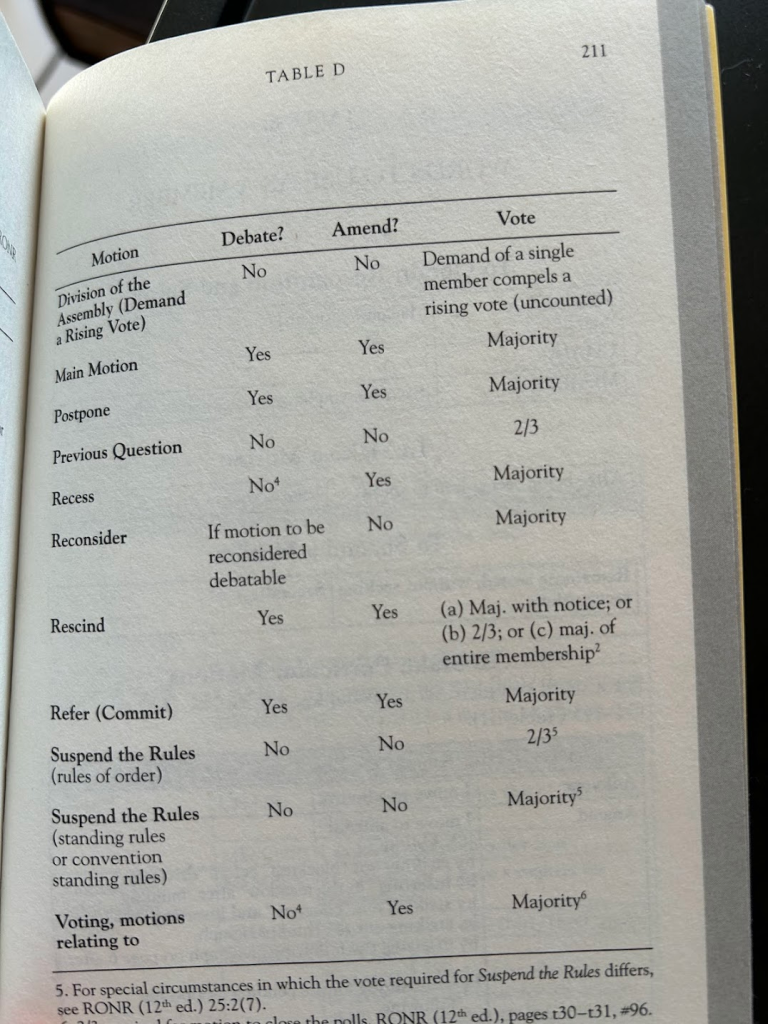
This is not so much a book as it is a manual of organizational governance procedures. This is shorter than the full version of Robert’s Rules, which is nice.
You won’t be picking this up for a casual read – but it’s useful. I found it particularly illuminating for understanding the mechanical workings of New York City government, especially regarding City Council operations. The NY City Council officially uses Robert’s Rules, so this is kind of required reading.
38. Happy Odyssey by Sir Adrian Carton De Wiart
Rating: 9/10
A straightforward biography of a remarkable individual. Carton De Wiart’s life story is both entertaining and insightful, providing a glimpse into a fascinating era. Each chapter brings a smile, showcasing his adventurous spirit and resilience.
39. Europe in Autumn by Dave Hutchinson
Rating: Did not complete
40. The Prince by Machiavelli
Rating: Did not complete
41. Here Is New York by E.B. White
Rating: 7/10
I enjoyed this short piece reflecting on New York City. While it captures the essence of the city beautifully, I feel it didn’t fully resonate with my personal affection for New York. I may have to write my own tribute to the city someday.
42. A Beginner’s Guide To Recognizing Trees Of The Northeast by Mikolas
Rating: 10/10
This book accomplishes exactly what it sets out to do. Its strength lies in its focused approach to tree identification, eschewing unnecessary details in favor of recognition. The guide concentrates on the most common native species you’re likely to encounter, rather than attempting to catalog every tree in the Northeast.
What makes this book particularly effective is its streamlined approach to identification. Each entry provides essential recognition patterns – bark characteristics, leaf structures – followed by just a couple of interesting facts to keep things engaging. There’s no information overload here. Instead of diving into tangential details about medicinal properties or historical uses, the book remains laser-focused on answering one key question: “What tree am I looking at?”
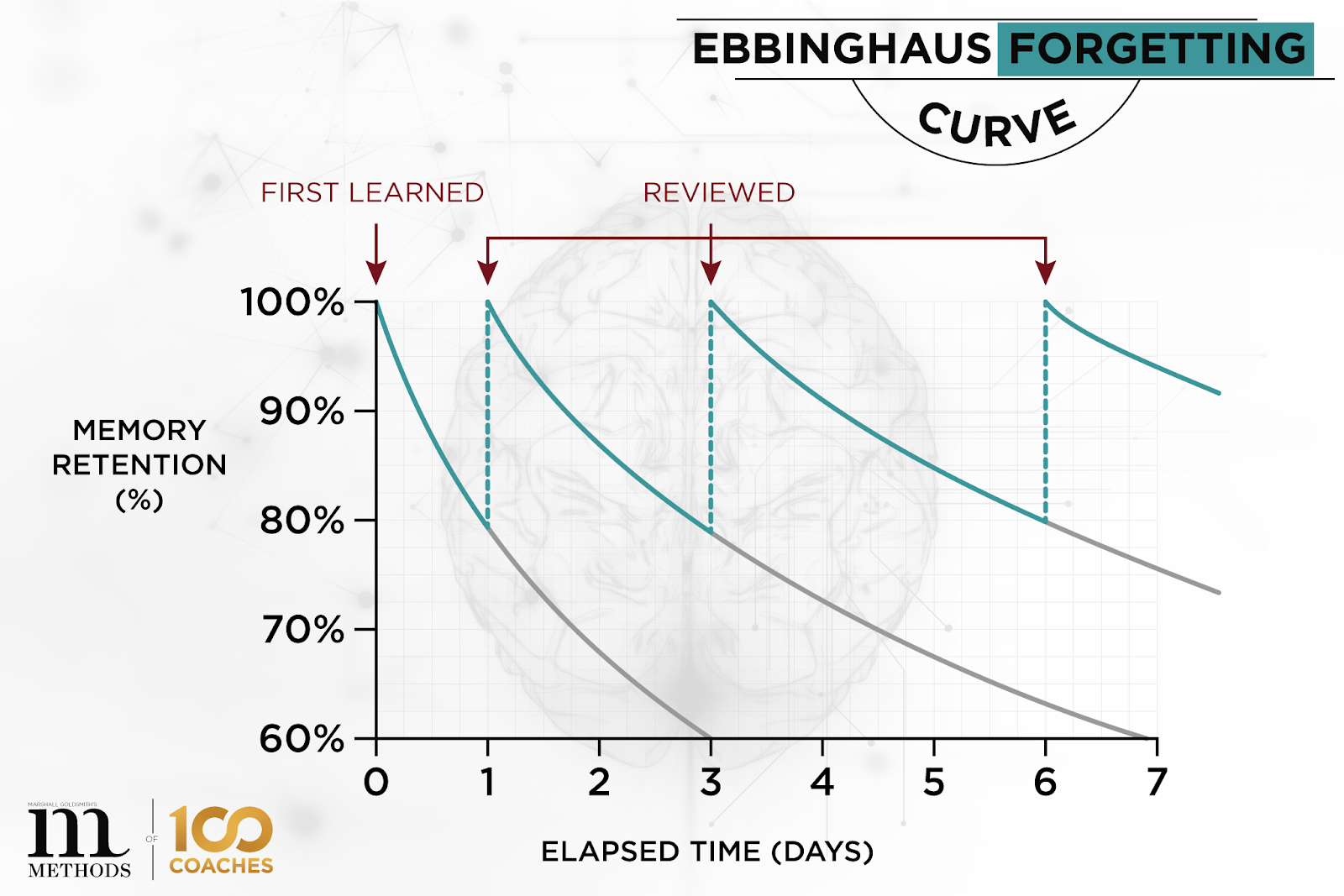
I’m planning to convert the key identification points into an Anki deck (watch for that on my blog soon).
43. Outlive by Peter Attia
Rating: 8/10
Peter Attia’s “Outlive” stands out primarily for its take on exercise. While the book, like many popular science works, presents claims that are challenging for the average reader to fully evaluate, its core diagnostic recommendations are worth exploring just from a common-sense perspective.
The exercise section truly shines by introducing a crucial mindset shift: viewing exercise as a defense against aging rather than just a health maintenance tool. Attia backs this up with compelling evidence – from VO2 max decline over time to the correlation between hand strength and mortality. The key insight is that you need to be in excellent shape in your thirties to maintain basic fitness into old age.
What makes this approach particularly appealing is it’s an offensive rather than defensive perspective on health. Instead of reactively addressing problems as they arise, Attia focuses on preventative measures you can take now. As a Type A personality, I find this proactive stance pretty compelling.
While the book isn’t comprehensive (and like many popular science books, most readers won’t dig into the sources), it works exceptionally well as an accessible health guide. Its relaxed tone and personal anecdotes – both from Attia’s life and his patients – make it highly readable and perfect for gifting to family members. It strikes a nice balance between being informative and engaging, never feeling like a dry medical tome.
The exercise chapter deserves special attention for its crucial message: getting into athlete-level shape when you’re young creates essential strength and mobility reserves for your later years. While it’s technically possible to get fit at 60, it’s way way easier to build and maintain fitness starting in your thirties. Attia provides specific, concrete examples on what you need to do at 30 to comfortably climb stairs at 70. He emphasizes that basic activities in your 70s or 80s require starting from a high baseline of strength, as muscle mass diminishes rapidly with age.
I really like it as a popular health book that provides actionable insights and new perspectives.
44. Elon Musk by Isaacson
Rating: 10/10
This is the first book I’ve read by Walter Isaacson and frankly I don’t understand how he is lauded as a great biographer. This book is exclusively worth reading because Elon is a fascinating dude.
The pattern the writing follows is
Chapter focused on a project
For i in anecdotes
Anecdote about Musk
Quotes from a few people who were there
1 sentence of analysis
And that’s it! The best part of this book is the raw material. Maybe Isaacson deserves praise for getting access to Musk & friends, because I certainly didn’t get a lot of value added from his analysis or structure.
I even quit the book early around the Twitter buying bits, just because the structure was getting repetitive.
Despite saying this, it’s absolutely worth reading — there’s so much material here that wasn’t in the Ashlee Vance bio.
——
I took a long look at my work after reading this book. Musk structurally cannot work more than 45 hours per company, the math doesn’t pencil out even if you consider he does nothing but work.
168 hours total
5 hours of sleep a night = 35 hours
133 hours / 3 (SpaceX, Tesla, (Neuralink + Boring Company)
45 hours per company
You can quibble with the numbers, but the fact remains that his number of hours worked is on the same order of magnitude as the rest of us. He can’t be different purely based on quantity of work, it’s the quality that makes the difference.
What conclusions can I draw that are relevant to me and the way I work?
Focus
Despite running a few companies at a time, Elon’s focused in his work. His work prioritizes the highest order bit. I think this is likely his secret sauce — getting the most important bit working as well as possible. I’d like to compare this with my own work. I have too many things I’m working on, but I think my prioritization is shit. If I’m working on my mom’s business I need to be increasing my ROAS. If I’m working on a website, getting MVP functionality as fast as possible. Upon evaluation, it’s pretty clear that I spread my efforts way too thin on nice to haves and non-bottleneck items. Designing the Tesla Roadster comes to mind as a specific anecdote. Elon fought to make the Roadster marketable against the wishes of the original founders. Highest order bit was selling the car to ensure Tesla survived.
For me, I find myself torn between tons of nice to haves that don’t directly move the needle on what my deep goals are. For example, I want to build my mom’s organizing business but I’ve been unfocused, rather than grinding reviews + website quality.
Management
Since reading this book I realized I don’t outsource or hire nearly enough. Elon doesn’t work alone — people use this to claim he’s either stealing work or that he’s got an amazing workforce that he manages well. What this misses is that he isn’t working alone. I took the opportunity to hire some more freelancers to (hopefully) become more effective.
His management style is interesting, he pushes people hard and isn’t afraid to fire them even when he’s in the wrong. One wonders whether he’d achieve more or less if he was less aggressive on firing. An anecdote repeated across the book is an employee that presents a real limitation, Elon gets mad, fires them, then retroactively admits they may not have been wrong. Might come with the territory I suppose
One fascinating twitter thread that I really agree with is linked here relating to his management abilities.
Another thread + QT about Elon’s management – valuable insofar as you’ll realize there’s no secret sauce really
First Principles
Cedric Chin has a good article arguing against First Principles thinking being overused, it being context dependent and all – but there’s something to it. Riffing off Elon’s method and looking at my experiences in Maximum NY — there’s a lot of value in checking ground truth yourself, rather than relying on second hand information.
I tend to have this problem, where I don’t usually dig deeper past second hand sources. I’m pretty sure this is generally fine, since it’s efficient, but I should keep first principles digging in my back pocket for the real important stuff
Marketing
Dude markets hard, just not through advertising. He thinks about distribution all the time. Not particularly surprising, just a reinforcement of what I already figured.
Dude is fucked
It’s comforting to see that his life is pretty fucked and he still managed to accomplish what he has (causation lol?). He has low points where he doesn’t do anything for months and yet!
Balls
His risk tolerance is crazy high, certainly much higher than mine. I adjusted mine a bit higher (nowhere near his though).
Adding notes thanks to some feedback from a friend
re first principles – I think the main point is just digging into the ground truth rather than relying on secondary sources.
Rather than trusting news articles about NYC politics, I instead learned to read the actual bills being passed.
I also rely way too much on secondary sources for understanding history. I started to read more primary sources — it’s harder but you’re not getting info prefiltered by someone else
45. Braudel’s Wheels of Commerce
Rating: Did not complete
46. The Hour of the Dragon by Robert E. Howard
Rating: 7/10
The Hour of the Dragon by Robert Howard stands out as a good piece of fantasy literature, not for its sophistication, but for what I’d call the Seinfeld effect in action. You can clearly see this as the proto-D&D text, completely free from the self-consciousness in modern fantasy. Its greatest strength lies in its straightforward, no-frills approach to sword and sorcery.
Reading this feels similar to discovering Tolkien’s work – you witness the DNA of an entire genre taking shape. The building blocks of Dungeons & Dragons and many many fantasy works that followed are right here in their purest form.
In today’s media, morally gray characters dominate. Conan stands out as something refreshingly different – a genuinely good protagonist who somehow avoids being boring (a la Superman). Howard manages this by positioning Conan as an underdog throughout the story.
There’s this particularly compelling scene that stuck with me: Conan gazing out at the harbor, wrestling with the choice between his duties as king and the freedom of his former life as a pirate. It’s these small moments that reveal the surprising depth lurking beneath the surface of what might otherwise seem like a straightforward adventure tale.
But perhaps the book’s greatest strength is that it’s just plain fun. It moves at a brisk pace from one set piece to the next, reading like a well-crafted D&D campaign. In an era where every piece of media seems determined to hammer home some profound message, there’s something incredibly refreshing about a story that’s content to simply be entertaining. You get your classic “evil guy does evil things, good guy saves the day” setup, and it works well.
While I wouldn’t classify this as high literature, it’s a masterclass in straightforward storytelling. If you’re in the market for a good yarn well told, you really can’t go wrong here.
47. Moby Dick (continued from last year)
Rating: Did not complete
48. Day of the Jackal by Frederick Forsyth
Rating: 7/10
The Day of the Jackal is a solid entry in the Cold War spy canon next to books like Tinker Tailor Soldier Spy. Definitely competence porn and a solid page turner
What really sets this thriller apart is Forsyth’s ability to build tension through methodical investigation. The cat-and-mouse game between the Jackal and the police officer protagonist proves consistently engaging. The 1961 France setting offers a refreshing departure from what’s typically seen in English-speaking media – especially with the Algerian War serving as backdrop and motivation.
The most surprising aspect is Forsyth’s emotional depth. The Jackal, despite being essentially a blank slate murderer, develops into a compelling character through his actions and subtle character moments. Even the faceless goons who meet their end along the way receive enough characterization to make their presence meaningful – they’re presented as actual people whose stories intersect with the main plot.
49. Russian Shores of the Black Sea by Laurence Oliphant
Rating: Did not complete
50. Aztecs: An Interpretation by Inga Clendinnen
Rating: 10/10
Fascinating book 10/10
Highly recommended if you’re at all interested in the Aztecs. Read about half, skipped around a lot
Found the book from this great review
http://abandonedfootnotes.blogspot.com/2013/11/aztec-political-thought.html?m=1…
The merchant class was almost a separate society — to the extent that it’s compared to Jews in Medieval Europe. They related their accomplishments in terms of physical strength and exertion to better relate to the warrior class. Rather than have sumptuary laws a la Europe and Japan, they instead self policed to present humbly.
Violence was a first resort, individualism + achievement over group success. Defection over cooperate
“Endless striving, the endless, anxious, making of the self and then the reversal: the sudden, massive, physical assault by one’s peers in punishment for some perhaps unintended, possibly involuntary delict; the merchant, all payments made, deprived of his reward; the priest cast out; the great warrior shamed. For the elevated those reversals may have happened only rarely, men in authority usually knowing how to protect themselves. But the threat was always there,”
What’s fun is that Jaynes is at least not disproven by this work. See below
“cast their most comprehensive ideas of the way things ultimately are, and the way men should therefore act, into immediately apprehended sensuous symbols…rather than into a discursively apprehended, ordered set of explicit “beliefs””
Perception of death
“For others, too, the same note sounded. When long-distance merchants travelling their far roads heard the laughter of the white-headed hawk, they knew that danger was waiting. It was the leader’s charge to steady his men, not, we are told, by denying the omen, but by yielding to its implications. He was to remind them that their kin had lamented when the merchant train departed, pouring out ‘their sorrow, their weeping, that perhaps here, somewhere, on the desert, on the plain, in the gorge, in the forest, will lie scattered our bones and our hair, in many places our blood, our redness, will spread, poured out and slippery’. Should that moment come, ‘let no-one feel womanish in heart. Yield completely to death; pray to our lord. Let none think of or brood over [our condition]; for only later shall we know of whatsoever things we may strike against. Then in the end we may weep for ourselves.’24”
One thing that is striking is the MASSIVE WASTE of this society. Clearly the agriculture must have been insanely productive to support this.
And of course regarding the human sacrifices and rituals
“If Mexica rituals were valued for their connections and commentaries on life and their capacity to forge a particular kind of unity out of difference, participation was itself addictive. Given that access to ritual “excitements was not an occasional grace note but an enduring part of the rhythm of living, ritual-generated experience and ritual-generated knowledge among the Mexica opened zones of thought and feeling at once collective, cumulative and transformative. At least part of the attraction must have lain in the lavishness of the gifts made and the perfection of the elaborated feast, in the mighty clamour of appeal, in the calculated dramatizations of dependence; as part of those great happenings, the individual could feel himself to be more than a single pellet rolling helplessly in Tezcatlipoca’s casual palm. The very order of the more formal displays – the balanced alternations of sexes or groups, the circles wheeling within circles, the complex weaving of the snake dance – modelled a patterned predictability which promised not to coerce but to tame the movements of the natural and “sacred worlds, and to allow humans to move in harmony with them.12 So the dancers sometimes mimicked the slow long step of the gods, or in their pattern reproduced the rotations of the year-bearer deities, who ‘go describing circles, go whirling around’, as they measure time.13”
51. The Fifth Head of Cerberus by Gene Wolfe
Rating: Did not complete
52. Empire of the Summer Moon by SC Gwynne
Rating: Did not complete
53. Redcoat by Richard Holmes
Rating: Did not complete
54. Slim Aarons: Style
Rating: 10/10
Glad I got this for Christmas
1. Society has changed so damn much even in the last 3 decades. the entire patterns of wealth have shifted, at least in my popular perception. Debutante balls, polo, horses, even when previously aspirational and “put on”, are now entirely out of style (at least from the people I see). It’s like a lost world.
2. The fashion looks good, really damn good, and the photography does it justice. it’s quite funny how two people can be in the same photo – one wouldn’t be out of place in manhattan today, and the other looks hopelessly dated.
3. Beauty is beautiful. There’s a bit of fun for me in ignoring the circumstances of wealth and simply reveling in how damn good it looks. modern airbnb minimalism delenda est.
4. Taste matters
55. Mask by Chris Rainier
Rating: Did not complete