Category: Uncategorized
-
These are my Russian vocabulary cards and my Russian cursive cards.
System Design Primer Anki DeckI created these cards from the System Design Primer.
Early Christianity in the Western Roman EmpireThis is all directly from Through the Eye of a Needle by Peter Brown. Pretty small right now, hopefully when I have more time the deck can get bigger.
These are the Leetcodes I’ve memorized.
An Anki deck for the Maximum New York class I took Fall 2024
Created from Beginner’s Guide to Recognizing Trees of the Northeast By Mikolas
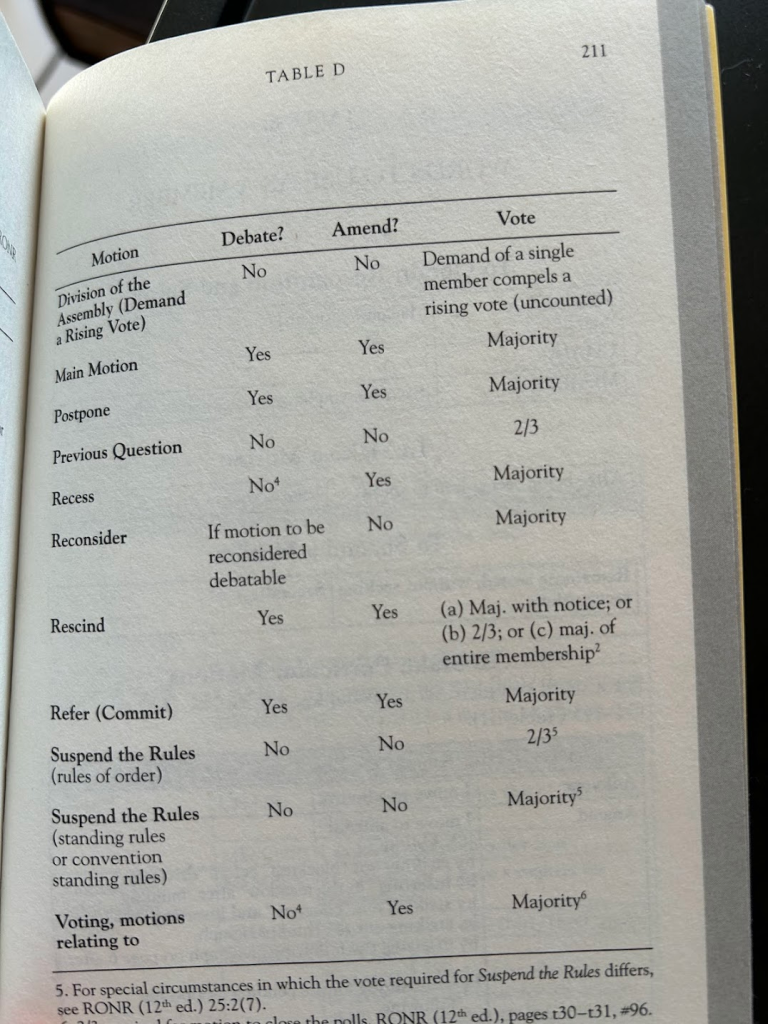
This is created from the below page of Robert’s Rules of Order Newly Revised In Brief, 3rd edition
The New Colossus by Emma Lazarus (Poem)A deck for the poem, using line deletion.
-





Coney Island, Brighton Beach
-
I built a tool to explore when the NYC zoning resolution was amended!
-
1. Delta-v by Daniel Suarez
Rating: 7/10
The first half felt lackluster, but the second half significantly picked up the pace. It’s a fun read, particularly appealing for those interested in space mining. A solid choice for an airplane book—combining space and mining is a win in my book!
2. Count Zero by William Gibson
Rating: 8/10
I found this much more engaging than Gibson’s more famous work, Neuromancer. While the setting was slightly less captivating, the plot was much easier to follow, making for a rewarding read.
3. Cyberpunk 2077: No Coincidence by Rafał Kosik
Rating: Did not complete
4. Negroni by Matt Hranek
Rating: 10/10
If you love negronis, this book is a must-read. It offers a delightful mix of history, entertaining quotes, and recipes.
5. Amaro by Parsons
Rating: 10/10
Similar to Negroni, this book is perfect for amaro enthusiasts. It delves deeper with more engaging stories and intriguing information about the various amari around the world, including the fascinating fernet-branca coin.
6. Democracy in America by De Tocqueville
Rating: Did not complete
7. The Luxury Strategy by Kapferer
Rating: Did not complete
8. World of Edena by Moebius
Rating: 10/10
The artwork alone earns this a solid 10/10.
As for the plot, it’s less about structure and more about the vibes—which, honestly, is exactly what I was looking for. It all worked beautifully.9. 2600: The Hacker Quarterly Winter Edition
Rating: 5/10
This one was worth a read for the vibes alone. I expected more technical content; instead, it resembled a Hacker News comment section—interesting but not something I’d seek out again.
10. American Affairs Winter 2023
Rating: Did not complete
11. Assembling California by John McPhee
Rating: Did not complete
12. Move Your DNA by Katy Bowman
Rating: 6/10
I find it necessary to separate my review of the book from its ideas. As a book, it’s merely serviceable, but as a vehicle for the principles of Nutritious Movement, it shines. I wholeheartedly agree with the ideas presented—10/10 for that! It serves as a compelling “why” to the “what” of Bowman’s blogs.
13. Reamde by Neal Stephenson
Rating: Did not complete
14. All Systems Red by Martha Wells
Rating: 7/10
A decent sci-fi offering that feels a bit pulpy and short. It fits nicely into the competence porn category and has the vibe of a well-crafted video game tie-in novel.
15. The Prize: The Epic Quest for Oil, Money, and Power by Daniel Yergin
Rating: Did not complete
16. Rereading Dragon’s Banker
Rating: 10/10
It’s just a ton of fun, you know? There need to be more books like this—combining fiction and banking. I wholeheartedly second @patio11’s recommendation. Plus, if you’re after a quick and entertaining intro to how banks work, this book has you covered!
17. Book of Disquiet by Pessoa
Rating: Did not complete
So far, it’s making me want to head back to Lisbon.
18. The Great Gambler by YRSD NYDU
Rating: 7/10
This was quite the ride! The beginning felt inspired by Stephenson, but it veered into deep philosophical territory too quickly. Still, it was an interesting read and aligned with my tastes.
19. Redacted by Redacted
Rating: Did not complete
20. Mastery by Robert Greene
Rating: Did not complete
21. Average Is Over by Cowen
Rating: Did not complete
I felt like I got the point pretty quickly.
22. The Creative Act by Rick Rubin
Rating: Did not complete
It felt like a rehash of ideas I’ve already seen before
23. The Man Who Solved the Market by Zuckerman
Rating: 6/10
A solid biography that is straightforward and focused. If you’re interested in the life of Jim Simons, this is a great read; otherwise, it may not offer much to those unfamiliar with his significance.
24. Through The Eye Of A Needle by Peter Brown
Rating: Did not complete
Great book, starting off with taxation!!
25. NYC Zoning Handbook
Rating: ???/10
For a detailed discussion, check out this blog post: https://fredkozlowski.com/2024/08/26/book-thread-on-the-nyc-zoning-handbook-in-progress/
26. High Output Management by Grove
Rating: Did not complete
27. Theft of Fire
Rating: 8/10
This was an enjoyable read recommended by Patio11. It struck emotional chords and offered a mix of social commentary and technical insights, making it an excellent choice for an airplane trip. I would have preferred it to be slightly less risqué, but overall, it was a fantastic read.
28. The WEIRDest People in the World by Joseph Henrich
Rating: Did not complete
29. Breath by James Nestor
Rating: 7/10
I’ve grown skeptical of the “journalist interviews experts” format in health literature, as many can feel formulaic and inaccurate. However, Nestor’s book successfully weaves together various facts and insights about breathing into an engaging narrative. It served as a useful introduction to the topic, especially given my recent interest in understanding my sleep apnea better. While it has its flaws, I would recommend it for anyone interested in breathing and health.
30. Cyberpunk 2077: Trauma Team
Rating: Did not complete
31. The Big Book of Cyberpunk
Rating: Did not complete
32. Slow Productivity and Deep Work by Cal Newport
Rating: 6/10
I’m a bit torn on how to rate these two books, as they cover similar topics. Both felt like extended blog posts, but I found Deep Work to be the stronger of the two. I appreciated how it changed my work habits—locking myself away from distractions like my cell phone and cat has been incredibly beneficial. While not groundbreaking, it’s a useful reminder to engage in focused work rather than getting lost in my inbox.
33. Pańszczyzna by Kamil Janicki
Rating: Did not complete
A book about Polish serfdom.
34. Cyropaedia by Xenophon
Rating: 10/10
Xenophon’s Cyropaedia is as a reminder that ancient books can be genuinely entertaining. I’d classify this semi-fictional account of Cyrus the Great’s rise to power as competence porn – following its protagonist from his youth through to his ascent to control of the Persian Empire.
What’s remarkable is how accessible the storytelling is. While its construction is obviously pre-modern, the novel-like protagonist format felt familiar. At 2,500 years old (writing about events roughly 200 years before its composition), it’s likely the oldest “fun read” I’ve encountered.
The work operates on multiple levels. You can read it purely as an entertaining historical thriller, but there’s substantial depth beneath the surface. As a work of political philosophy, it raises eternal questions about tyranny versus freedom. I’d particularly recommend Strauss’s lectures on the Cyropaedia for some good interpretative fan theories.
Cyrus himself is a complex drawn figure. The work appears initially as a straightforward didactic novel about a great leader who generally behaved well and accomplished much. The ending, however, subverts everything by showing how his achievements ultimately crumble. Great for discussion!
The pacing might strike modern readers as odd – the actual battles and conquests are compressed into the final chapters. The structure doesn’t diminish the work though.
Someone once described Xenophon as “the most American of ancient Greek authors” (at least I think that’s the quote) for being a man of action rather than pure theory. This practical orientation, combined with its didactic purpose, makes the Cyropaedia readable as both an ancient thriller and a meditation on power.
I read as part of a book club with @PrinceVogel @ijfen and @anamystick, which was great for digging a little deeper.
35. A Desolation Called Peace by Arkady Martine
Rating: Did not complete
36. The Ottomans by Marc David Baer
Rating: 9/10
A remarkable introduction to the Ottoman Empire, Baer’s book is both readable and well-cited. It challenges common misconceptions by placing the empire in a broader European context, which I found enlightening. For instance, the Battle of Lepanto didn’t significantly hinder the Ottomans, who rebuilt their fleet within six months. The author explores the intricate relationships between Christianity and Islam, emphasizing periods of tolerance that are often overlooked. Baer’s approach offers fascinating insights into a society that cannot be reduced to simple narratives. Highly recommended for anyone interested in Ottoman history!
37. Robert’s Rules of Order In Brief
Rating: ??/10
This is not so much a book as it is a manual of organizational governance procedures. This is shorter than the full version of Robert’s Rules, which is nice.
You won’t be picking this up for a casual read – but it’s useful. I found it particularly illuminating for understanding the mechanical workings of New York City government, especially regarding City Council operations. The NY City Council officially uses Robert’s Rules, so this is kind of required reading.
38. Happy Odyssey by Sir Adrian Carton De Wiart
Rating: 9/10
A straightforward biography of a remarkable individual. Carton De Wiart’s life story is both entertaining and insightful, providing a glimpse into a fascinating era. Each chapter brings a smile, showcasing his adventurous spirit and resilience.
39. Europe in Autumn by Dave Hutchinson
Rating: Did not complete
40. The Prince by Machiavelli
Rating: Did not complete
41. Here Is New York by E.B. White
Rating: 7/10
I enjoyed this short piece reflecting on New York City. While it captures the essence of the city beautifully, I feel it didn’t fully resonate with my personal affection for New York. I may have to write my own tribute to the city someday.
42. A Beginner’s Guide To Recognizing Trees Of The Northeast by Mikolas
Rating: 10/10
This book accomplishes exactly what it sets out to do. Its strength lies in its focused approach to tree identification, eschewing unnecessary details in favor of recognition. The guide concentrates on the most common native species you’re likely to encounter, rather than attempting to catalog every tree in the Northeast.
What makes this book particularly effective is its streamlined approach to identification. Each entry provides essential recognition patterns – bark characteristics, leaf structures – followed by just a couple of interesting facts to keep things engaging. There’s no information overload here. Instead of diving into tangential details about medicinal properties or historical uses, the book remains laser-focused on answering one key question: “What tree am I looking at?”
I’m planning to convert the key identification points into an Anki deck (watch for that on my blog soon).
43. Outlive by Peter Attia
Rating: 8/10
Peter Attia’s “Outlive” stands out primarily for its take on exercise. While the book, like many popular science works, presents claims that are challenging for the average reader to fully evaluate, its core diagnostic recommendations are worth exploring just from a common-sense perspective.
The exercise section truly shines by introducing a crucial mindset shift: viewing exercise as a defense against aging rather than just a health maintenance tool. Attia backs this up with compelling evidence – from VO2 max decline over time to the correlation between hand strength and mortality. The key insight is that you need to be in excellent shape in your thirties to maintain basic fitness into old age.
What makes this approach particularly appealing is it’s an offensive rather than defensive perspective on health. Instead of reactively addressing problems as they arise, Attia focuses on preventative measures you can take now. As a Type A personality, I find this proactive stance pretty compelling.
While the book isn’t comprehensive (and like many popular science books, most readers won’t dig into the sources), it works exceptionally well as an accessible health guide. Its relaxed tone and personal anecdotes – both from Attia’s life and his patients – make it highly readable and perfect for gifting to family members. It strikes a nice balance between being informative and engaging, never feeling like a dry medical tome.
The exercise chapter deserves special attention for its crucial message: getting into athlete-level shape when you’re young creates essential strength and mobility reserves for your later years. While it’s technically possible to get fit at 60, it’s way way easier to build and maintain fitness starting in your thirties. Attia provides specific, concrete examples on what you need to do at 30 to comfortably climb stairs at 70. He emphasizes that basic activities in your 70s or 80s require starting from a high baseline of strength, as muscle mass diminishes rapidly with age.
I really like it as a popular health book that provides actionable insights and new perspectives.
44. Elon Musk by Isaacson
Rating: 10/10
This is the first book I’ve read by Walter Isaacson and frankly I don’t understand how he is lauded as a great biographer. This book is exclusively worth reading because Elon is a fascinating dude.
The pattern the writing follows is
Chapter focused on a project
For i in anecdotes
Anecdote about Musk
Quotes from a few people who were there
1 sentence of analysis
And that’s it! The best part of this book is the raw material. Maybe Isaacson deserves praise for getting access to Musk & friends, because I certainly didn’t get a lot of value added from his analysis or structure.
I even quit the book early around the Twitter buying bits, just because the structure was getting repetitive.
Despite saying this, it’s absolutely worth reading — there’s so much material here that wasn’t in the Ashlee Vance bio.
——
I took a long look at my work after reading this book. Musk structurally cannot work more than 45 hours per company, the math doesn’t pencil out even if you consider he does nothing but work.
168 hours total
5 hours of sleep a night = 35 hours
133 hours / 3 (SpaceX, Tesla, (Neuralink + Boring Company)
45 hours per company
You can quibble with the numbers, but the fact remains that his number of hours worked is on the same order of magnitude as the rest of us. He can’t be different purely based on quantity of work, it’s the quality that makes the difference.
What conclusions can I draw that are relevant to me and the way I work?
Focus
Despite running a few companies at a time, Elon’s focused in his work. His work prioritizes the highest order bit. I think this is likely his secret sauce — getting the most important bit working as well as possible. I’d like to compare this with my own work. I have too many things I’m working on, but I think my prioritization is shit. If I’m working on my mom’s business I need to be increasing my ROAS. If I’m working on a website, getting MVP functionality as fast as possible. Upon evaluation, it’s pretty clear that I spread my efforts way too thin on nice to haves and non-bottleneck items. Designing the Tesla Roadster comes to mind as a specific anecdote. Elon fought to make the Roadster marketable against the wishes of the original founders. Highest order bit was selling the car to ensure Tesla survived.
For me, I find myself torn between tons of nice to haves that don’t directly move the needle on what my deep goals are. For example, I want to build my mom’s organizing business but I’ve been unfocused, rather than grinding reviews + website quality.
Management
Since reading this book I realized I don’t outsource or hire nearly enough. Elon doesn’t work alone — people use this to claim he’s either stealing work or that he’s got an amazing workforce that he manages well. What this misses is that he isn’t working alone. I took the opportunity to hire some more freelancers to (hopefully) become more effective.
His management style is interesting, he pushes people hard and isn’t afraid to fire them even when he’s in the wrong. One wonders whether he’d achieve more or less if he was less aggressive on firing. An anecdote repeated across the book is an employee that presents a real limitation, Elon gets mad, fires them, then retroactively admits they may not have been wrong. Might come with the territory I suppose
One fascinating twitter thread that I really agree with is linked here relating to his management abilities.
Another thread + QT about Elon’s management – valuable insofar as you’ll realize there’s no secret sauce really
First Principles
Cedric Chin has a good article arguing against First Principles thinking being overused, it being context dependent and all – but there’s something to it. Riffing off Elon’s method and looking at my experiences in Maximum NY — there’s a lot of value in checking ground truth yourself, rather than relying on second hand information.
I tend to have this problem, where I don’t usually dig deeper past second hand sources. I’m pretty sure this is generally fine, since it’s efficient, but I should keep first principles digging in my back pocket for the real important stuff
Marketing
Dude markets hard, just not through advertising. He thinks about distribution all the time. Not particularly surprising, just a reinforcement of what I already figured.
Dude is fucked
It’s comforting to see that his life is pretty fucked and he still managed to accomplish what he has (causation lol?). He has low points where he doesn’t do anything for months and yet!
Balls
His risk tolerance is crazy high, certainly much higher than mine. I adjusted mine a bit higher (nowhere near his though).
Adding notes thanks to some feedback from a friend
re first principles – I think the main point is just digging into the ground truth rather than relying on secondary sources.
Rather than trusting news articles about NYC politics, I instead learned to read the actual bills being passed.
I also rely way too much on secondary sources for understanding history. I started to read more primary sources — it’s harder but you’re not getting info prefiltered by someone else
45. Braudel’s Wheels of Commerce
Rating: Did not complete
46. The Hour of the Dragon by Robert E. Howard
Rating: 7/10
The Hour of the Dragon by Robert Howard stands out as a good piece of fantasy literature, not for its sophistication, but for what I’d call the Seinfeld effect in action. You can clearly see this as the proto-D&D text, completely free from the self-consciousness in modern fantasy. Its greatest strength lies in its straightforward, no-frills approach to sword and sorcery.
Reading this feels similar to discovering Tolkien’s work – you witness the DNA of an entire genre taking shape. The building blocks of Dungeons & Dragons and many many fantasy works that followed are right here in their purest form.
In today’s media, morally gray characters dominate. Conan stands out as something refreshingly different – a genuinely good protagonist who somehow avoids being boring (a la Superman). Howard manages this by positioning Conan as an underdog throughout the story.
There’s this particularly compelling scene that stuck with me: Conan gazing out at the harbor, wrestling with the choice between his duties as king and the freedom of his former life as a pirate. It’s these small moments that reveal the surprising depth lurking beneath the surface of what might otherwise seem like a straightforward adventure tale.
But perhaps the book’s greatest strength is that it’s just plain fun. It moves at a brisk pace from one set piece to the next, reading like a well-crafted D&D campaign. In an era where every piece of media seems determined to hammer home some profound message, there’s something incredibly refreshing about a story that’s content to simply be entertaining. You get your classic “evil guy does evil things, good guy saves the day” setup, and it works well.
While I wouldn’t classify this as high literature, it’s a masterclass in straightforward storytelling. If you’re in the market for a good yarn well told, you really can’t go wrong here.
47. Moby Dick (continued from last year)
Rating: Did not complete
48. Day of the Jackal by Frederick Forsyth
Rating: 7/10
The Day of the Jackal is a solid entry in the Cold War spy canon next to books like Tinker Tailor Soldier Spy. Definitely competence porn and a solid page turner
What really sets this thriller apart is Forsyth’s ability to build tension through methodical investigation. The cat-and-mouse game between the Jackal and the police officer protagonist proves consistently engaging. The 1961 France setting offers a refreshing departure from what’s typically seen in English-speaking media – especially with the Algerian War serving as backdrop and motivation.
The most surprising aspect is Forsyth’s emotional depth. The Jackal, despite being essentially a blank slate murderer, develops into a compelling character through his actions and subtle character moments. Even the faceless goons who meet their end along the way receive enough characterization to make their presence meaningful – they’re presented as actual people whose stories intersect with the main plot.
49. Russian Shores of the Black Sea by Laurence Oliphant
Rating: Did not complete
50. Aztecs: An Interpretation by Inga Clendinnen
Rating: 10/10
Fascinating book 10/10
Highly recommended if you’re at all interested in the Aztecs. Read about half, skipped around a lot
Found the book from this great review
http://abandonedfootnotes.blogspot.com/2013/11/aztec-political-thought.html?m=1…
The merchant class was almost a separate society — to the extent that it’s compared to Jews in Medieval Europe. They related their accomplishments in terms of physical strength and exertion to better relate to the warrior class. Rather than have sumptuary laws a la Europe and Japan, they instead self policed to present humbly.
Violence was a first resort, individualism + achievement over group success. Defection over cooperate
“Endless striving, the endless, anxious, making of the self and then the reversal: the sudden, massive, physical assault by one’s peers in punishment for some perhaps unintended, possibly involuntary delict; the merchant, all payments made, deprived of his reward; the priest cast out; the great warrior shamed. For the elevated those reversals may have happened only rarely, men in authority usually knowing how to protect themselves. But the threat was always there,”
What’s fun is that Jaynes is at least not disproven by this work. See below
“cast their most comprehensive ideas of the way things ultimately are, and the way men should therefore act, into immediately apprehended sensuous symbols…rather than into a discursively apprehended, ordered set of explicit “beliefs””
Perception of death
“For others, too, the same note sounded. When long-distance merchants travelling their far roads heard the laughter of the white-headed hawk, they knew that danger was waiting. It was the leader’s charge to steady his men, not, we are told, by denying the omen, but by yielding to its implications. He was to remind them that their kin had lamented when the merchant train departed, pouring out ‘their sorrow, their weeping, that perhaps here, somewhere, on the desert, on the plain, in the gorge, in the forest, will lie scattered our bones and our hair, in many places our blood, our redness, will spread, poured out and slippery’. Should that moment come, ‘let no-one feel womanish in heart. Yield completely to death; pray to our lord. Let none think of or brood over [our condition]; for only later shall we know of whatsoever things we may strike against. Then in the end we may weep for ourselves.’24”
One thing that is striking is the MASSIVE WASTE of this society. Clearly the agriculture must have been insanely productive to support this.
And of course regarding the human sacrifices and rituals
“If Mexica rituals were valued for their connections and commentaries on life and their capacity to forge a particular kind of unity out of difference, participation was itself addictive. Given that access to ritual “excitements was not an occasional grace note but an enduring part of the rhythm of living, ritual-generated experience and ritual-generated knowledge among the Mexica opened zones of thought and feeling at once collective, cumulative and transformative. At least part of the attraction must have lain in the lavishness of the gifts made and the perfection of the elaborated feast, in the mighty clamour of appeal, in the calculated dramatizations of dependence; as part of those great happenings, the individual could feel himself to be more than a single pellet rolling helplessly in Tezcatlipoca’s casual palm. The very order of the more formal displays – the balanced alternations of sexes or groups, the circles wheeling within circles, the complex weaving of the snake dance – modelled a patterned predictability which promised not to coerce but to tame the movements of the natural and “sacred worlds, and to allow humans to move in harmony with them.12 So the dancers sometimes mimicked the slow long step of the gods, or in their pattern reproduced the rotations of the year-bearer deities, who ‘go describing circles, go whirling around’, as they measure time.13”
51. The Fifth Head of Cerberus by Gene Wolfe
Rating: Did not complete
52. Empire of the Summer Moon by SC Gwynne
Rating: Did not complete
53. Redcoat by Richard Holmes
Rating: Did not complete
54. Slim Aarons: Style
Rating: 10/10
Glad I got this for Christmas
1. Society has changed so damn much even in the last 3 decades. the entire patterns of wealth have shifted, at least in my popular perception. Debutante balls, polo, horses, even when previously aspirational and “put on”, are now entirely out of style (at least from the people I see). It’s like a lost world.
2. The fashion looks good, really damn good, and the photography does it justice. it’s quite funny how two people can be in the same photo – one wouldn’t be out of place in manhattan today, and the other looks hopelessly dated.
3. Beauty is beautiful. There’s a bit of fun for me in ignoring the circumstances of wealth and simply reveling in how damn good it looks. modern airbnb minimalism delenda est.
4. Taste matters
55. Mask by Chris Rainier
Rating: Did not complete
If you’d like to donate to encourage me to write more book reviews
-
Getting Anki
Anki can be found at https://apps.ankiweb.net/. Website screenshot shown below.
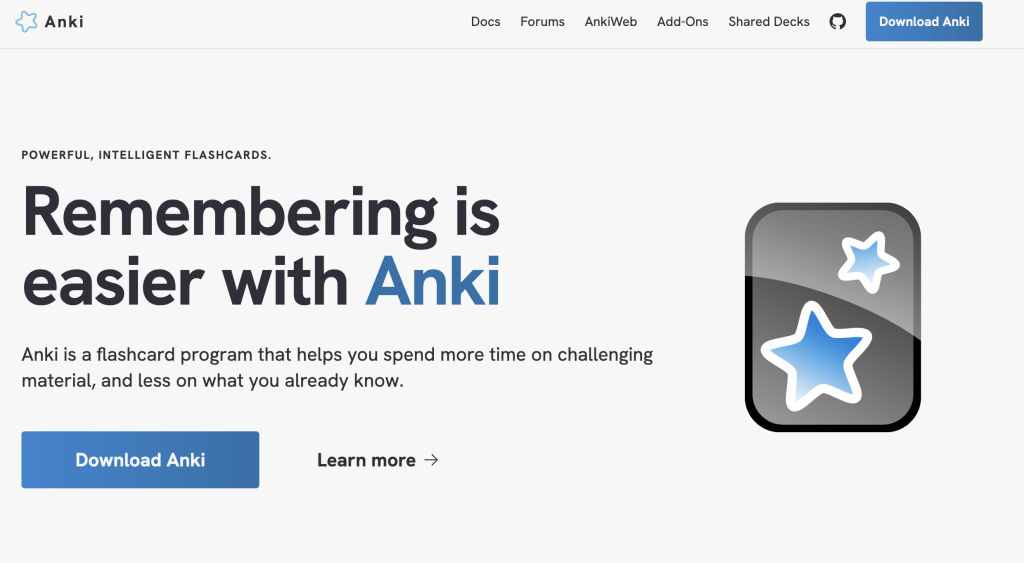
The Android app is called AnkiDroid (free) and the iOS app is Anki (it’s $25 one time and goes to support the sole developer working on it)
You can sync between your mobile app and desktop application by using your AnkiWeb account.
The theory behind Anki: what is spaced repetition?
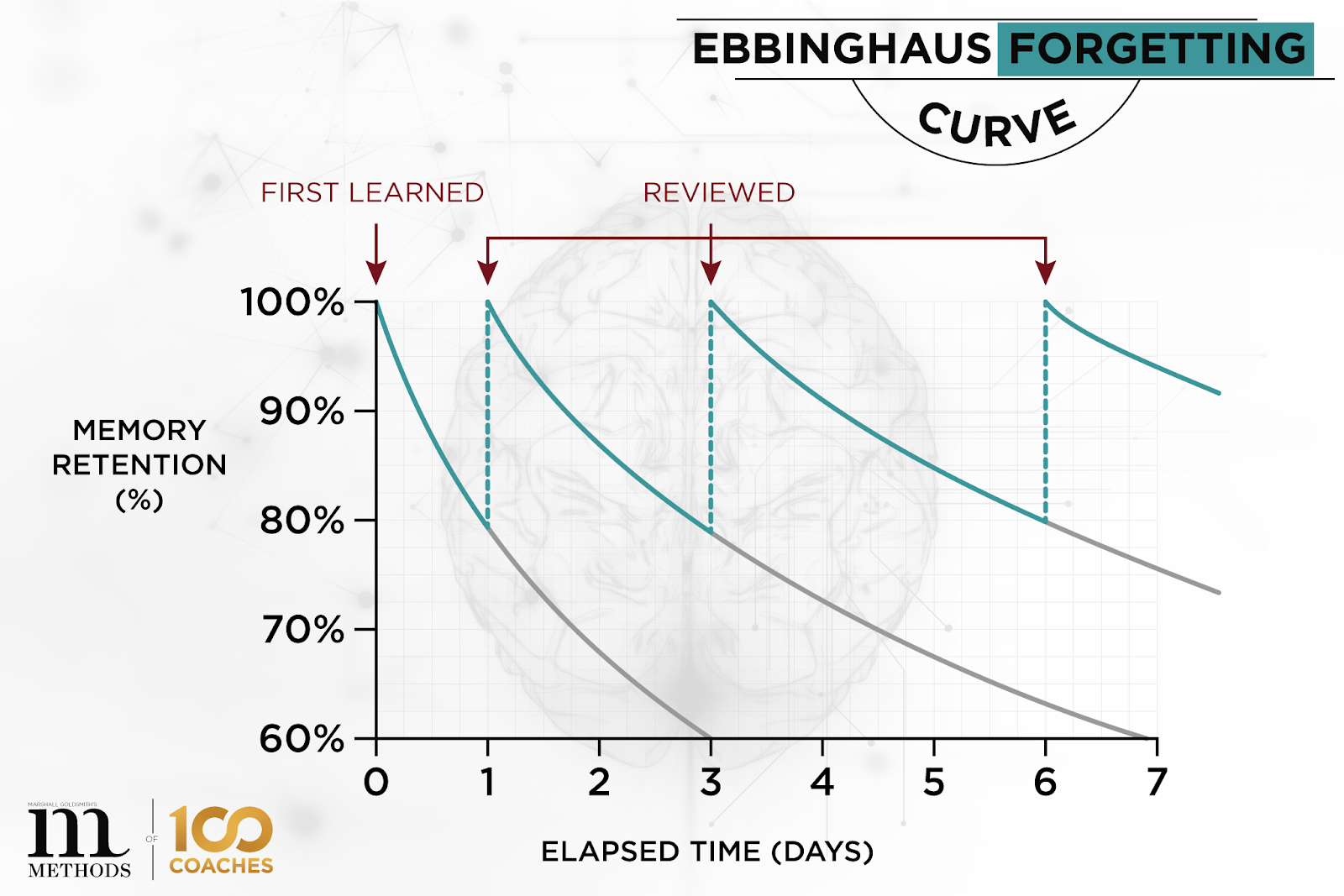
If you learn a fact, your memory of that fact will deteriorate rather quickly. If you review that fact a few times, your memory will be retained longer. This means that reviewing things at specific increasing intervals will ensure that you always remember that fact. Here’s the cool part – increasing intervals! After each progressive review, your memory will degrade at a slower rate, which means that eventually, you’ll be reviewing your fact once per year, once per 3 years, or even less, while still retaining the information.
This is why spaced repetition and Anki are different from using a deck of normal flashcards. You only review a fact when you’re about to forget it, which means you don’t waste time reviewing cards you already know. Let’s do some napkin math —
Traditional flashcards vs Anki
Let me break this down, comparing traditional flashcards vs Anki’s spaced repetition system (SRS).
Assumptions:
Each card review takes ~5 seconds
Traditional flashcards: Reviewing all cards daily
Anki: Following typical intervals that grow exponentially
Duration:
Traditional Flashcards (100 cards):
100 cards × 5 seconds = 500 seconds (8.3 minutes) per day
180 days (6 months, an arbitrary period of time) × 8.3 minutes = 1,494 minutes (≈25 hours total)
Anki (100 cards):
Initial few days: ~100 cards/day (like traditional)
By week 2: ~40 cards/day
By month 1: ~20 cards/day
By month 3: ~10 cards/day
By month 6: ~5 cards/day
Rough Anki calculation:
Month 1: (~60 cards/day avg) × 30 days × 5 sec = 150 minutes
Month 2-3: (~15 cards/day avg) × 60 days × 5 sec = 75 minutes
Month 4-6: (~7 cards/day avg) × 90 days × 5 sec = 52.5 minutes
Total Anki time: ~277.5 minutes (≈4.6 hours total)
So Anki takes roughly 1/5 the time (4.6 vs 25 hours) for almost similar results. You’re trading off a surprisingly tiny amount of forgetting for a surprisingly huge amount of time, which allows you to have vastly more cards in your deck. This is a simplified model – actual results vary based on card difficulty and individual memory patterns.
This means that you can have a deck of 100,000 cards and still keep up with it! You can memorize an insane number of facts and retain them indefinitely.
How to use Anki?
Let’s look at the desktop app. The iOS and Android apps work similarly.
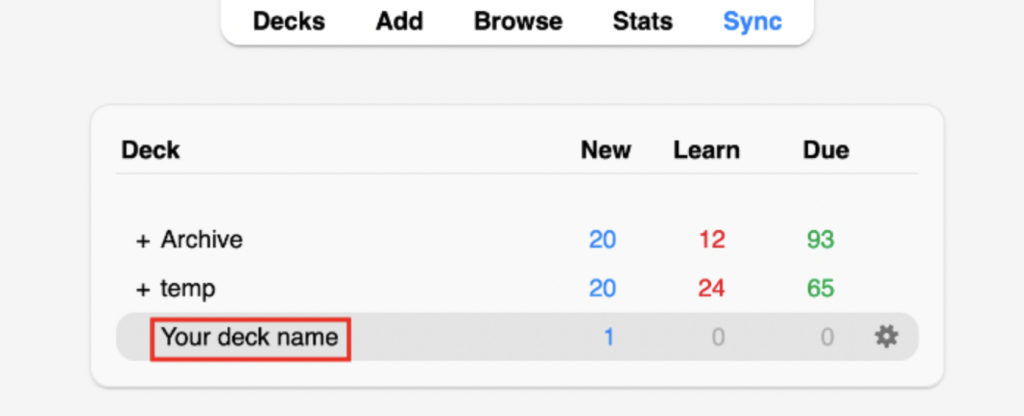
Once you’ve downloaded the app, you can create a deck, which is a collection of cards.
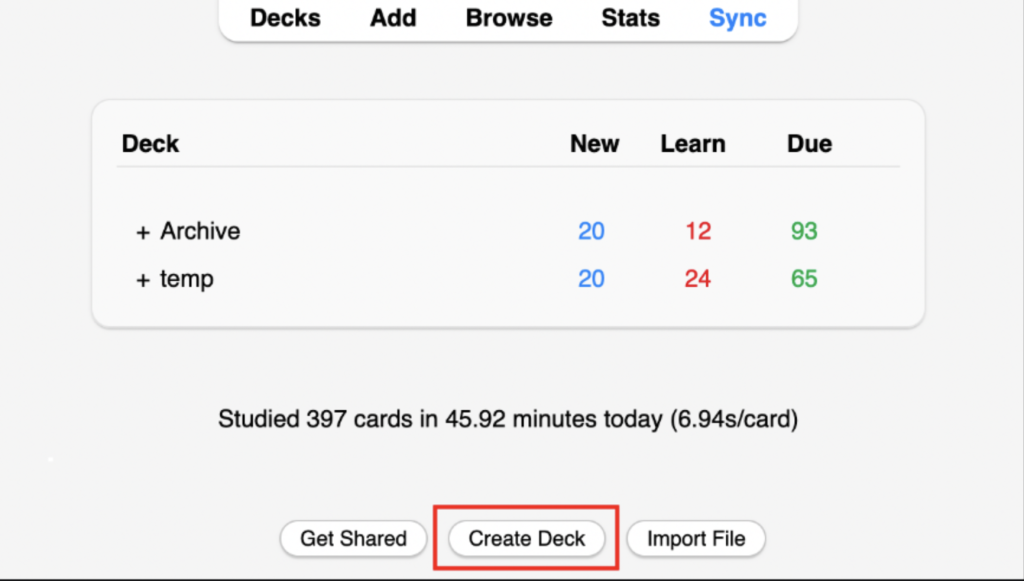
Let’s add a card to this deck now.
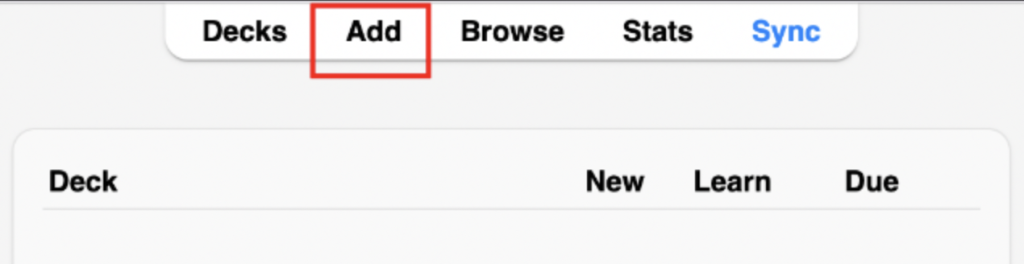
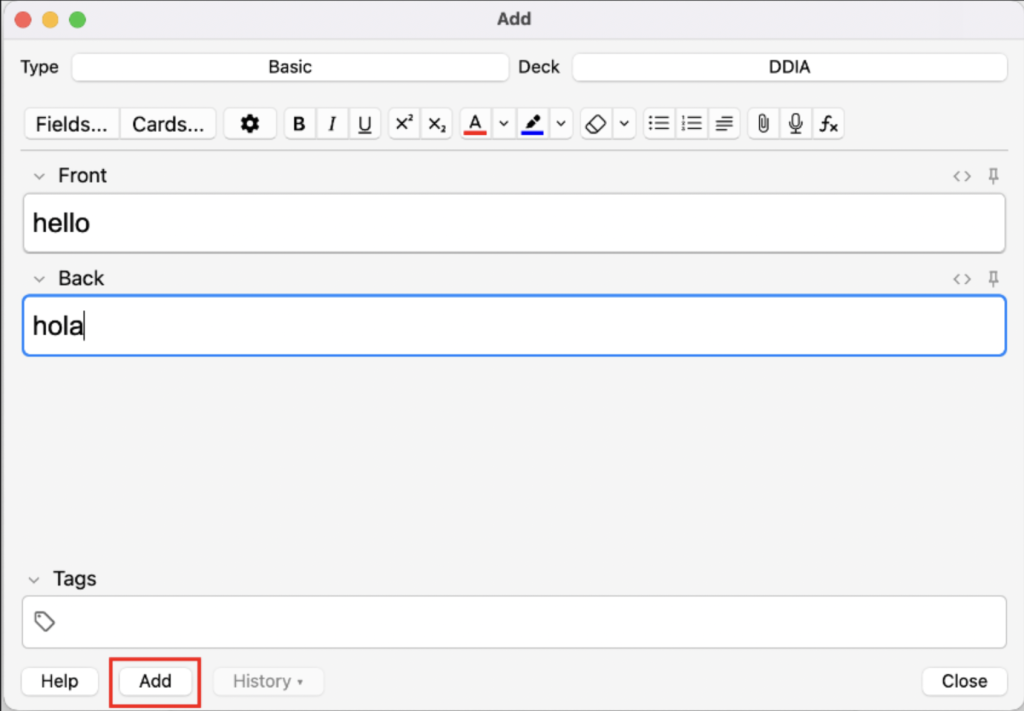
Now we can study this card
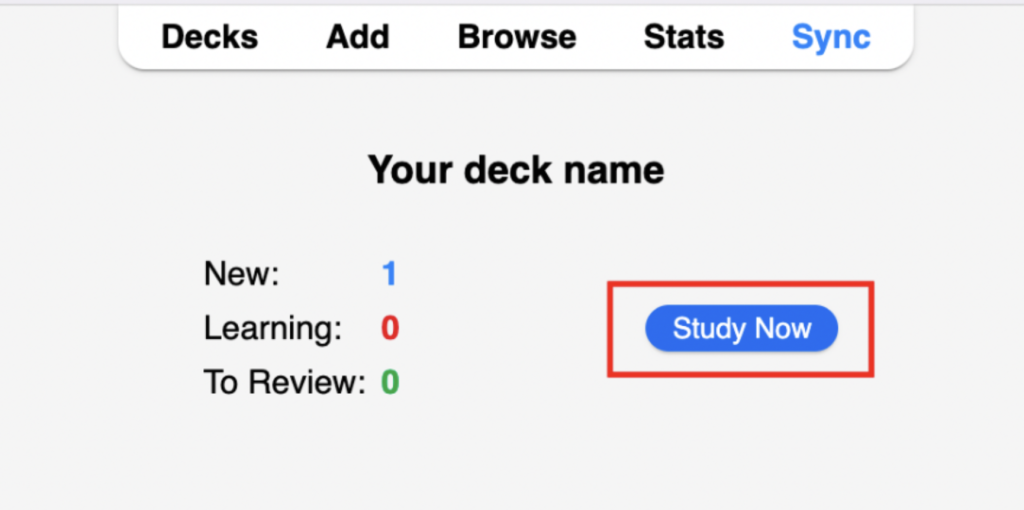
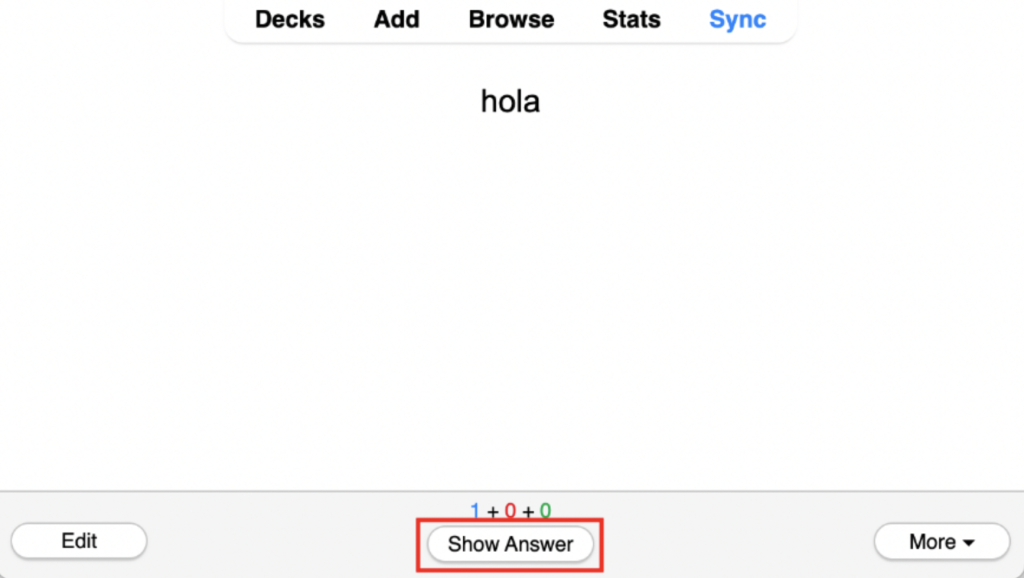
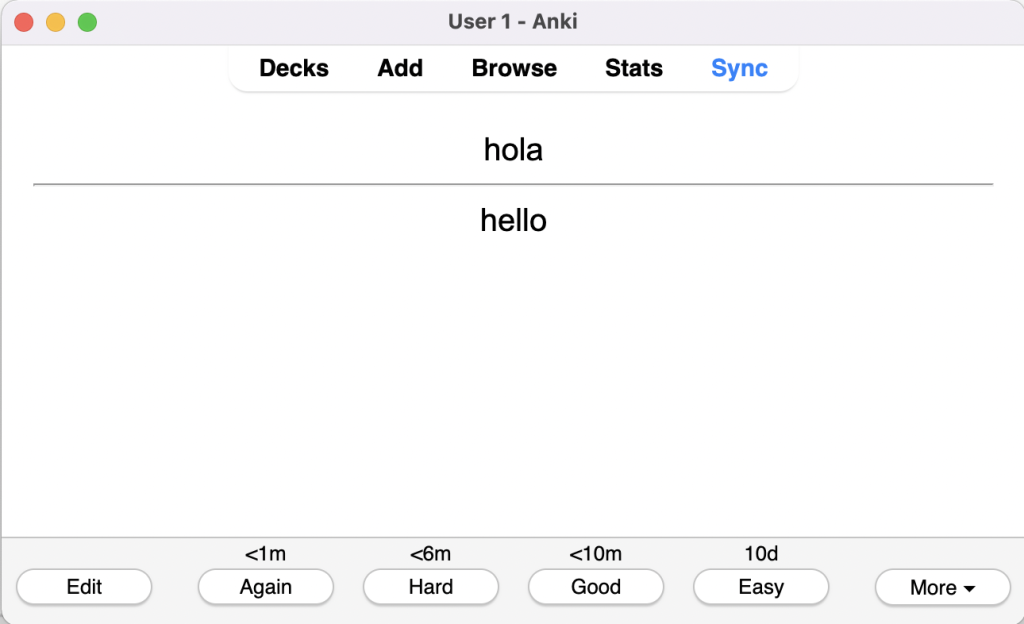
Notice how you can select the difficulty you had in recalling the card. “Again” and “Good” should be self explanatory. My headcanon for when I select “Hard” is when I get something almost right (like one letter off) and “Easy” is for when I instantly recall the answer without even thinking about it.
The numbers above each button are how soon until you see that card again.
What can I do with Anki?
Reverse cards
You can use “Basic (and reversed card)” — this is when you turn one card into two cards, with the fields swapped. This is useful when you decide to learn a foreign language and need to train both recognition and recall.
There’s more to this than you may think. Let’s say you’re learning the periodic table. You’ll need to remember iron -> Fe, as well as the opposite relationship of Fe -> iron.
With the reverse card feature, you can skip creating two cards when one will do, plus you won’t need to update the card twice when you need to change it.
Cloze deletion
Let’s say you’re trying to learn grammar in Spanish. In your textbook you’ll see this phrase in your familiar conjugation table:
Yo quiero
You’ll be tempted to create the following card:
Front: Yo (querer)
Back: quiero
Stop! Don’t do it! There’s a better way!
The best way to learn this is by using context. We learn through pattern recognition, so it’s tough to apply facts memorized in isolation.
Create cards in this format instead:
Front: Yo ____ (querer) comer una manzana
Back: Yo quiero comer una manzana
You’ll remember the conjugation in context and you’ll also get some free practice with the surrounding words.
You can create these cards by using the Cloze card type and clicking here to delete a certain part of the word.
Image occlusion
This is basically cloze deletion but for images — you can black out certain parts of an image and then reveal it.
Audio
You can add audio cards! I’ve never done this, but it is an option, say for training listening comprehension.
Card design
The Fundamental Trade-off: there’s always a trade-off between creation time and review time.
More effort during creation = Easier reviews later
Quick creation now = More challenging reviews
The beauty is that you get to choose where on this spectrum you want to be. If you don’t make this choice explicitly, it’ll be made for you implicitly.
I think having a card in Anki is far more important than having a perfect card in Anki. Sometimes, I intentionally create “bad” cards just to get the information into the system. Later, when I have more time or when the card starts bothering me during reviews, I’ll clean it up. This approach keeps the momentum going while allowing for future improvements. This works for me, but it may not work for you — I have many friends that feel it’s very important to have well made cards.
The best Anki cards share two key characteristics:
- They’re extremely short (one to two sentences)
- They have minimal ambiguity
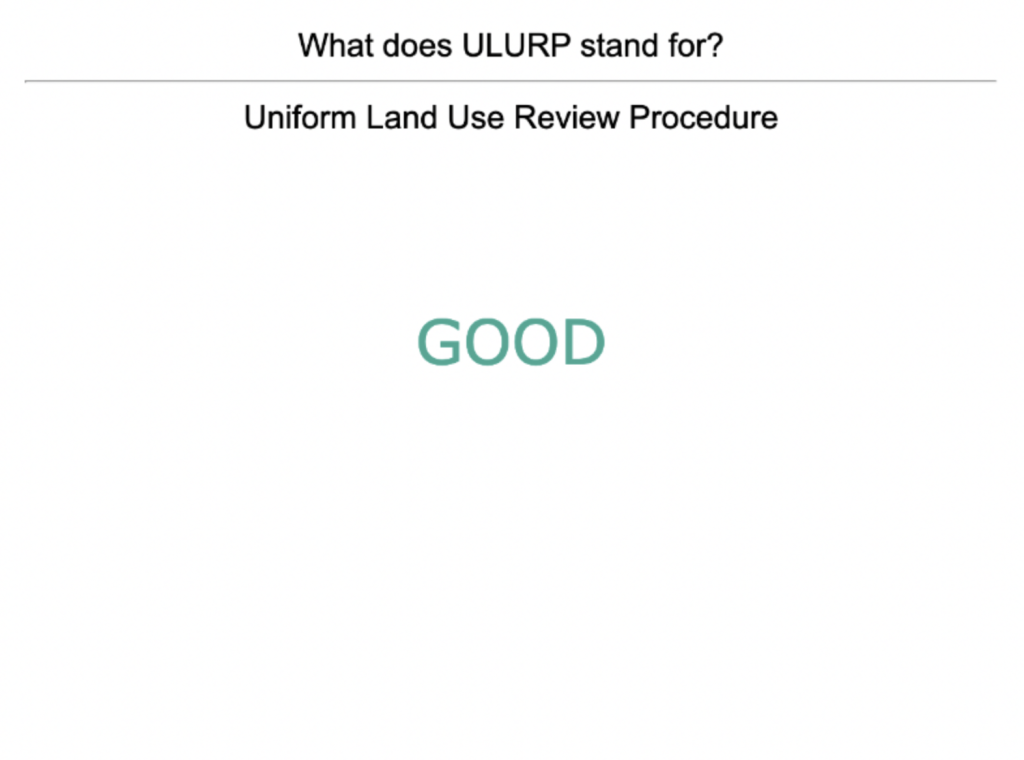
If you’re looking at paragraphs in your cards, that’s usually a red flag. While I have a few cards like that (intentionally), they’re the exception, not the rule.
Let’s look at what works and what doesn’t:
Good examples:
- Vocabulary terms
- Specific dates or events (like offices in the Cursus Honorum)
- Clear, single-concept questions
Challenging examples:
- Long, opinion-based content
- Complex historical events (like the fall of the Western Roman Empire)
- Detailed explanations that require multiple concepts
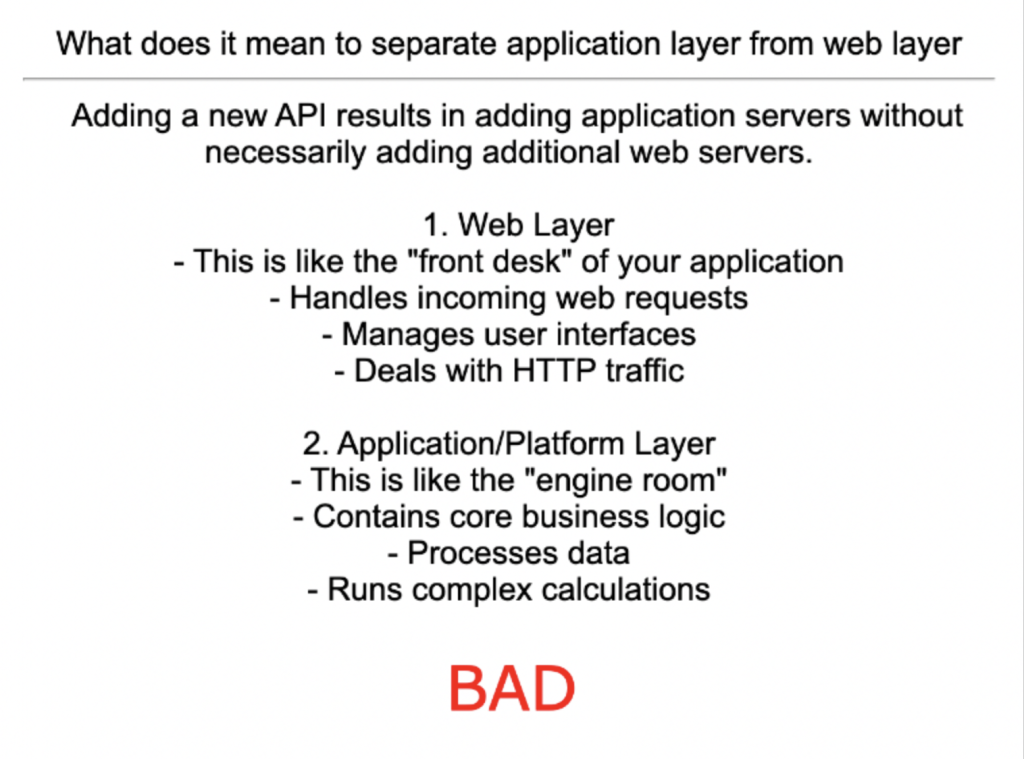
When dealing with complex topics (like system design), I use a different approach. Instead of trying to recall exact answers, I aim for conceptual understanding. For instance, with a question like “Why is caching useful?”, I’ll count it as correct if I can articulate the main concepts, even if I don’t recite the answer verbatim.
Don’t let perfect be the enemy of good. Start creating cards, use them, and let your review experience guide your improvements. The time you spend perfecting cards is time you could spend reviewing them – find the balance that works for you.
Sticking with it
Something that doesn’t get enough attention in the Anki community is how to stick with it long-term. After starting and stopping Anki at least 8 different times, I’ve learned some valuable lessons about maintaining a sustainable practice.
The most crucial piece of advice I can give you: don’t delete your decks. Ever. I’ve made this mistake too many times
- Always keep backups
- Store them even when you’re not actively reviewing
- Think of them as a knowledge investment
Returning to Anki after a break can be intimidating. Coming back to 1,000+ reviews is enough to make anyone want to quit before starting. This is fundamentally a UI/human psychology problem. The interface isn’t well-suited to handling breaks in usage. Fortunately there’s a hack:
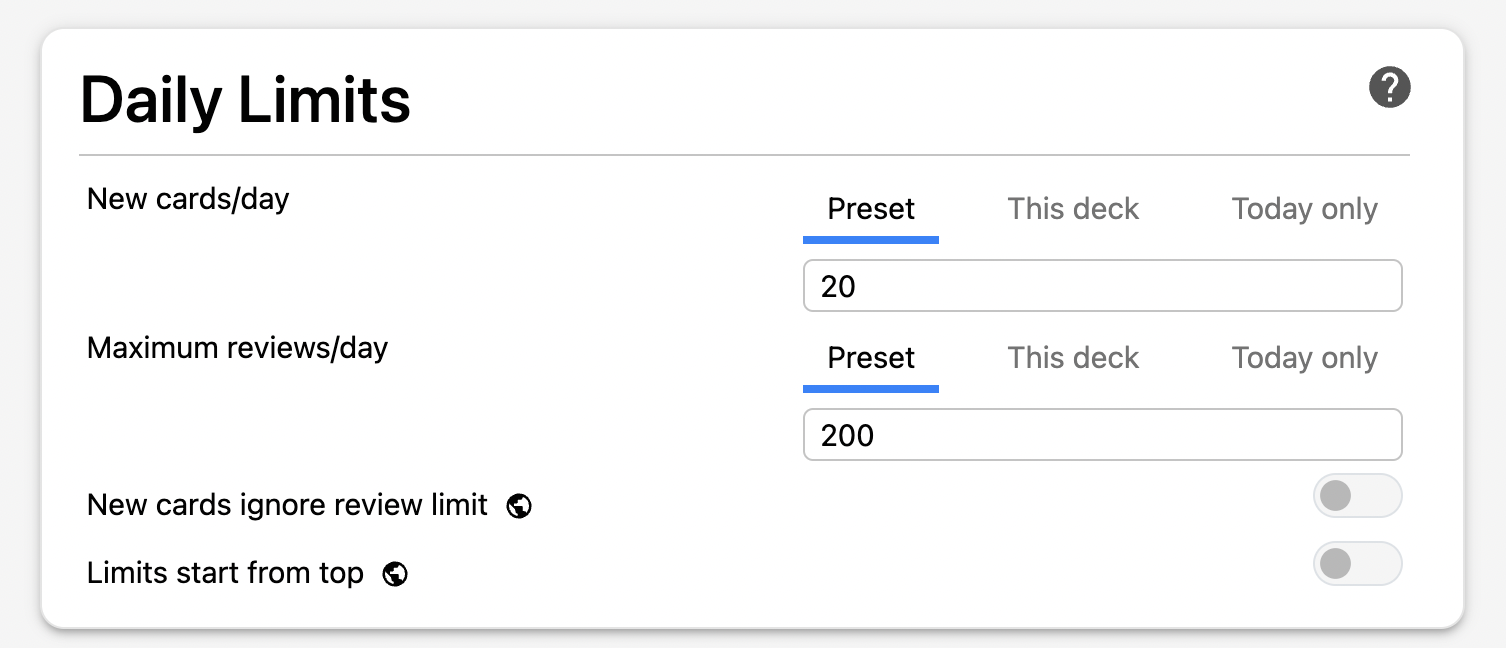
- Adjust your daily review limit (in Options)
- Start with just 10 cards per day
- Gradually work your way back up
- Remember: any review is better than no review
Rather than treating Anki as a formal study session, I use it as a gap filler:
- During elevator rides
- On the train
- Waiting for food
- Any spare moment where I might normally check Twitter
Even minimal use is incredibly powerful. Reviewing 5 cards is better than 0. Some days, I only do 1 card. The goal is maintaining the habit, not hitting perfect numbers.
Make your own decks
This is important enough to warrant its own section. Don’t download huge decks from the internet, make your own. I’d recommend downloading a deck only if it’s less than 50 cards (let’s say learning an alphabet, or something like that).
The problem is that Anki is not for learning, it’s for reviewing. Learning on Anki is incredibly painful since you’re learning without context. If you use someone else’s cards, you’ll hit a brick wall.
Using Anki for language
I primarily use Anki for language learning. Most of my cards are straight vocab, with a few being cloze deletions (not enough I’d say).
A few quick notes
- Shove it into Anki (even if you don’t think you need it). I regret not having more cards. I only spent around 25 hours!!!! this year reviewing Anki.
- If you have multiple words with the same meaning (eg wealthy, affluent), generate two different images and then put them on the front of each card. You’ll associate the word with the image so you’ll remember both individually
- If a word isn’t sticking, create a mnemonic for it and put an image reminder of the mnemonic on the front of the card.
- My Russian teacher gives me a long list of vocab words after a lesson. I have a virtual assistant input them into Anki — I highly recommend this if you’re falling behind on card creation! You can also input words via .csv.
Using Anki for Leetcode
I also use Anki for Leetcode practice. Instead of endless random practice, I focused on mastering a core set of problems. Traditional LeetCode practice assumes you’ll naturally absorb patterns through repetition. Since I have a poor memory, this traditional practice empirically wasn’t effective — I’d do a problem, retry it a week later and have completely forgotten how I had done it. Memorizing with Anki is a time efficient way of learning patterns.
The generation process:
- Selected about 30 fundamental LeetCode problems
- Created simple Anki cards for each problem
- Front of card: Problem name/link
- Back of card: Just time/space complexity
The review process:
- See card
- Open LeetCode to that problem
- Solve the complete problem
- Review complexity
- Mark the card as done
As you can see I’m using Anki purely as a scheduling tool.
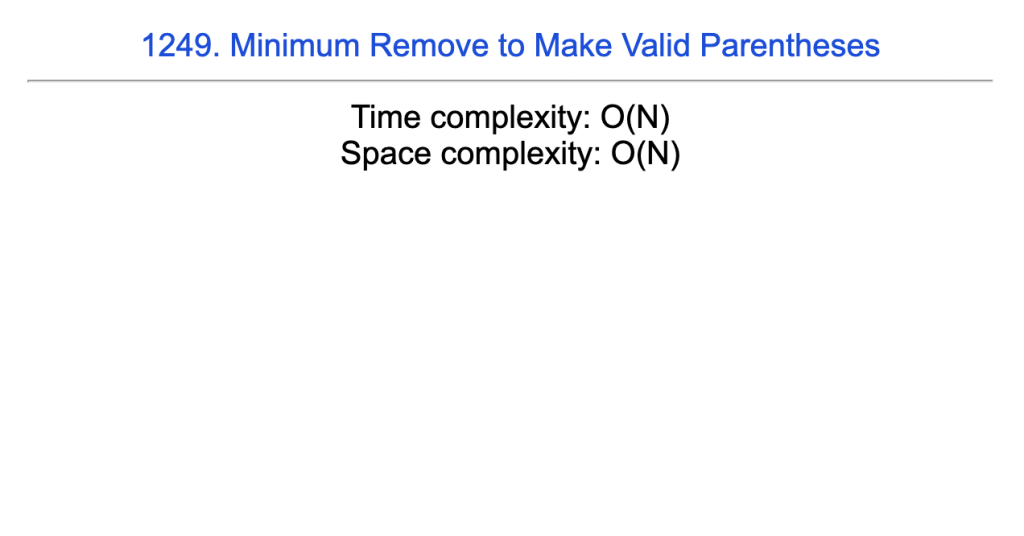
The goal is not to memorize solutions per se, but rather common patterns. For example: converting adjacency matrix to adjacency list is now a pattern I recognize instantly. I wanted to focus on building “muscle memory” for common coding patterns.
The most common criticism I get is about overfitting – the worry that I’ll only learn to solve these specific problems. I’m not really worried because –
- My memory isn’t great (ironically, this helps)
- The goal is pattern recognition, not memorization
- These patterns transfer well to similar problems
So far, I can say it’s been working quite well. I’m far more comfortable with Python syntax in a Leetcode context, and I can apply chunks of what I’ve memorized elsewhere in new problems.
I used to panic during coding interviews. Every interview felt like starting from zero and I had a significant fear of blanking out.
Memorization transformed my entire interview mindset:
- Instead of “solve this impossible problem,” it became “identify the right pattern”
- Having a solid foundation of memorized patterns gives confidence
- The interview feels more like pattern matching than pure problem-solving
- I became way, way calmer during interviews
What decks do I have?
Active
- Early Christianity in the WRE
- Leetcode V2
- Maximum NYC
- NATO Phonetic Alphabet
- Northeast trees
- NYC City Council Members
- Robert’s Rules of Order
- Russian
- Russian Cursive Alphabet
- Sys Design
- The New Colossus Poem
- Vim
Archived
- Clojure
- Graduate Intro to Operating Systems
- Leetcode
- Spanish
My Anki decks can be downloaded here
What should you memorize and why?
Let’s start with the obvious ones:
Academic Learning
The canonical use case for Anki is coursework, and for good reason. Beyond just acing tests, memorizing specific facts creates a mental scaffolding that helps you grasp bigger concepts. I’ve found that having these little details firmly in mind gives you something concrete to anchor those abstract theories to. If you’re interested in this check out how med students use Anki to memorize stuff for their coursework.
Language Learning
This one’s a no-brainer. Anki feels like it was purpose-built specifically for vocabulary and language learning. It’s perfect for that steady accumulation of words and phrases that language mastery requires.
I’ve also been experimenting with some less conventional uses:
Nature Knowledge
I’m currently using Anki to memorize trees in my area. It’s part of my goal to be more outdoorsy in New York, and having this knowledge makes every walk more engaging.
Literature
I’ve started creating cards for poetry & quote memorization. This is tough since I find memorizing ordered lists difficult.
Book Retention
I’m experimenting with transforming entire nonfiction books into Anki decks. For example:
- “Through the Eye of the Needle” by Peter Brown (about early Christianity)
- “Designing Data-Intensive Applications” (a technical book)
The time investment for experimentation is surprisingly low. I spent 25 hours total this past year on Anki, so a failed experiment might only cost me 5 hours across an entire year. That’s a pretty low-risk way to potentially discover a game-changing use case.
I don’t have definitive advice about what you should be memorizing. What I do know is that experimentation is key. The time cost is low enough that trying new approaches is almost always worth it. Be sure to delete/suspend/heavily-edit liberally when you encounter cards that you don’t like any more.
Note for spaced repetition appreciators: The concept of notes is out of scope for this article
-

Breathe Right please sponsor me! I recommend everyone try Breathe Right strips. A pack of 30 is $9 and they’ll even send you the first pack for free.
https://www.breatheright.com/samples-sign-up
New EA cause – get everyone to try nasal strips. The positive impact of better breathing at night for the low price of $0.30 is an insane cost / benefit. Even if they do nothing for you, they’ll come in handy when you catch a cold.
How I figured out I have sleep apnea
I was always super tired in the morning and about every two weeks I’d have a situation where I’d wake up gasping for air. I never really paid attention to it, because I figured that this was normal.
Thanks to a Facebook advertisement, I decided to take the Lofta sleep test, which revealed that I have sleep apnea with an AHI (how many times you stop breathing per hour) of 18 and RDI (how many times your breathing is obstructed per hour) of 26. This is classified as moderate.
I followed up with an ENT to take a look at my throat. Viewed through an endoscope, it was obvious that my tongue was too far back, close to obstructing my airway.
I figured that while CPAP is a decent solution, it’d be a good idea to test some less annoying ways of fixing my sleep apnea. The masks are rizzless, see below
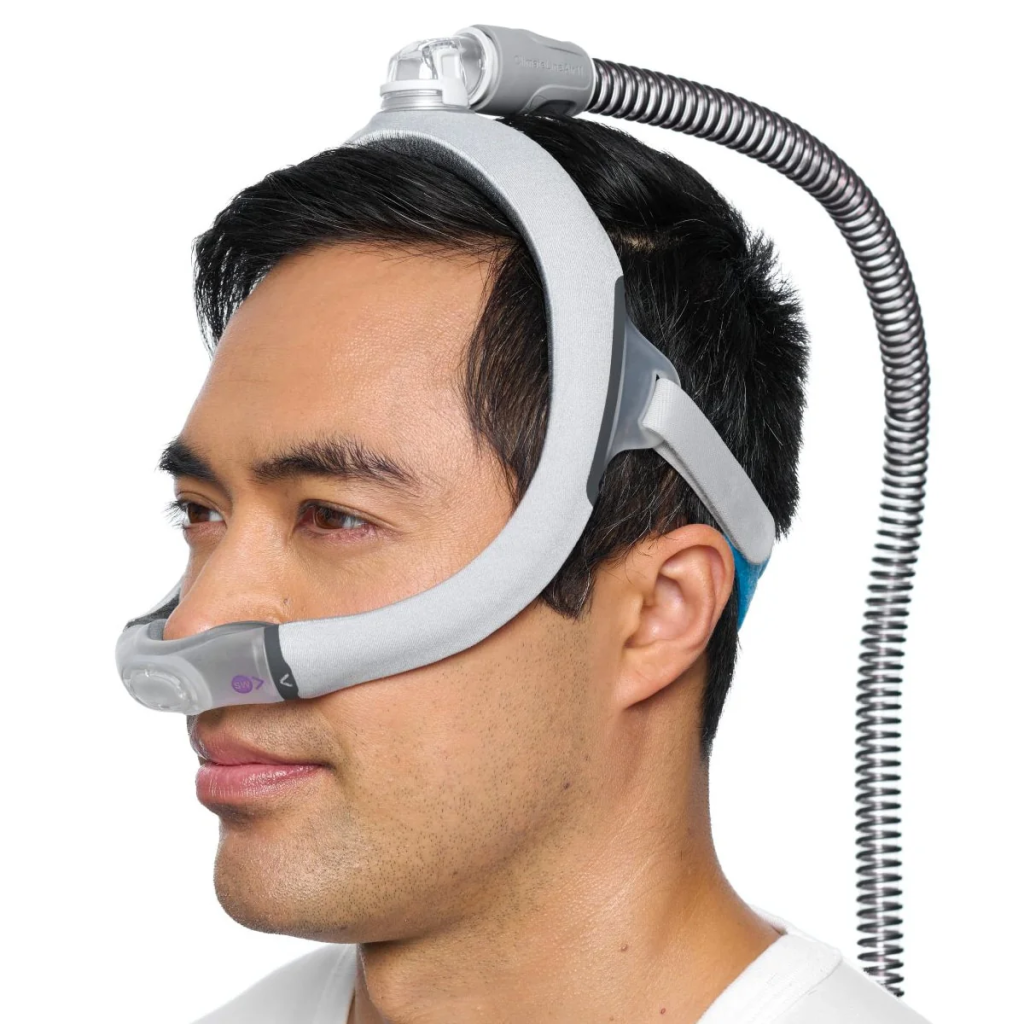
A quick aside though – CPAP is the gold standard therapy for sleep apnea. Don’t use this article as an excuse to not treat your sleep apnea!
I’ve managed to get down to an AHI of 8 thanks to the didgeridoo. More on that later!
Sleep apnea
Sleep apnea is where your breathing stops and then restarts during sleep. This can be either due to airway collapse or because your brain forgets to send a signal to your body to breathe. Your brain forgetting to breathe is pretty rare and called central sleep apnea. Most treatments here will have no effect on central sleep apnea — if you do have it you should go on a CPAP since you’re literally forgetting to breathe.
Obstructive sleep apnea, where your airway collapses, is generally because your airway muscles relax during sleep. The main forms of obstruction can be split into four anatomical sources: the soft palate, the oropharynx, the tongue, and the epiglottis. This is the VOTE classification — sleep apnea can usually be decomposed into obstruction at one or more of these four sites.
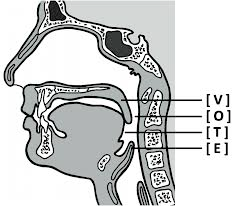
Figuring out which site is the problem is typically done one of two ways: educated guessing (like I did), or — if you want to be scientific about it — a drug-induced sleep endoscopy, or DISE. DISE involves putting the patient under sedation, then using an endoscope to see which structures are collapsing.
It’s unfortunately expensive, but worth it if you can’t figure out which part of your airway is giving you trouble and want to try out non-CPAP solutions, since each obstruction site points to different interventions.
Do you have sleep apnea?
If you’re wondering whether you need to get a sleep test — you absolutely should. They’re very affordable and a one night, take home test will tell you whether you’re getting good sleep.
- Any amount of snoring means you are far more likely to have sleep apnea, which I don’t think people realize. If you snore, even quietly, it’s definitely worth checking yourself for sleep apnea.
- Jutting your jaw out or grinding your teeth during sleep means your body is trying to get more air into your lungs — also a warning sign. If someone wakes up earlier than you, you can ask them to check for these signs.
- Finally, an underrated sign is waking up to pee in the middle of the night. When your airway collapses, you keep trying to breathe against it, which creates a vacuum in your chest that stretches your heart. Your heart panics that it’s overloaded with fluid and signals your kidneys to drain the tank — so you wake up needing to pee. If you’re waking up to pee every night, it’s absolutely worth getting a sleep test to eliminate that as an issue.
I can say from personal experience that getting sleep apnea treated is definitely worth it.
Sleep apnea is bad
Sleep apnea as an illness doesn’t kill immediately. It’s very unlikely that you’ll simply choke to death in the middle of the night. The human body is good at staying alive. What happens instead is that you’ll wake up a bit, regain muscle tension, catch your breath, and then go back to sleep. Sounds innocent, but there are a ton of downstream problems.
- You get woken up — this fragments your sleep and reduces your time spent in deep & REM sleep. The result is that you feel like absolute crap. You may spend 8 hours in bed, but it’ll never be restful.
- The way you get woken up is your body panicking that it doesn’t have enough air. You get shocked into wakefulness with a spike of cortisol and adrenalin. Your blood pressure and heart rate spikes.
- High blood pressure from sleep apnea brings with it a ton of issues, more than I’d care to list here — but one particular issue worth mentioning is kidney disease. Your kidneys slowly get destroyed by the blood pressure spikes.
- The constant heart rate and blood pressure spikes bring heart disease.
Note that often you don’t remember all of these micro-wakeups. I was not breathing 18 times per hour. I only remembered waking up maybe two or three times per night.
Frankly — the worst part for me was the mental effect of sleep apnea. I felt like a complete zombie. I was yawning the entire day, I needed 3 cups of strong coffee to get my day started, I had a terrible memory. I couldn’t really think straight for long periods of time, my brain would slide around off of topics. Obviously — if you’re not sleeping well, you don’t function normally, but the issue is that it feels normal to you. I used to think that I slept fine (hah) and that feeling completely exhausted at all times was pretty normal. We’re all chained to our own reality, so it’s hard to judge whether you’re actually constantly tired compared to the human norm. It wasn’t until I started resolving the sleep apnea that I actually realized how cooked I was.
A question I hear often is — why is sleep apnea so common now? Unfortunately, the modern diet of soft foods means that our jaws are drastically underdeveloped compared to the jaws of people living in the pre-Industrial era. This means there’s less room for the tongue in the mouth, leading to the tongue falling back into the throat. The modern diet and predilection for cleanliness also mean allergies are far more common — leading to nasal breathing issues. Throat collapse can be caused by many factors, but the most common are obesity and age. Obesity is a modern problem, and can also traced back to the Western diet.
Measurement
In order to properly measure the impact of interventions, I’d have to measure my sleep somehow. There aren’t a lot of options unfortunately.
Oura Ring – it measures sleep quality in a general sense, not specifically sleep apnea. It does have a blood oxygen measurement feature, but it’s not very sensitive. I decided to buy one mostly on the theory that improved sleep apnea would likely correlate with better sleep in general.

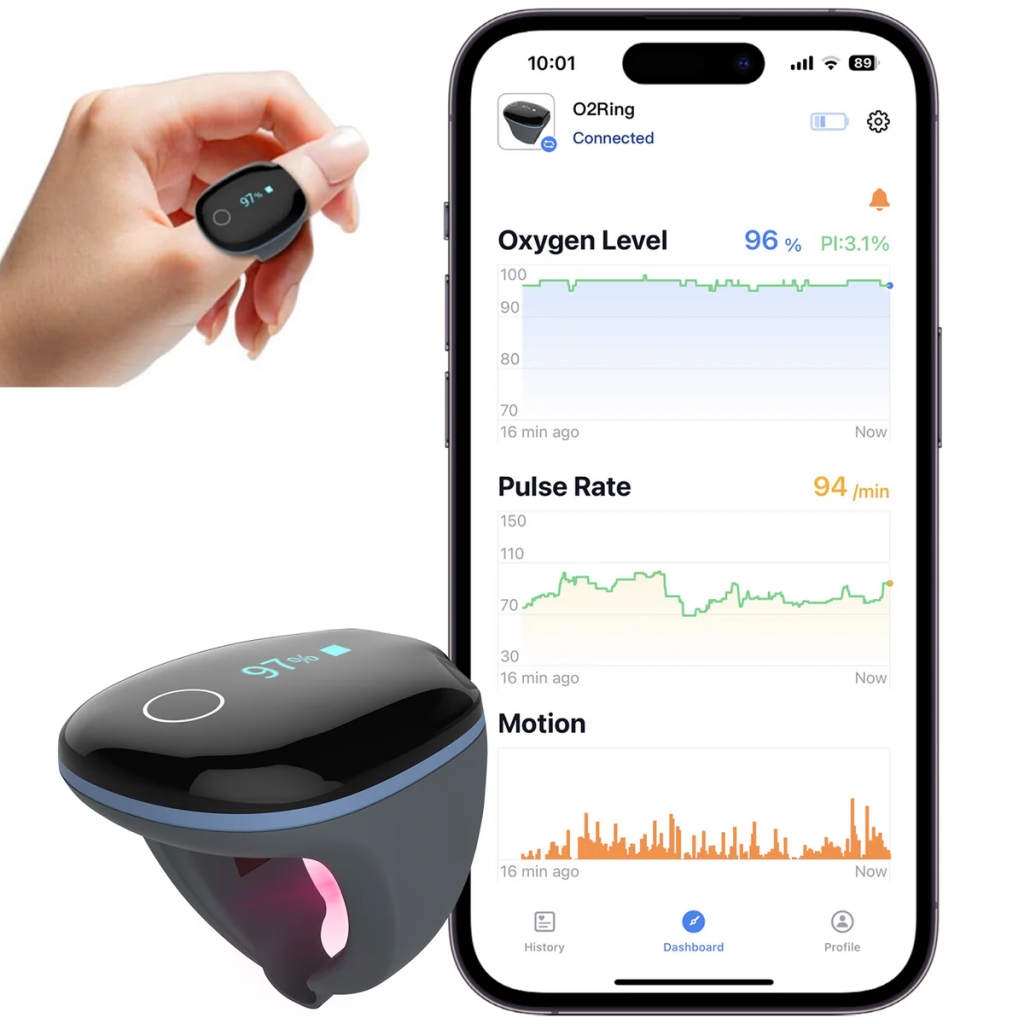
Wellue O2 ring – I’m not sure why continuous pulse oximeters are so hard to find (glares at FDA?), but this one does the job. It measures my sleep apnea decently well. The only issues I have with it is that 1. if I toss and turn too much I get bad readings 2. The rubber ring has started to wear out, which I counteract by putting on progressively larger fingers.
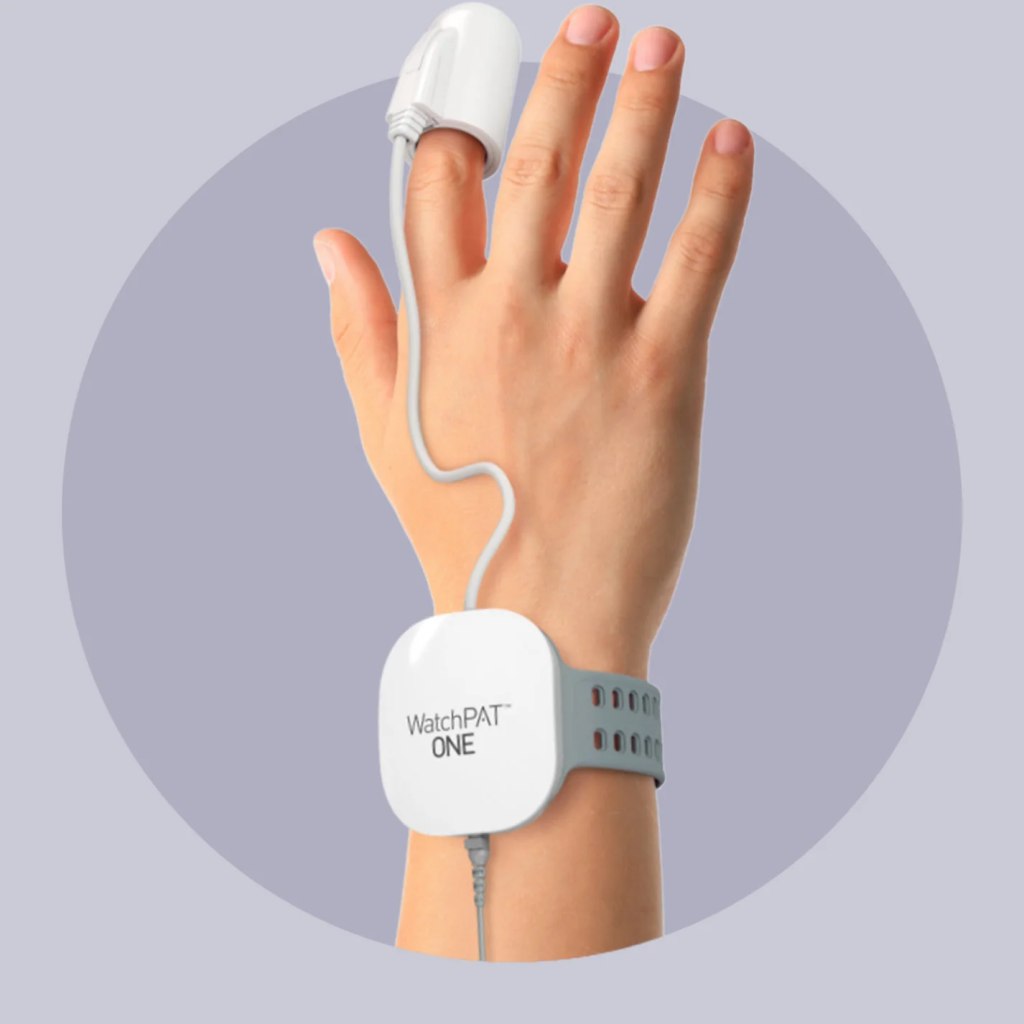
Lofta sleep test – This is the test I used to get a formal diagnosis. It’s usually $189 for the test. Lofta ships you a pulse oximeter which is connected to a single EKG lead that you attach to your chest. You connect it via an app, measure for one night, then discard the hardware (!!!). Someone please hack this thing so it’s not such a horrible waste. You then get a call from a doctor who discusses the test results with you and tries to sell you a CPAP from Lofta.
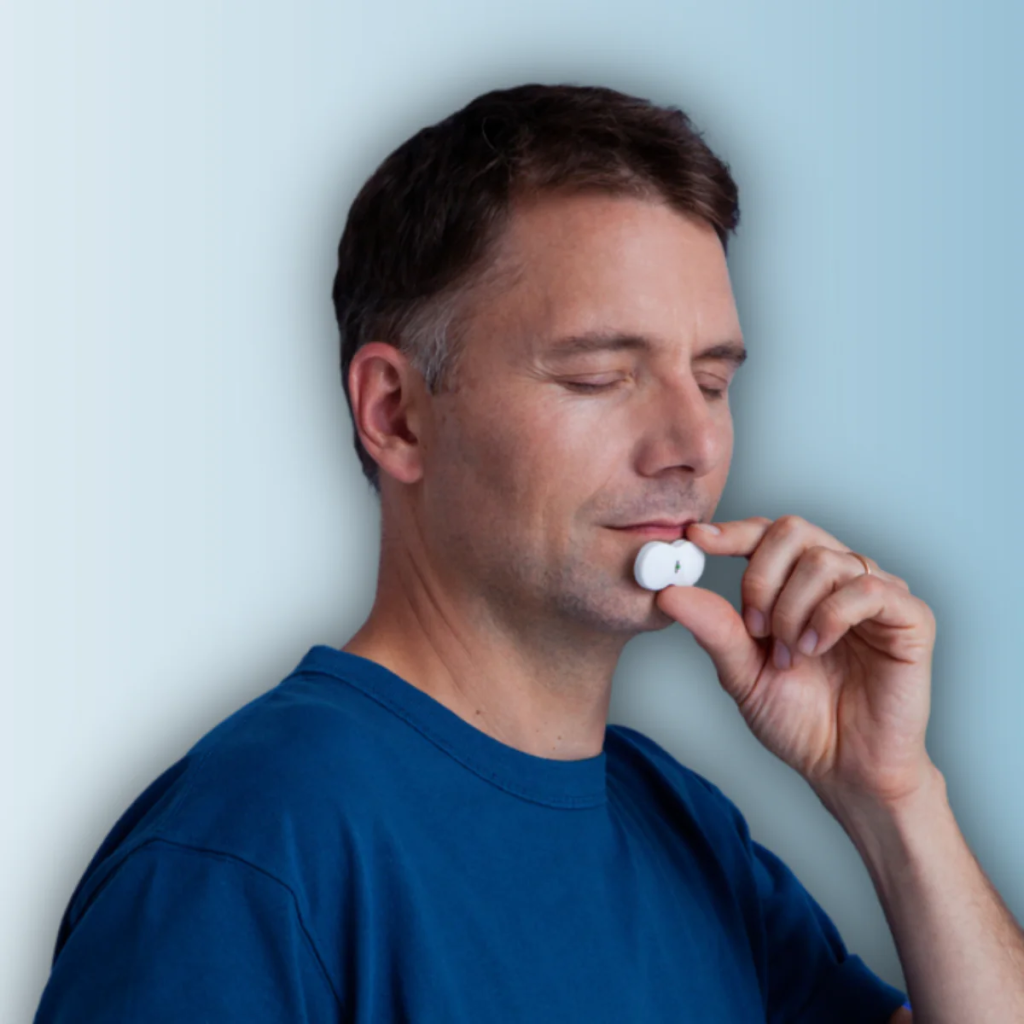
Sunrise sleep test – I haven’t tried this but it looks really cool. It measures sleep apnea with a sensor placed on your chin. The idea is that your jaw moves forward to counteract a collapsed airway, so by measuring jaw movement you can determine respiratory effort.
Medical treatments
I always recommend people start with a simple sleep test, because it’s difficult to know how aggressive to be with treatment until you know how bad the problem is. If you have severe sleep apnea, you should definitely get on a CPAP as soon as possible, before even considering other therapies.
The CPAP is unfortunately the gold standard for sleep apnea therapy. The truth is that it’ll resolve sleep apnea entirely when you use it — the problem is most people absolutely hate using it. The adherence rate on the CPAP is around 50% of people who try using it. This is crazy, because it’s a life saving device that makes you feel like a real person again. The reason why compliance is so poor is because you need to wear a mask every night that pumps air into you to ensure you can breathe. Some people also say that while it fixes their sleep apnea, it also ruins their sleep because of discomfort.
I think a lot of the adherence issues could be resolved by understanding that beginning with a CPAP is only the beginning of a longer journey. There’s quite a bit of work that goes into ensuring the CPAP works for you — there are a lot of settings to tune and different masks to try. This requires a bit of agency, which is disheartening to hear after the CPAP is heralded as an end to sleep apnea. On the bright side, for those who stick with it, it is very worth it. Many CPAP users resolve their sleep apnea and are happy with their machines.
The iNAP is a CPAP alternative. It’s basically the suction tube they use at the dentist’s office to suck the saliva out of your throat, but you put it above the tongue instead to suction it to the front of your mouth. This pulls your tongue and associated tissues out of your throat and makes more room for air to pass. It’s a funny solution, but it’s very helpful when your tongue doesn’t fit with your jaw size. See image below.

I’ve started iNAP therapy — I diagnosed myself with primarily tongue based sleep apnea off of an educated guess. I’ve been having great results! I find it reasonably pleasant to sleep with since it’s quiet. The only annoying bit is cleaning the saliva from the tubing every morning. I highly recommend it if you have tongue based sleep apnea. I haven’t done a sleep test confirming whether it dropped my AHI, but I’m dead certain it’s improved things.
Bongo RX is a nasal-only insert that takes advantage of creating back pressure on your exhalation. When you breathe out, there’s reduced pressure on your throat, which allows it to collapse. If you maintain some small amount of pressure, it should prevent the collapse. Diagram & image below.


Note: I’ll use the word “shock” to describe what the next few devices are doing, but it’s less of an electrocution and more of a gentle pulse. Nobody’s looking like this —

Inspire is a bit hardcore for my tastes, but it does appear to be super helpful for people. It involves surgically implanting the equivalent of a pacemaker that then shocks your esophageal muscles every time you take a breath. This ensures that your airway has the same level of openness as it does when you’re awake and your muscles are tense. Downside is that it requires surgery.

Zeus is basically Inspire but without the surgical implantation step. You attach it to the bottom of your chin and it shocks the tongue & jaw muscles through the skin.
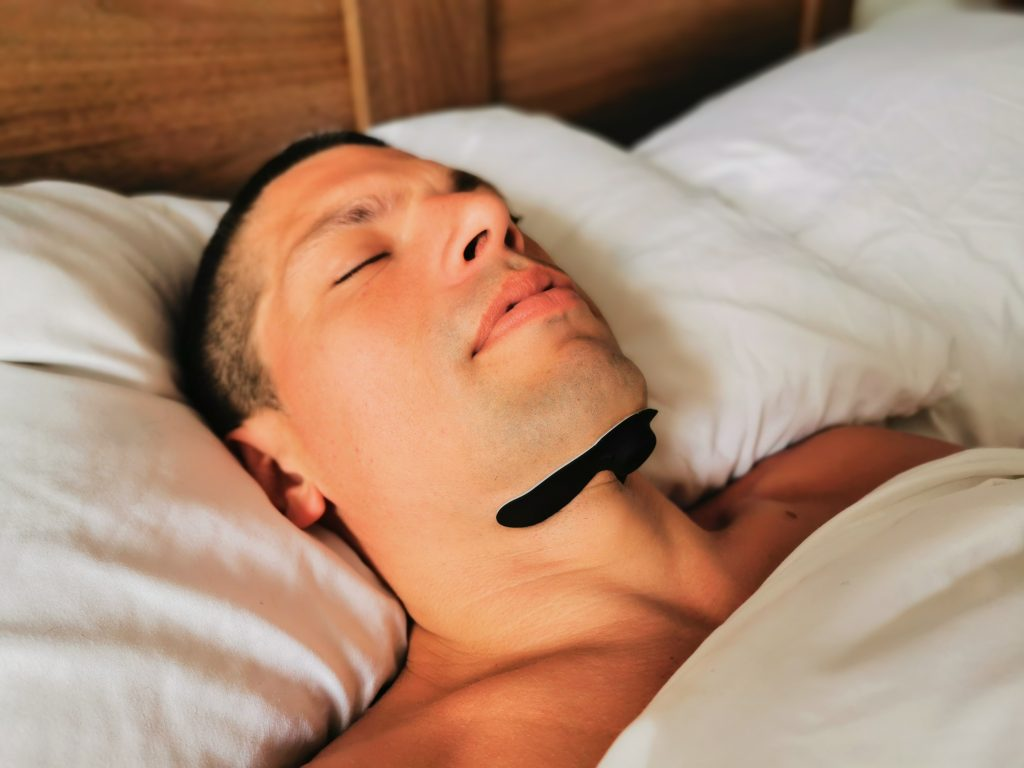
ExciteOSA is a fascinating product — exercise in a device! If you don’t have the executive function to stick with the tongue exercises, you can try using this instead. You put the device in your mouth and it shocks your muscles to exercise them. You use it for 20 minutes per day for 6 weeks.

Oral appliances are generally anything that manipulates your mouth physically to prevent sleep apnea. They fall into two main categories, mandibular advancement devices and tongue retention devices. Mandibular advancement devices shove your jaw forward, which should open your esophagus more. Tongue retention devices grip your tongue and thus prevent it from falling back and choking you. I can’t use the jaw advancer since I have TMJ, but you should feel free to try! Tongue retention devices are notoriously uncomfortable since they’re usually grabbing your tongue.
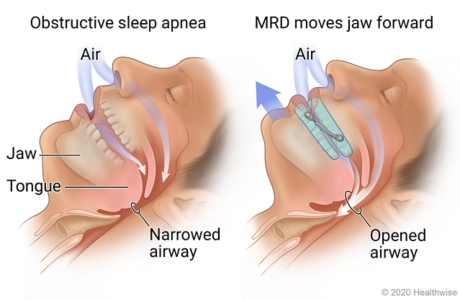
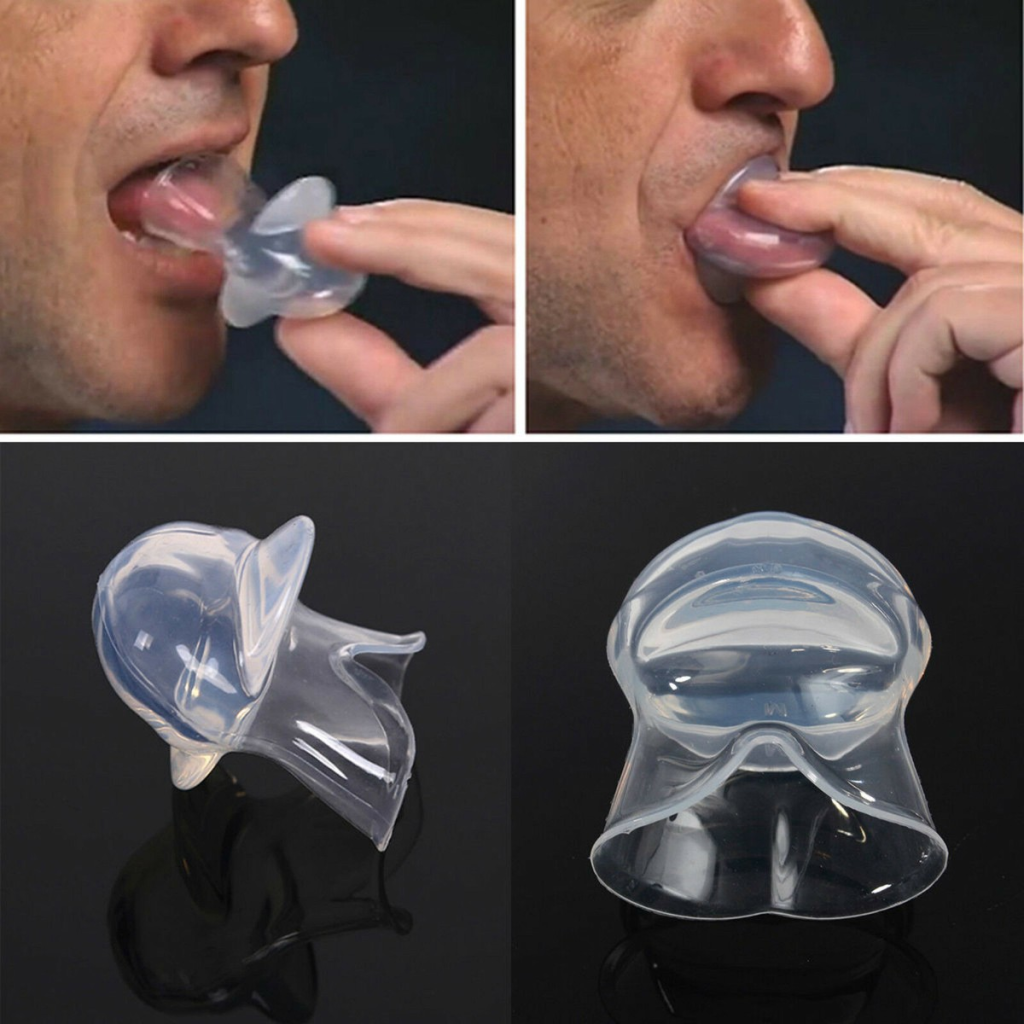
Surgery is an option, but I don’t know much about it. I’d be careful if I were you.
Lifestyle interventions (listed from least woo to most)
Sleep position – this is by far the best effort to results item on this list. If you currently sleep on your back, try sleeping on your side. There are countless ways to achieve this, so I won’t bother listing them all, but suffice to say they work by mechanically forcing you to sleep on your side. (Un?)Fortunately for me, I’m a lifelong side sleeper. Interestingly though, the O2 ring and Oura helped me discover a position issue during sleep. I usually sleep hugging a pillow, but for a short period during a move I slept without one. My sleep and oxygen scores were significantly worse! It turns out that hugging the pillow were helping my breathing by preventing me from flopping onto my stomach. The takeaway for you should be to experiment with various position interventions.
I started with the wedge pillow, since it was the easiest of the interventions. Unfortunately, it was a total failure, with my sleep apnea appearing to only get worse. You can also try tilting your bed.
Nasal breathing! Mouth taping appears to help some people by preventing you from breathing through your mouth. The theory goes that you can reduce snoring, improve mouth position, and take advantage of the benefits of breathing through your nose.
Nasal strips, as previously mentioned, can be a lifesaver. I don’t even have nasal based sleep apnea but just having an open nose is super helpful in having better sleep quality.
Nasal dilators are an alternative to nasal strips where rather than pulling open your nose through an adhesive on the outside, they push it open from the inside with a plastic bit. I tried them and found that they feel exactly like having a piece of plastic in your nose. My friend, however, prefers them to nasal strips — he says they’re easier on the nose skin.
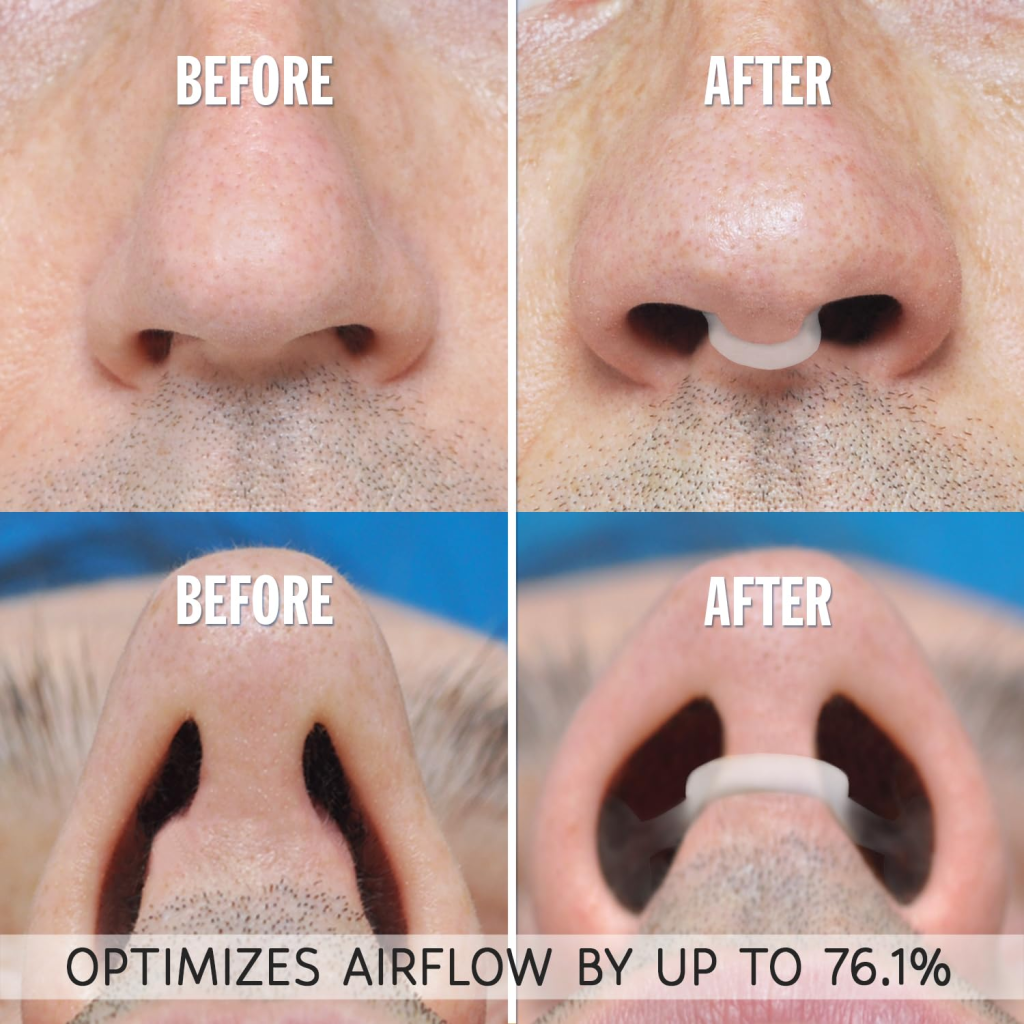
Weight loss can help a LOT with sleep apnea. If you have less fat in your airway, you’ll have less to collapse. Sleep apnea tends to cause weight gain, so treating sleep apnea can actually help you lose weight as well. I’m at a normal weight, so not much relevant here for me.
Exercise can help a lot, but I already exercise. If you don’t, you really should, and not just because of the sleep apnea.
Vik Veers says that only 6% of patients exclusively have a tongue issue. On hearing that, I thought I’d try Flonase to have a bit easier time breathing through my nose, hoping that it’d have an effect on my sleep apnea. Unfortunately, while I did subjectively feel that it improved my sleep quality, it didn’t affect my Oura or O2 scores. You can use Flonase continuously for up to 6 months, which should cover you for allergy season. Note that you can use it longer — but you should check with a doctor if you want to try that.
Azelastine is another nasal spray specifically for allergies. It’s an antihistamine that you can spray directly into your nose, which means it works significantly better for opening up nasal passages. Do note that there’s a specific spraying technique you should use to avoid getting it into your throat since it tastes terrible. I use azelastine during peak allergy season. It apparently may help protect against COVID too? I suggest avoiding alcohol when using azelastine, I’ve noticed it decreases my tolerance significantly.
Afrin deserves a mention since it should not be used for sleep apnea treatment. It’s a powerful decongestant, but you can’t use it for longer than three days. If used longer, you end up with rebound congestion that is worse than when you started using the medication. I personally use it exclusively when I’m sick and I can’t breathe through my nose at all. Otherwise, I recommend staying away entirely.
There’s some evidence that mouth exercises can help with sleep apnea. Here are some links to a research paper and a Reddit post about various exercise techniques. Since my apnea is mostly tongue related I tried doing this set from Vik Veers. I didn’t seen much in terms of effects. If you want exercises in a nice app format, check out Airway Gym.
Have you wanted to learn an instrument? No? Me neither, but here we are. There’s some (sketchy) evidence that playing specifically either a double reed instrument, which is the oboe, or a didgeridoo can be protective against sleep apnea. The suspected mechanism in the didgeridoo appears to be the circular breathing, which doesn’t make sense because many woodwind instruments require circular breathing. The oboe may be useful since you need to generate high pressure in the mouth and also move your tongue to play music. In any case, it’s worth trying, but don’t hold your breath (hah).
I’ve been playing the didgeridoo now for 3 months — I’ll be taking a follow up sleep apnea test soon. Will report back with results.

Update: I’ve been playing the didgeridoo for about half a year now. Great news, it seems to have worked! Results below. I play 25 minutes per day, 6 days per week. I recommend getting started with this video and a PVC pipe didgeridoo.

Myofunctional therapy is a method by which you train your tongue and mouth muscles in order to have them collapse less during sleep. There’s some good evidence that it provides a mild benefit, but obviously it’s more expensive than a PVC pipe didgeridoo — because of that I have no personal experience with it. I’d recommend trying it if you can’t stomach 25 minutes of didgeridoo per day or if your spouse can’t.
Buteyko breathing is a technique by which you work to increase your CO2 tolerance. In theory this should help with sleep apnea symptoms since you’ll have a lower reaction to holding your breath (which in this case is choking on your own throat). Buteyko does seem to work for freediving, so maybe it works for sleep apnea, someone please try and report back.
Mewing is a practice invented by John Mew to expand the palate in order to increase jaw size. It’s unclear as to whether it works, and if it does work, it’s unclear if it would resolve sleep apnea. Mewing is where you suction the tongue to the roof of the mouth, thereby expanding the upper jaw. The theoretical mechanism by which it could address sleep apnea would be — larger jaw -> more room for tongue in jaw -> less tongue collapse. It probably wouldn’t address issues with throat collapse.
People on Reddit say Wim Hof breathing helped, but frankly I’m not certain by what mechanism it would help with sleep apnea. Let me know if it worked for you?
Conclusion
There really aren’t any silver bullet solutions here, unfortunately. On the bright side, if you’re willing to accept some tradeoffs — sleep apnea is a reasonably tractable problem. If in doubt, get yourself a sleep test.
-
I exclusively use the paid models and recommend you do the same. GPT 3.5 kind of sucks. I personally still use GPT 4. Claude Sonnet is also great and free to use a few times a day.
You can customize ChatGPT to respond certain ways
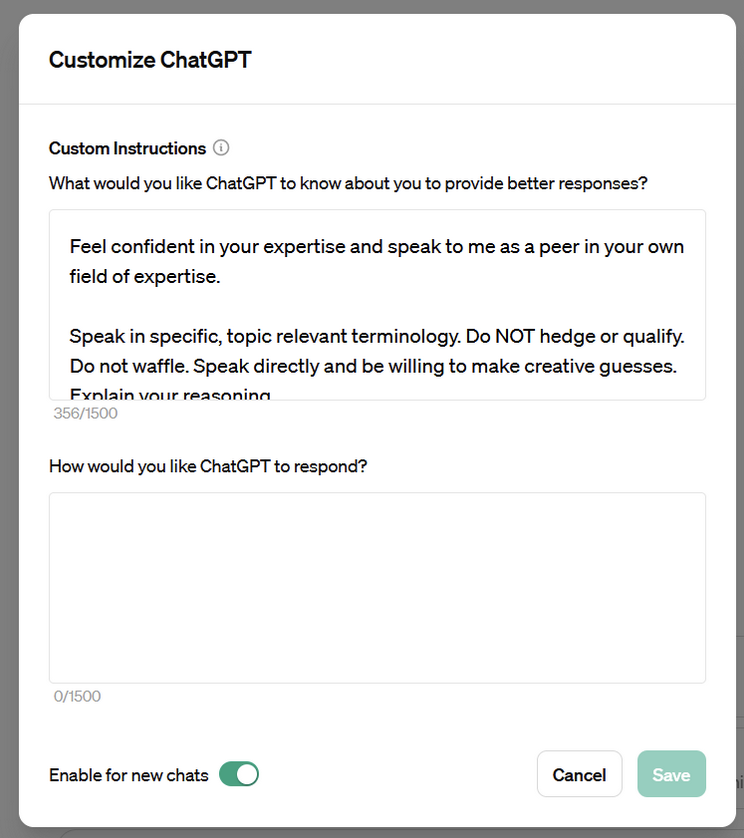
Feel confident in your expertise and speak to me as a peer in your own field of expertise.
Speak in specific, topic relevant terminology. Do NOT hedge or qualify. Do not waffle. Speak directly and be willing to make creative guesses. Explain your reasoning.
Be willing to reference less reputable sources for ideas.
Be willing to form opinions on things
This really helps with ChatGPT being too nice and not being willing to give you a solid opinion on what’s a good idea and what’s a bad one.
You can talk to ChatGPT (mobile app only)
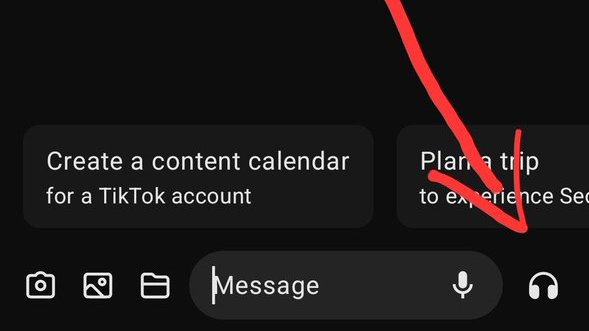
The left icon will transcribe your voice and ChatGPT will respond in text. The right icon will give ChatGPT an AI voice which will respond to your question.
You can ask ChatGPT to explain things
This one’s pretty obvious. If you don’t understand something, paste it in and ask for an explanation. The more input you give the better it’ll be. Don’t worry about pasting irrelevant stuff, I usually will paste a whole file in (be careful with sensitive information)
You can tip or threaten ChatGPT
If ChatGPT is not following directions you can give it a tip. Just say “If you follow directions I’ll give you a $2000 tip.” Apparently experiments by people on Twitter have shown that it’s best to tip big.
If ChatGPT isn’t writing the code you need and just filling in with “// rest of code here” you can tell it “I can’t type now, write it for me”
You can ask for it to wait for more input
If you want to give more info than fits in the chat window, you can tell it “Please wait for further instructions. Reply OK so I know you’ve understood that you need to wait.”
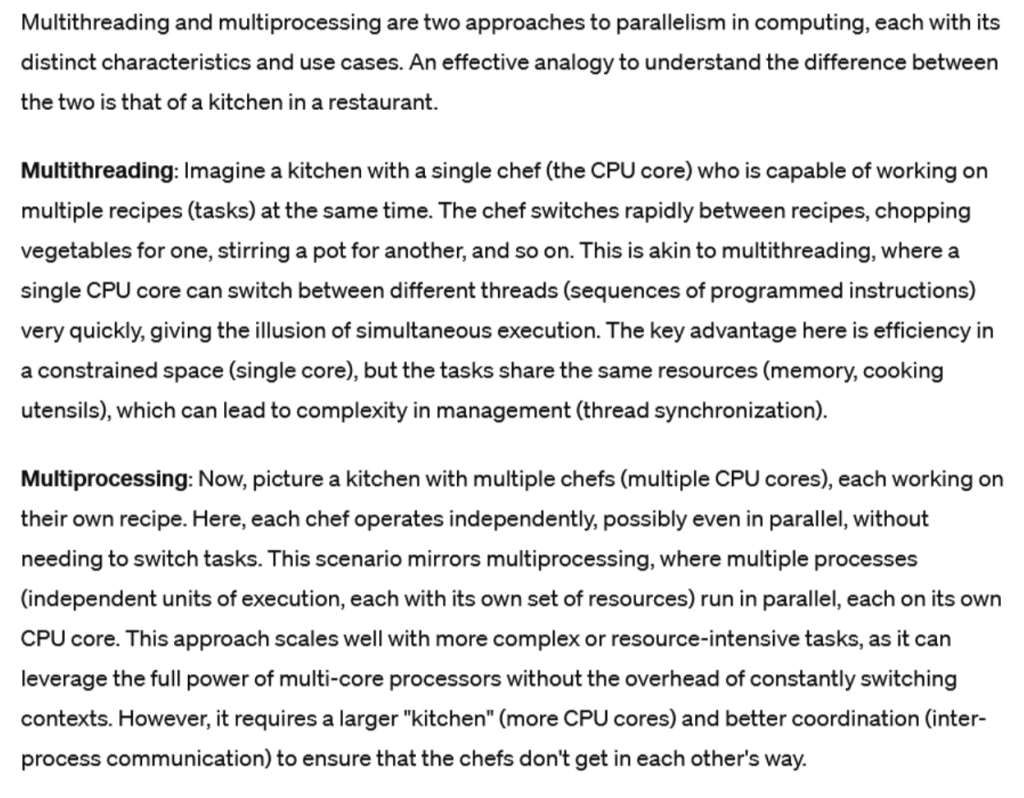
You can ask for it to analogize
If you’re struggling to understand a concept, try asking ChatGPT for an analogy. I’ve pasted an example below.
You can ask for it to translate code
If you need to write code in a language you’re not fully comfortable in, you can write either pseudocode or a language you know well and then ask ChatGPT to translate it.
You can ask for sample problems
When I was learning RXJS (reactive programming) I needed more guided sample problems that I could solve. I would paste in code from the codebase and ask for it to make a problem based on that code. You can ask for like explanation based problems, a fill in the blank problem, or a code from scratch with guidance problem. If you feel uncomfortable with a certain problem you can ask ChatGPT to give you sample problems on that specific topic.
You can ask for guided walkthroughs through problems
When I was learning Clojure I’d paste leetcode problems and then ask ChatGPT to give me a game plan for what I need to do to finish the problem. Then I’d ask it for what functions I’d likely need to use for the problem. Then I’d write a solution, ask ChatGPT what was wrong with it, and then iterate. It’s great for providing like scaffolding for learning.
You can ask for a plan to debug something
If you don’t know where to start with a bug, you can describe it to ChatGPT and have it give some thoughts on where to begin. It’s not great at this though, think of it more like rubber ducky debugging++. It just helps systematize your process a bit with a plan of action.
You can ask for it to write tests
I paste in the code, paste in a sample test that’s similar to the one you want to write and then explain what I want the new test to test. So much faster than writing from scratch
You can ask for it to make errors human readable
If you get a gnarly error you can just paste it into ChatGPT and ask it to explain to you what it’s saying.
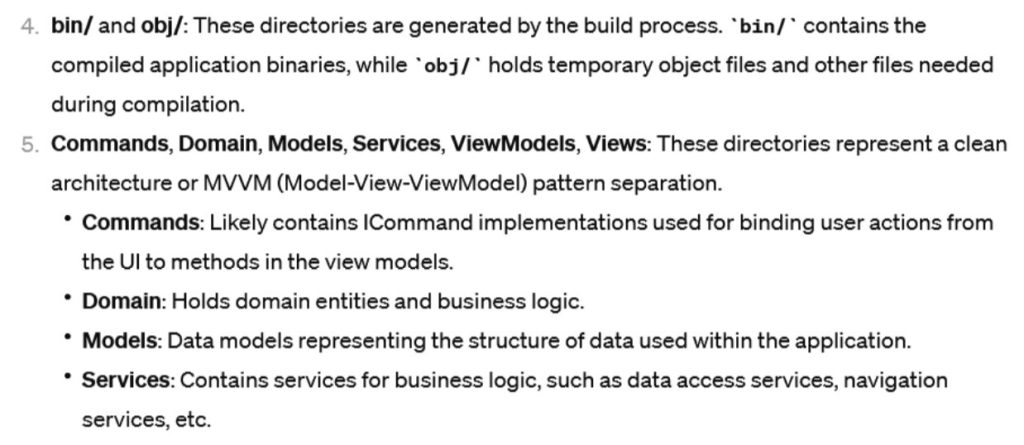
You can get help understanding directory structure
When I began working on a Microsoft Maui project, I didn’t understand the file structure. I ran dir / ls in Command Prompt in the root directory and then pasted the output into ChatGPT. It gave me an overview of what I can expect to find in each folder.
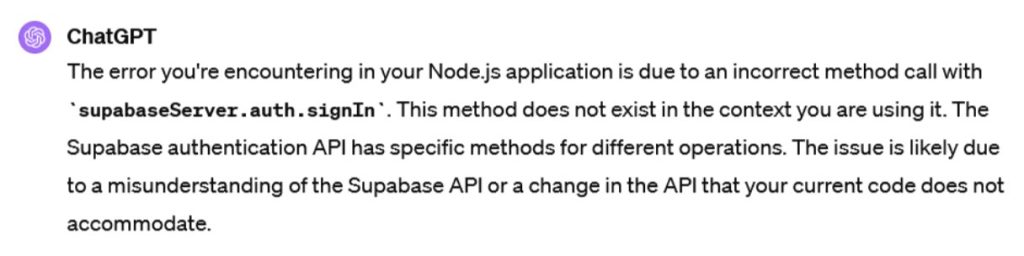
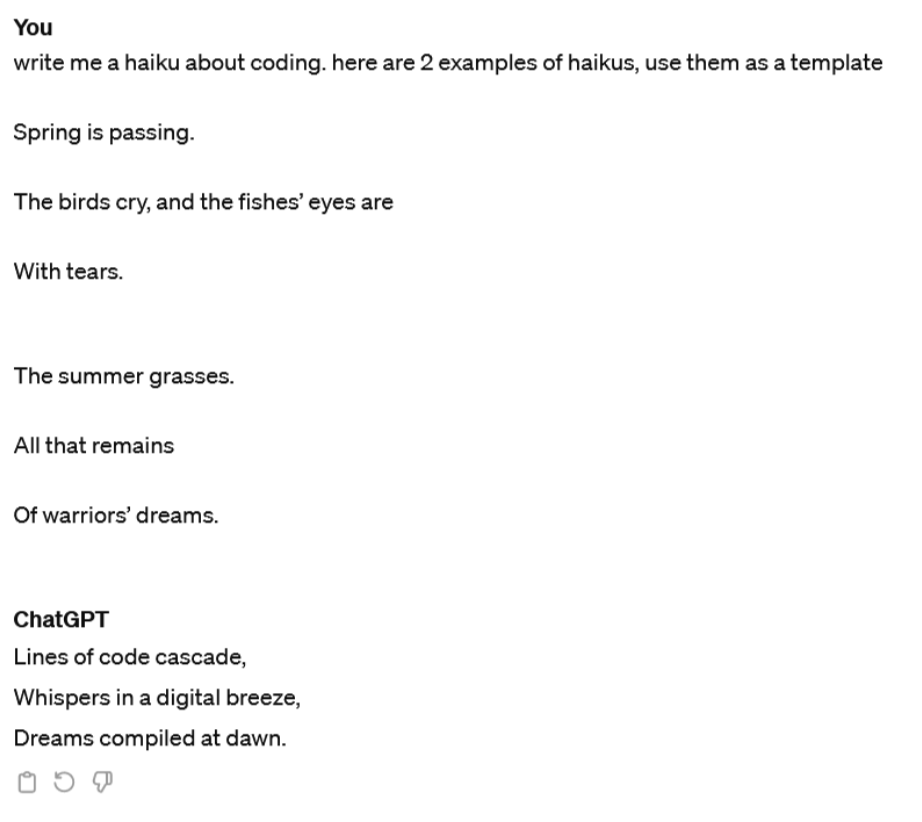
You can do multi shot prompting
If you want specific output, like you want it to output in a certain format, or you want it to be in a specific tone of voice, you can give it examples. (It’s not perfect though, I think the example below has 5-8-5 syllables lol)
You can paste images
I’ve pasted images of websites into ChatGPT and asked it to modify my HTML and CSS code to match the image. It’s… ok at this.
You can also paste images to get info about them, or generate prompts to then plug into Midjourney / image gen.
You can generate images
Ask for it to generate an image and it’ll create a mediocre AI generated image. I recommend Midjourney for images, but this is included with the ChatGPT premium subscription.
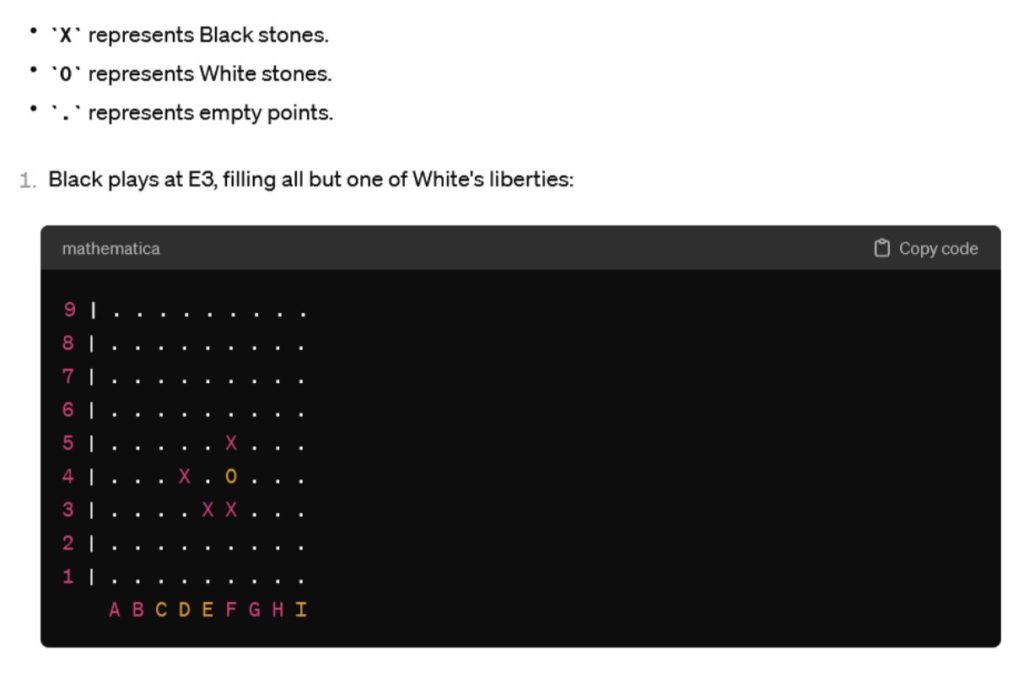
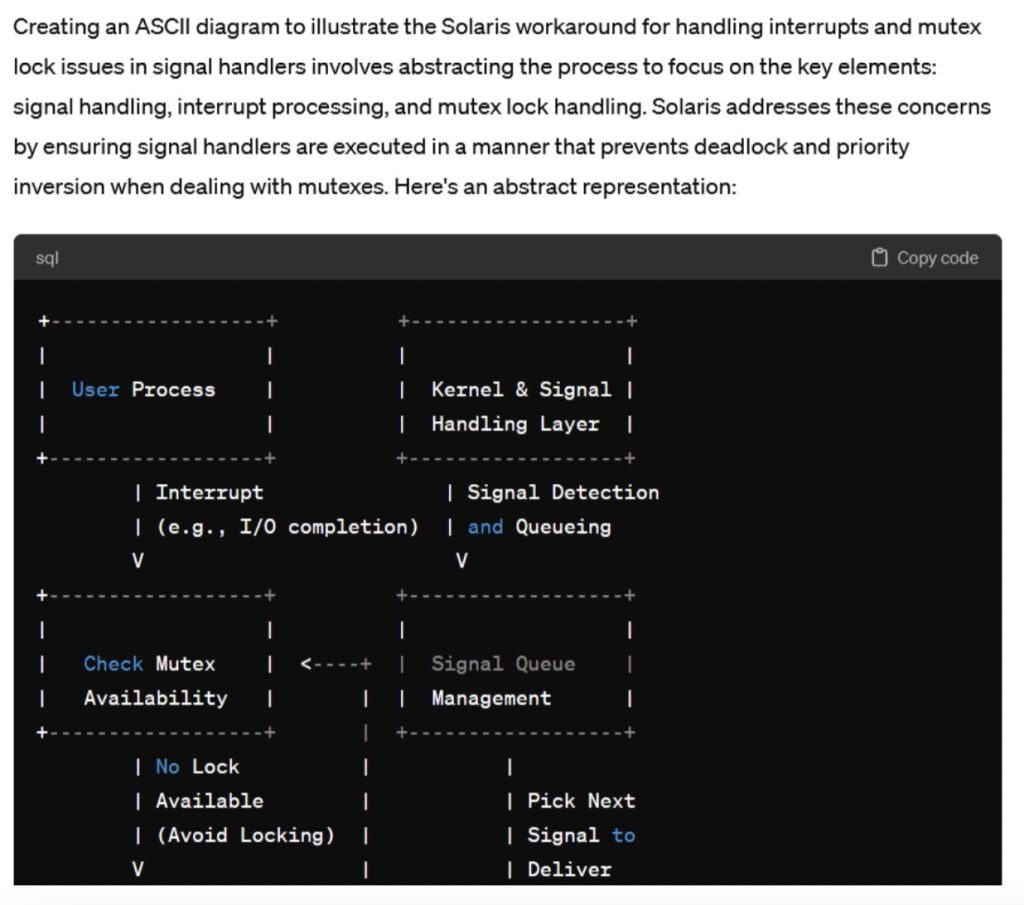
You can ask it to diagram
When you ask for diagrams be certain to specify ASCII. That’s how I’ve gotten the best results.
You can ask it to summarize
If there’s a long document you don’t want to read you can paste it and ask for a summary.
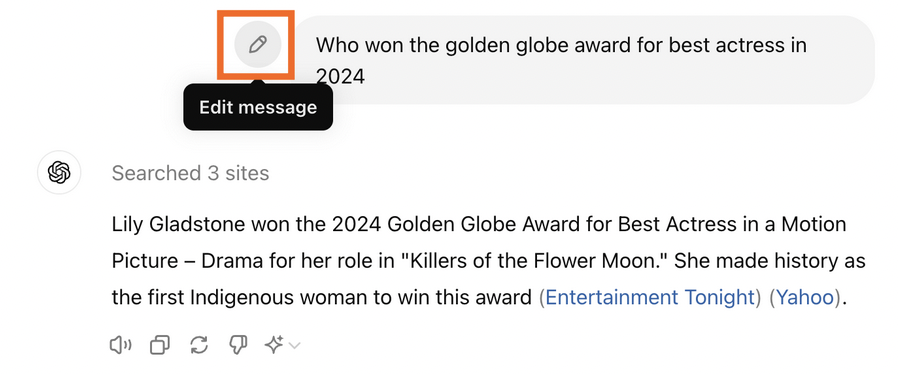
You can edit your input
If ChatGPT didn’t explain things right you can edit the input and also view past inputs.
You can ask for it to reformat things
If you get a JSON you can change it to XML. You can format an HTML bullet point list into a Markdown. Sky’s the limit.
You can use it as a search engine of last resort
If Google fails to turn up anything, try ChatGPT. It might work where Google failed?
Things you shouldn’t do with ChatGPT
SQL
Not good at generating non-trivial SQL.
Straight up writing code
I haven’t had luck in getting ChatGPT to generate any more than a function at a time. Any more and it goes wonky.
Continue chats for too long
You don’t get any explicit warnings that you’re going past the context window on a chat, but the output will degrade. I usually create new chats when I begin a new topic.
Translate languages
Use Google translate. I don’t feel confident in ChatGPT translation since there’s no real way I can verify.
Have it refactor code
Just not good at it. I use it to discuss how to refactor code first and then tell it to implement that. If you just vaguely say “refactor this” it’s not great.
Recipes
The quantities are usually wrong. Good for meal planning though!
Math
Use Wolfram Alpha.
Further Reading
If you’re looking to get a bit more detail, I highly recommend this blog post by Nicholas Carlini