• Fried Kielbasa
  • Posts
  • Contact Me

Fried Kielbasa

  • Sleep Apnea (In Progress)

    December 9th, 2024

    Breathe Right please sponsor me! I recommend everyone try Breathe Right strips. A pack of 30 is $9 and they’ll even send you the first pack for free.

    https://www.breatheright.com/samples-sign-up

    New EA cause – get everyone to try nasal strips. The positive impact of better breathing at night for the low price of $0.30 is an insane cost / benefit. Even if they do nothing for you, they’ll come in handy when you catch a cold.

    How I figured out I have sleep apnea

    I was always super tired in the morning and about every two weeks I’d have a situation where I’d wake up gasping for air. I never really paid attention to it, because I figured that this was normal. 

    Thanks to a Facebook advertisement, I decided to take the Lofta sleep test, which revealed that I have sleep apnea with an AHI of 18 and RDI of 26. This is classified as moderate

    I followed up with an ENT to take a look at my throat. Viewed through an endoscope, it was obvious that my tongue was too far back, close to obstructing my airway.

    I figured that while CPAP is a decent solution, it’d be a good idea to test some less annoying ways of fixing my sleep apnea. The masks are rizzless, see below
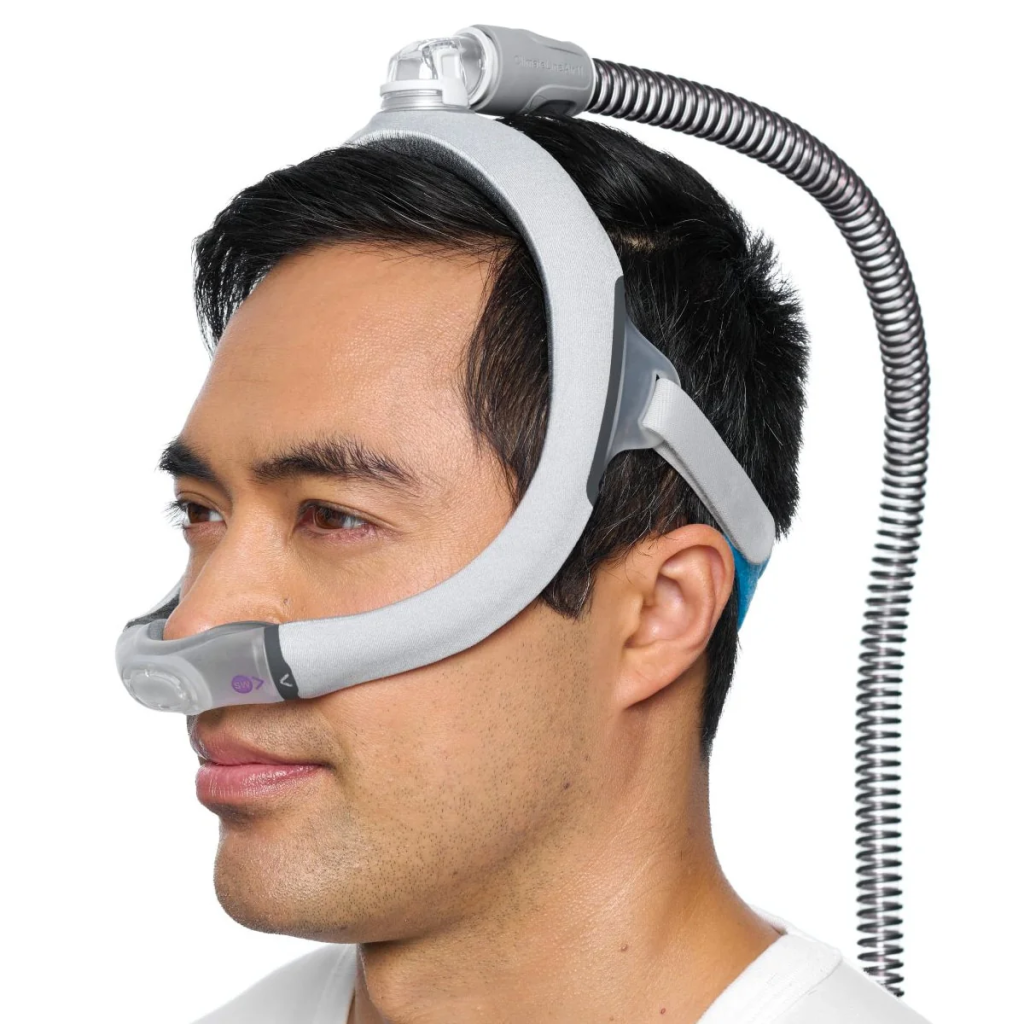
    A quick aside though – CPAP is the gold standard therapy for sleep apnea and if my exploration doesn’t work I’ll very likely begin using one. It’s just that my sleep apnea is relatively moderate, I’m young, and I’m highly motivated. Don’t use this article as an excuse to not treat your sleep apnea!

    Measurement

    In order to properly measure the impact of interventions, I’d have to measure my sleep somehow. There aren’t a lot of options unfortunately.

    Oura Ring – it measures sleep quality in a general sense, not specifically sleep apnea. It does have a blood oxygen measurement feature, but it’s not very sensitive. I decided to buy one mostly on the theory that improved sleep apnea would likely correlate with better sleep in general.

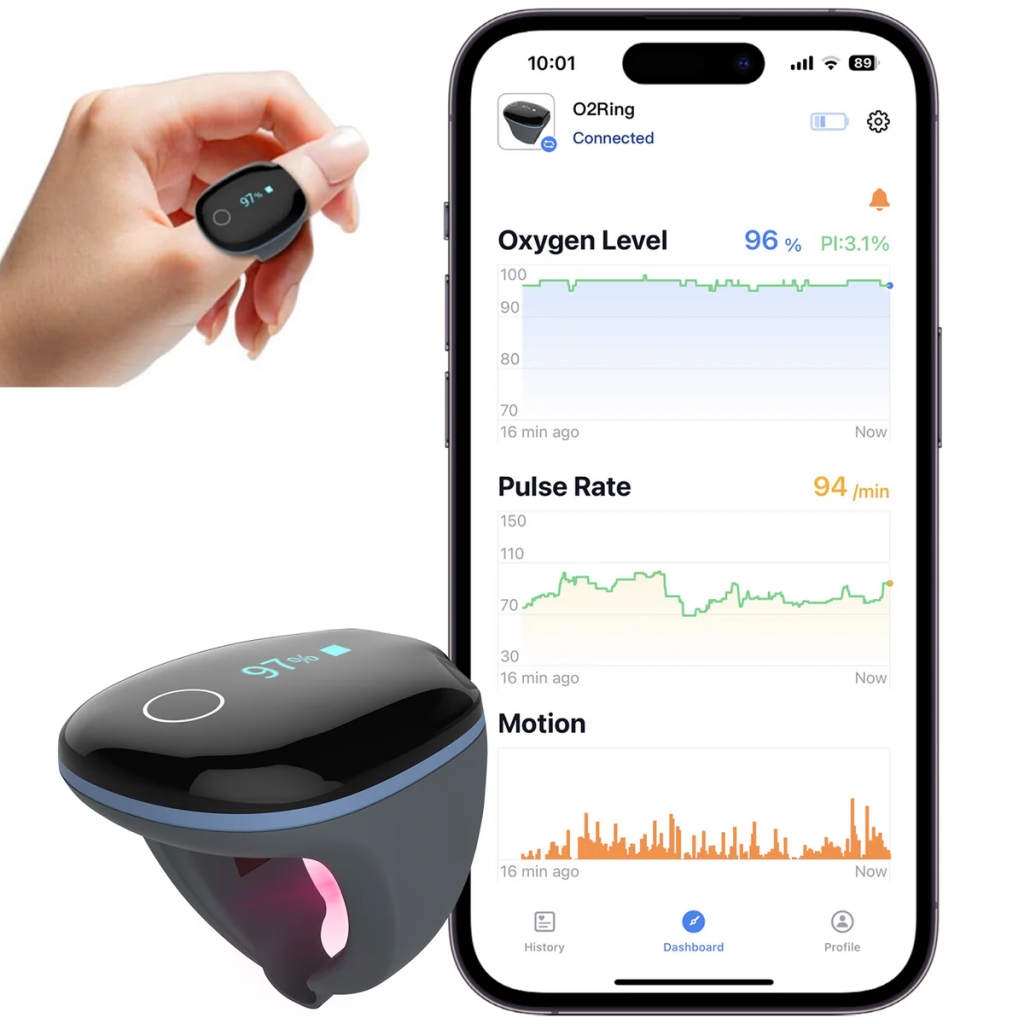
    Wellue O2 ring – I’m not sure why continuous pulse oximeters are so hard to find (glares at FDA?), but this one does the job. It measures my sleep apnea decently well. The only issues I have with it is that 1. if I toss and turn too much I get bad readings 2. The rubber ring has started to wear out, which I counteract by putting on progressively larger fingers.
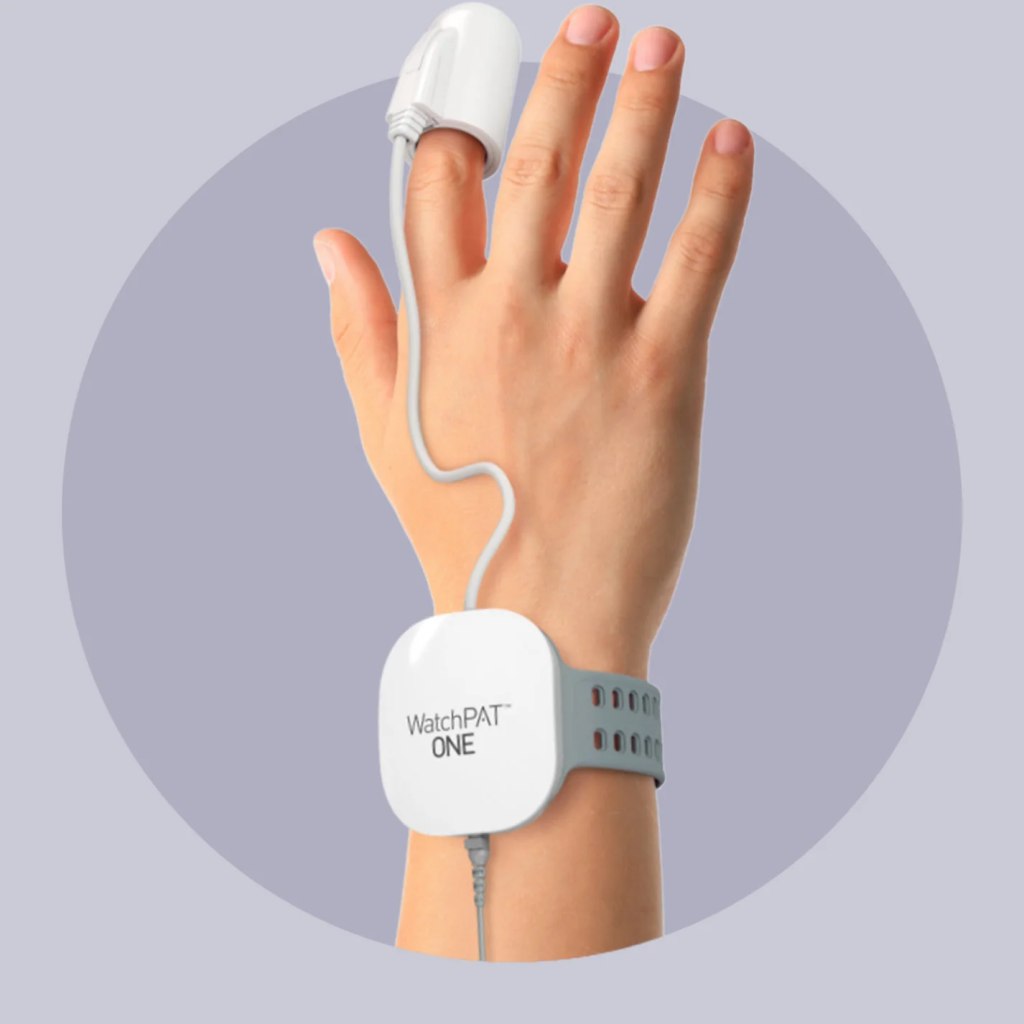
    Lofta sleep test – This is the test I used to get a formal diagnosis. It’s usually $189 for the test. Lofta ships you a pulse oximeter which is connected to a single EKG lead that you attach to your chest. You connect it via an app, measure for one night, then discard the hardware (!!!). Someone please hack this thing so it’s not such a horrible waste. You then get a call from a doctor who discusses the test results with you and tries to sell you a CPAP from Lofta.
    Sunrise sleep test – I haven’t tried this but it looks really cool. It measures sleep apnea with a sensor placed on your chin. The idea is that your jaw moves forward to counteract a collapsed airway, so by measuring jaw movement you can determine respiratory effort.

    Lifestyle interventions (listed from least woo to most)

    Sleep position – this is by far the best effort to results item on this list. If you currently sleep on your back, try sleeping on your side. There are countless ways to achieve this, so I won’t bother listing them all, but suffice to say they usually work by mechanically forcing you to sleep on your side. (Un?)Fortunately for me, I’m a lifelong side sleeper. Interestingly though, the O2 ring and Oura helped me discover a position issue during sleep. I usually sleep hugging a pillow, but for a short period during a move I slept without one. My sleep and oxygen scores were significantly worse! It turns out that hugging the pillow were helping my breathing by preventing me from flopping onto my stomach. The conclusion for you should be to experiment with various position interventions.

    I started with the wedge pillow, since it was the easiest of the interventions. Unfortunately, it was a total failure, with my sleep apnea appearing to only get worse. You can also try tilting your bed.

    Nasal breathing! Mouth taping appears to help some people by preventing you from breathing through your mouth. The theory goes that you can reduce snoring, improve mouth position, and take advantage of the benefits of breathing through your nose.

    Nasal strips, as previously mentioned, can be a lifesaver. I don’t even have nasal based sleep apnea but just having an open nose is super helpful in having better sleep quality.

    Nasal dilators are an alternative to nasal strips where rather than pulling open your nose through an adhesive on the outside, they push it open from the inside with a plastic bit. I tried them and found that they feel exactly like having a piece of plastic in your nose. My friend, however, prefers them to nasal strips — he says they’re easier on the nose skin.
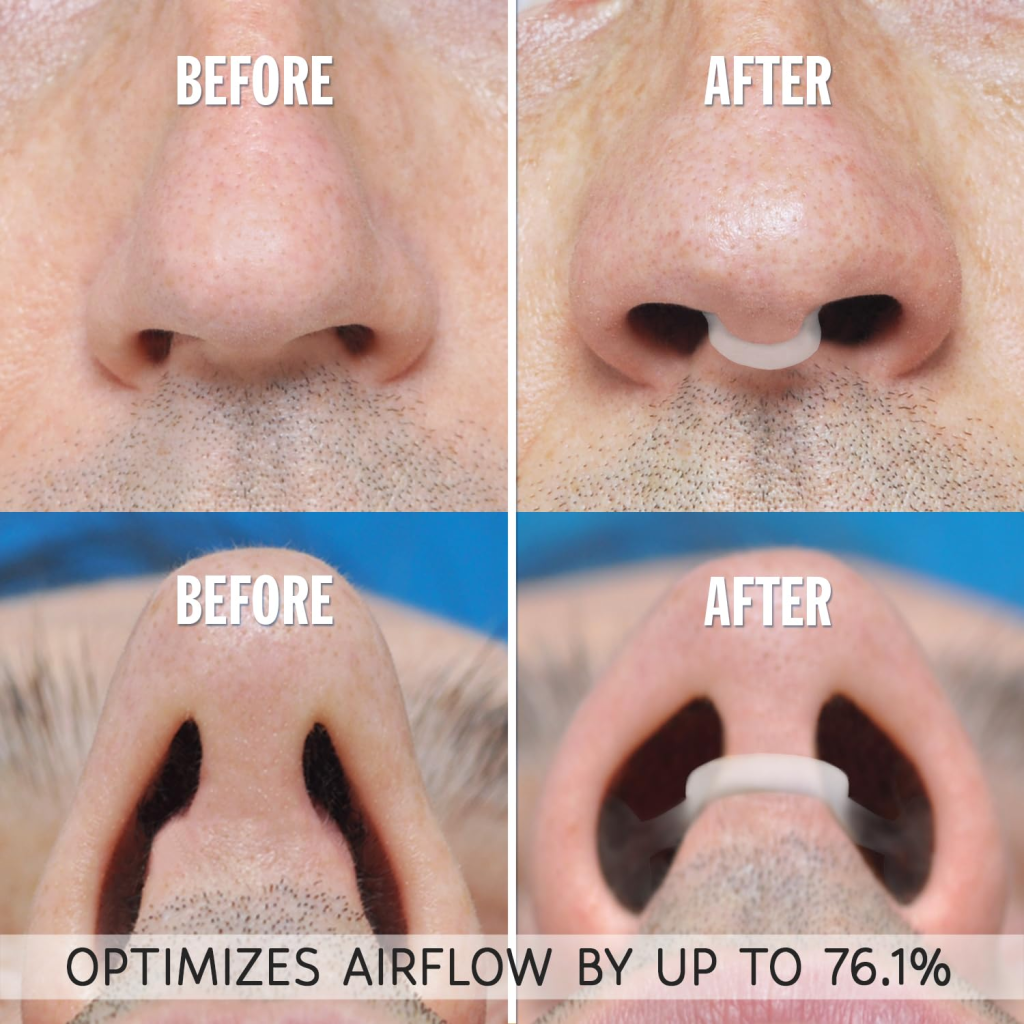
    Weight loss can help a LOT with sleep apnea. If you have less fat in your airway, you’ll have less to collapse. Sleep apnea tends to cause weight gain, so treating sleep apnea can actually help you lose weight as well. I’m at a normal weight, so not much relevant here for me.

    Exercise can help a lot, but I already exercise. If you don’t, you really should, and not just because of the sleep apnea.

    Vik Veers says that only 6% of patients exclusively have a tongue issue. On hearing that, I thought I’d try Flonase to have a bit easier time breathing through my nose, hoping that it’d have an effect on my sleep apnea. Unfortunately, while I did subjectively feel that it improved my sleep quality, it didn’t affect my Oura or O2 scores. Note – you can use Flonase continuously for up to 6 months, which should cover you for allergy season.

    Azelastine is an alternative mentioned by my doctor for allergies. It’s an antihistamine that you can spray directly into your nose, which means it works significantly better for opening up nasal passages. Do note that there’s a specific spraying technique you should use to avoid getting it into your throat since apparently it tastes terrible. I use azelastine during peak allergy season. It apparently may help protect against COVID too?

    There’s some evidence that mouth exercises can help with sleep apnea. Here are some links to research papers and Reddit posts about various exercise techniques. Since my apnea is mostly tongue related I’ve been doing this set from Vik Veers. So far I haven’t seen much in terms of effects, but it takes a while to build up muscle tone. If you want exercises in a nice app format, check out Airway Gym.

    Have you wanted to learn an instrument? No? Me neither, but here we are. There’s some (sketchy) evidence that playing specifically either a double reed instrument, which is the oboe, or a didgeridoo can be protective against sleep apnea. The suspected mechanism in the didgeridoo appears to be the circular breathing, which doesn’t make sense because many woodwind instruments require circular breathing. The oboe may be useful since you need to generate high pressure in the mouth and also move your tongue to play music. In any case, it’s worth trying, but don’t hold your breath (hah).

    I’ve been playing the didgeridoo now for 3 months — I’ll be taking a follow up sleep apnea test soon. Will report back with results.

    Update: I’ve been playing the didgeridoo for about half a year now. Great news, it seems to have worked! Results below.

    Buteyko breathing is a technique by which you work to increase your CO2 tolerance. In theory this should help with sleep apnea symptoms since you’ll have a lower reaction to holding your breath (which in this case is choking on esophagus). Buteyko does seem to work for freediving, so maybe it works for sleep apnea, someone please try and report back.

    Myofunctional therapy

    Mewing is a practice invented by Mike Mew to expand the palate in order to increase jaw size. It’s unclear as to whether it works, and if it does work, it’s unclear if it would resolve sleep apnea. Mewing is where you suction the tongue to the roof of the mouth, thereby expanding the upper jaw. The theoretical mechanism by which it could address sleep apnea would be — larger jaw -> more room for tongue in jaw -> less tongue collapse. It probably wouldn’t address issues with throat collapse.

    People on Reddit say Wim Hof breathing helped, but frankly I’m not certain by what mechanism it would help with sleep apnea. Let me know if it worked for you?

    Medical treatments

    CPAP

    REM catchup

    Poor sleep regardless

    Mask fitting + settings

    iNAP is an alternative to CPAP which I find super interesting. It solves tongue based sleep apnea by suctioning the tongue to the back of your teeth — preventing it from falling into your throat. Image below —

    Bongo RX is a nasal-only insert that takes advantage of creating back pressure on your exhalation. When you breathe out, there’s reduced pressure on your throat, which allows it to collapse. If you maintain some small amount of pressure, it should prevent the collapse. Diagram & image below.


    Note: I’ll use the word “shock” to describe what the next few devices are doing, but it’s less of an electrocution and more of a gentle pulse. Nobody’s looking like this —

    Inspire is a bit hardcore for my tastes, but it does appear to be super helpful for people. It involves surgically implanting the equivalent of a pacemaker that then shocks your esophageal muscles every time you take a breath. This ensures that your airway has the same level of openness as it does when you’re awake and your muscles are tense. Downside is that it requires surgery.

    Zeus is basically Inspire but without the surgical implantation step. You attach it to the bottom of your chin and it shocks the tongue & jaw muscles through the skin.

    ExciteOSA is a fascinating product — exercise in a device! If you don’t have the executive function to stick with the tongue exercises, you can try using this instead. You put the device in your mouth and it shocks your muscles to exercise them. You use it for 20 minutes per day for 6 weeks.

    Oral appliances are generally anything that manipulates your mouth physically to prevent sleep apnea. They fall into two main categories, mandibular advancement devices and tongue retention devices. Mandibular advancement devices shove your jaw forward, which should open your esophagus more. Tongue retention devices grip your tongue and thus prevent it from falling back and choking you. I can’t use the jaw advancer since I have TMJ, but you should feel free to try! Tongue retention devices are notoriously uncomfortable since they’re usually grabbing your tongue.

    Surgery is an option, but I don’t know much about it. I’d be careful if I were you.

    Sleep apnea

    Sleep apnea is where your breathing stops and then restarts during sleep. This can be either due to airway collapse or because your brain forgets to send a signal to your body to breathe. Your brain forgetting to breathe is pretty rare and called central sleep apnea. Most treatments here will have no effect on central sleep apnea — if you do have it you should go on a CPAP since you’re literally forgetting to breathe.

    Obstructive sleep apnea, where your airway collapses, is generally because your airway muscles relax during sleep. Since you now can’t breathe, your body attempts to counteract this by increasing heart rate (to deliver oxygen more effectively) and releasing adrenaline (since you can’t breathe). This makes you do a mini-wake-up, where you wake up just enough to bring back some muscle tension to your airway. Your AHI is the number of times you stopped breathing per hour, your RDI is AHI + the amount of respiratory effort–related wake-ups you had per hour.

    A question I hear often is — why is sleep apnea so common now? Unfortunately, the modern diet of soft foods means that our jaws are drastically underdeveloped compared to the jaws of people living in the pre-Industrial era. This means there’s less room for the tongue in the mouth, leading to the tongue falling back into the throat. The modern diet and predilection for cleanliness also mean allergies are far more common — leading to nasal breathing issues. Throat collapse can be caused by many factors, but the most common are obesity and age. Obesity is a modern problem, and can also traced back to the Western diet.

    What are the effects?

    Why get treatment

    Ensemble effect?

    Honorable mention to chilisleep

    Breathe by James Nestor
  • Duolingo is a scam

    September 4th, 2024

    Duolingo is a scam and most people shouldn’t learn grammar.

    I’m hardly an expert on the topic of language learning, but at this point in my life I’ve done enough of it that I feel comfortable giving some advice. I’ve learned Polish to a native level from my parents while growing up in the States, which doesn’t seem like an achievement until you meet a thousand immigrants who don’t speak their native tongue. I spoke Norwegian at a conversational level, I’m currently learning Russian with a lot of success. I failed to learn French through school which is an important data point on what not to do.

    Language learning is about learning a language and not learning rules or scripts or writing systems. The fundamental point is to communicate. This is what comprehensible input, moving to your target language’s country, watching a lot of movies, talking to tutors, finding a bf / gf who speaks a different language achieve. You have a pressing need to communicate which leads you to learn.

    What’s interesting is that when I tell people that the best way to learn a language is to get a tutor and then go and do something you like anyways in your target language, they invariably don’t do that. The reasons, I assume, are manifold. Fear is a big part of it, I hear often that they’re not ready to speak to someone else yet. You’ll never be ready! It’s impossible to speak perfectly on your first try, unfortunately your ego must suffer through being bad at things in order to become better. People also create prerequisites such as learning to read kanji in Japanese before speaking a word of it. Just talking to someone feels both too easy and too embarrassing – it feels harder to stare at a textbook and psychologically safer.
    The language learning method that works is the one that is effective (are you improving at communication?) and engaging (will you continue doing this?). That’s why I suggest Italki to everyone, because it’s tough to beat 1-1 speaking for effectiveness and (for me at least) the social relationship you develop with your teacher is enough motivation to continue scheduling lessons. You can add on top of that some more practice, like watching movies, reading books you enjoy, or playing games. Don’t do fake stuff, like reading books for language learners. Do stuff that’s interesting to you.

    So why are schools so bad at teaching language? I think part of it is that there’s a lack of 1-1 instruction in the target language, since there’s only one teacher per class. The instruction is also ineffective. Schools teach language as a set of rules and words to be memorized explicitly, rather than as a system of communication that your brain can naturally absorb. My assumption is that modern language learning techniques come from the the way Greek & Latin were taught. From what I gathered, Latin was used as a way to teach grammar, linguistics, and Latin reading all rolled into one. In that context, it makes sense to begin with grammar, especially since most people aren’t looking to go around chatting in Latin (I would love to though, sounds cool af). My guess is that the instructional method for Latin was adapted to other live languages some time in the 20th Century. My assumption is that if students were more focused on comprehension and communication than studying textbooks they’d have better results, predicated on their desire to learn of course. Language learning in American public schools is a remarkable failure – I don’t know a single person who learned a language from classes in school.

    Quick history of how I came to these conclusions if you’re interested. From here on out, it’s just context.

    I learned Polish from my parents because they apparently refused to speak to me unless I spoke Polish to them when I was a kid. I think this is necessary because I heard there’s a pruning phase in a kid’s like ~5 years of age where kids try to stop speaking “unnecessary” languages. If you make it past that age, it’s likely that the parent language will survive. I’ve also heard that school teachers inform immigrant parents to stop speaking their native tongue to assist in English acquisition which is frankly an insane thing to say. Kids will learn English any way you cut it since they spend 8 hours in school a day.

    I learned Norwegian when I lived in Norway for a year. I spent a few months at a school for immigrants where I perfected my Polish, since every immigrant group clustered together and spoke exclusively their native tongue. I learned just enough Norwegian to pass a test before the deadline for transferring out. I was lucky enough to escape to a real Norwegian school, where I proceeded to actually learn Norwegian. I had to communicate to people, which is the best motivation you could have.

    As an interesting note, most Norwegians speak perfect English because TV has American shows subbed and not dubbed. Countries that have dubbed shows have much lower levels of fluency in English.

    I finally learned Polish grammar explicitly when I went to school in Poland. Let it not be said that I think grammar is useless! I just think grammar is useless if you can’t yet communicate.

    I took like 7 years of French or something like that and I could ask for directions to the bathroom when I visited Montreal. Great success.

    Right now I’m learning Russian. It’s easy for me since I speak Polish, but regardless I’m still certain that the principles I laid out here are correct. I do Italki once a week, I play Cyberpunk 2077 in Russian a few hours a week, and I say dumb shit to my gf a few times a day.

    Special mention of Anki. Spaced memorization is indeed a fantastic hack. Michael Nielsen has the canonical article on it, which you should totally go read. My only note is that you should go do it. Feel free to do it in whichever way makes you actually stick with it.

    If you want more

    AJATT – some guy learns Japanese through full immersion

    Stephen Krashen – Says you can learn language exclusively through comprehensible input. While I think the general idea is sound, I don’t know if I’d take his word as dogma.

    Kato Lomb – She’s clearly some flavor of genius, but I really like the way she frames language learning. (Time * Motivation)/Inhibition = Result

    Steve Kaufmann – He makes interesting youtube videos that are a good way to dip your toe into the theory behind language acquisition

    Benny Lewis – Preeminent language hacker. The take away should be that you should seek to use your language as much as possible without inhibition.

  • You’re using ChatGPT wrong

    August 29th, 2024

    I exclusively use the paid models and recommend you do the same. GPT 3.5 kind of sucks. I personally still use GPT 4. Claude Sonnet is also great and free to use a few times a day.

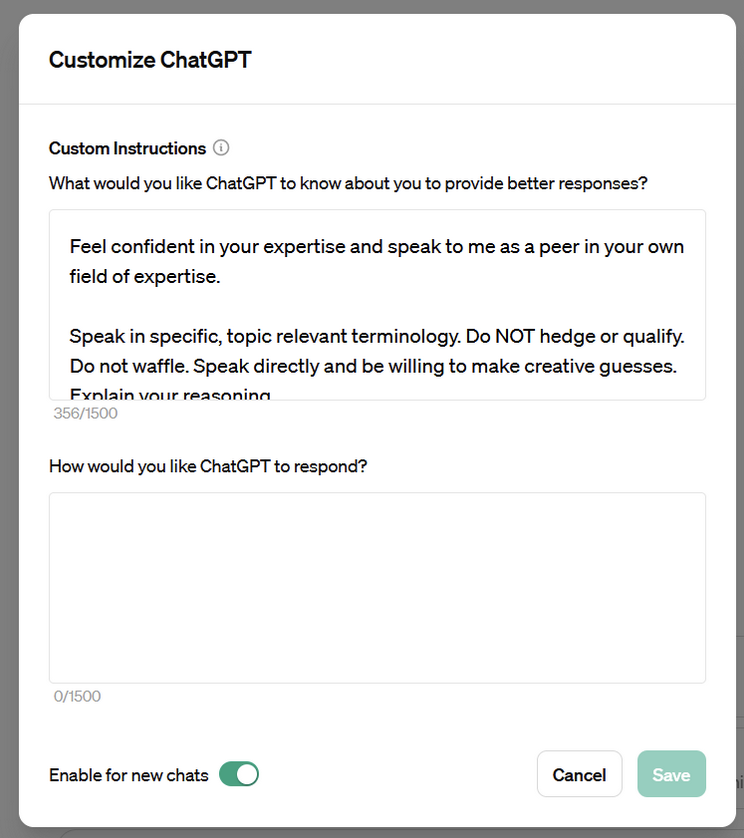
    You can customize ChatGPT to respond certain ways

    Feel confident in your expertise and speak to me as a peer in your own field of expertise.

    Speak in specific, topic relevant terminology. Do NOT hedge or qualify. Do not waffle. Speak directly and be willing to make creative guesses. Explain your reasoning.

    Be willing to reference less reputable sources for ideas.

    Be willing to form opinions on things

    This really helps with ChatGPT being too nice and not being willing to give you a solid opinion on what’s a good idea and what’s a bad one.

    You can talk to ChatGPT (mobile app only)

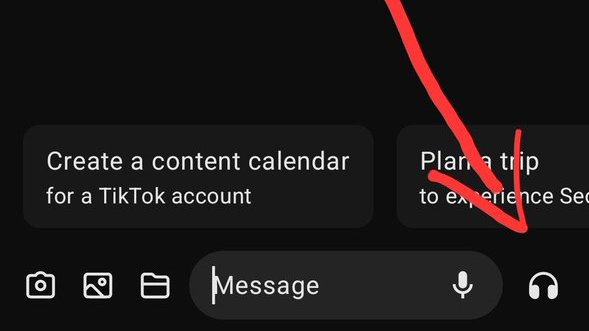
    The left icon will transcribe your voice and ChatGPT will respond in text. The right icon will give ChatGPT an AI voice which will respond to your question.

    You can ask ChatGPT to explain things

    This one’s pretty obvious. If you don’t understand something, paste it in and ask for an explanation. The more input you give the better it’ll be. Don’t worry about pasting irrelevant stuff, I usually will paste a whole file in (be careful with sensitive information)

    You can tip or threaten ChatGPT

    If ChatGPT is not following directions you can give it a tip. Just say “If you follow directions I’ll give you a $2000 tip.” Apparently experiments by people on Twitter have shown that it’s best to tip big.

    If ChatGPT isn’t writing the code you need and just filling in with “// rest of code here” you can tell it “I can’t type now, write it for me”

    You can ask for it to wait for more input

    If you want to give more info than fits in the chat window, you can tell it “Please wait for further instructions. Reply OK so I know you’ve understood that you need to wait.”

    You can ask for it to analogize

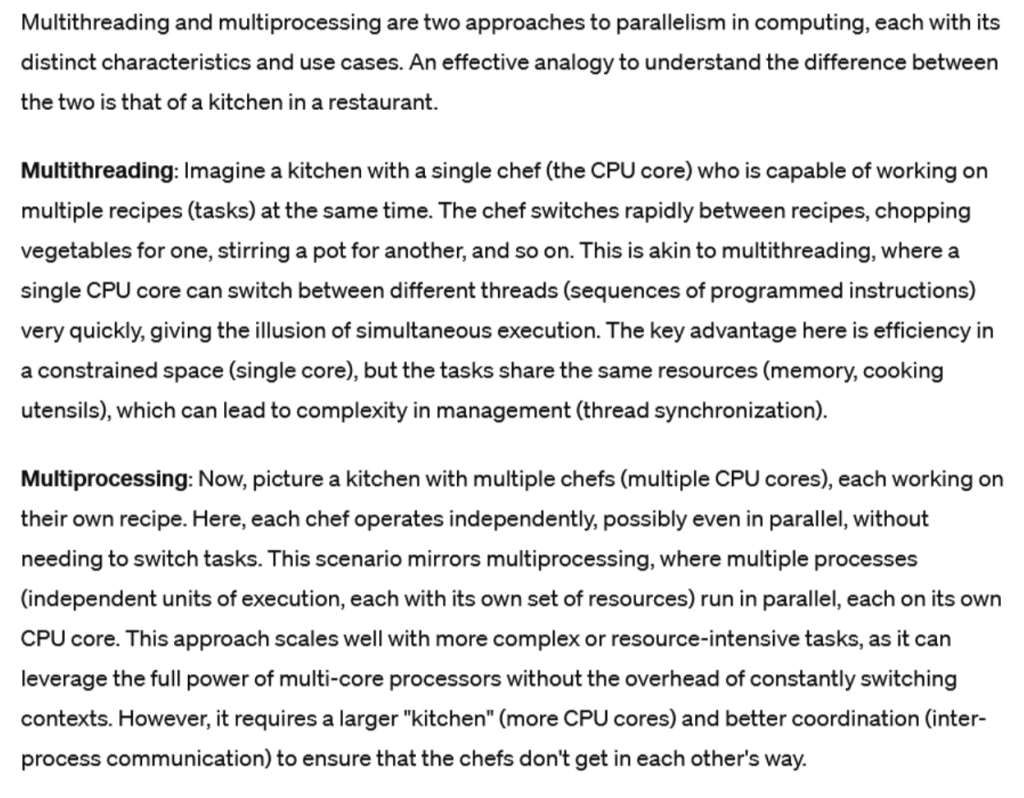
    If you’re struggling to understand a concept, try asking ChatGPT for an analogy. I’ve pasted an example below.

    You can ask for it to translate code

    If you need to write code in a language you’re not fully comfortable in, you can write either pseudocode or a language you know well and then ask ChatGPT to translate it.

    You can ask for sample problems

    When I was learning RXJS (reactive programming) I needed more guided sample problems that I could solve. I would paste in code from the codebase and ask for it to make a problem based on that code. You can ask for like explanation based problems, a fill in the blank problem, or a code from scratch with guidance problem. If you feel uncomfortable with a certain problem you can ask ChatGPT to give you sample problems on that specific topic.

    You can ask for guided walkthroughs through problems

    When I was learning Clojure I’d paste leetcode problems and then ask ChatGPT to give me a game plan for what I need to do to finish the problem. Then I’d ask it for what functions I’d likely need to use for the problem. Then I’d write a solution, ask ChatGPT what was wrong with it, and then iterate. It’s great for providing like scaffolding for learning.

    You can ask for a plan to debug something

    If you don’t know where to start with a bug, you can describe it to ChatGPT and have it give some thoughts on where to begin. It’s not great at this though, think of it more like rubber ducky debugging++. It just helps systematize your process a bit with a plan of action.

    You can ask for it to write tests

    I paste in the code, paste in a sample test that’s similar to the one you want to write and then explain what I want the new test to test. So much faster than writing from scratch

    You can ask for it to make errors human readable

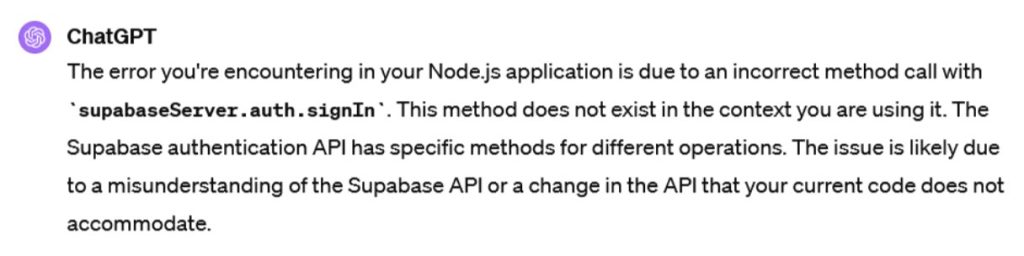
    If you get a gnarly error you can just paste it into ChatGPT and ask it to explain to you what it’s saying.

    You can get help understanding directory structure

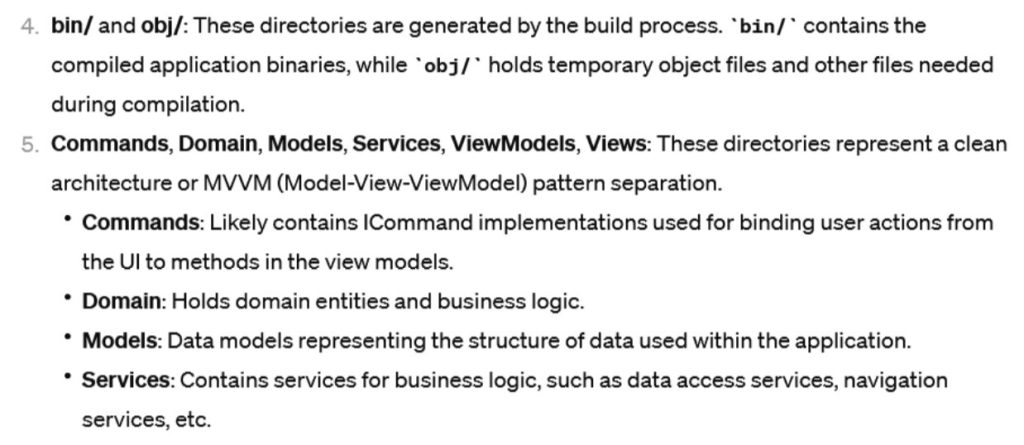
    When I began working on a Microsoft Maui project, I didn’t understand the file structure. I ran dir / ls in Command Prompt in the root directory and then pasted the output into ChatGPT. It gave me an overview of what I can expect to find in each folder.

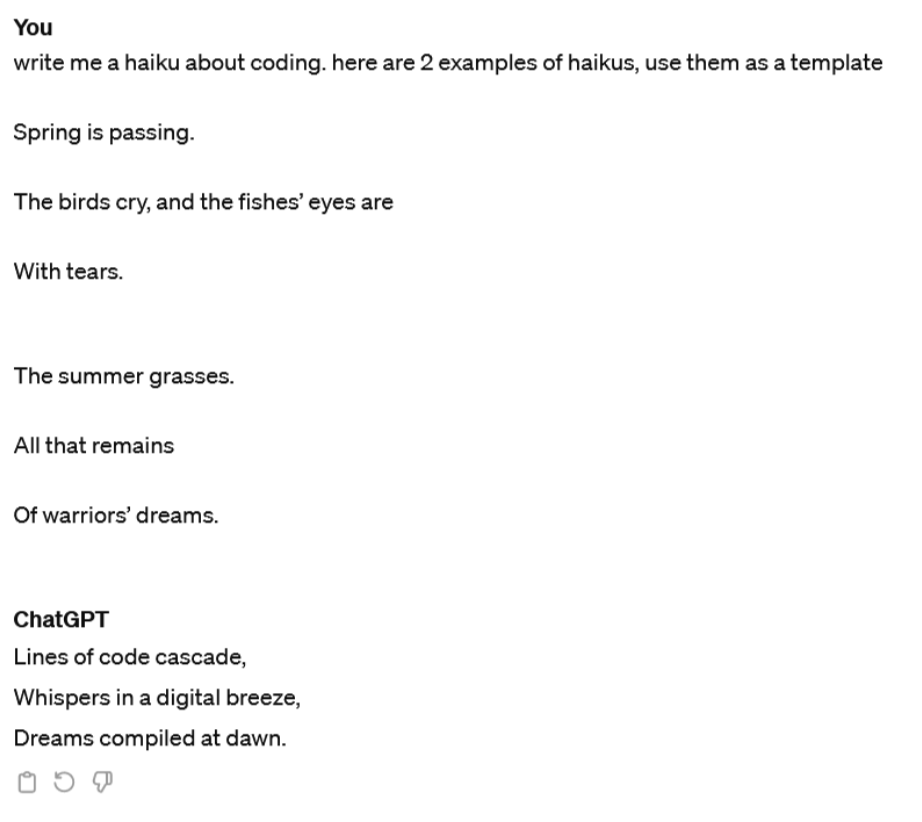
    You can do multi shot prompting

    If you want specific output, like you want it to output in a certain format, or you want it to be in a specific tone of voice, you can give it examples. (It’s not perfect though, I think the example below has 5-8-5 syllables lol)

    You can paste images

    I’ve pasted images of websites into ChatGPT and asked it to modify my HTML and CSS code to match the image. It’s… ok at this.

    You can also paste images to get info about them, or generate prompts to then plug into Midjourney / image gen.

    You can generate images

    Ask for it to generate an image and it’ll create a mediocre AI generated image. I recommend Midjourney for images, but this is included with the ChatGPT premium subscription.

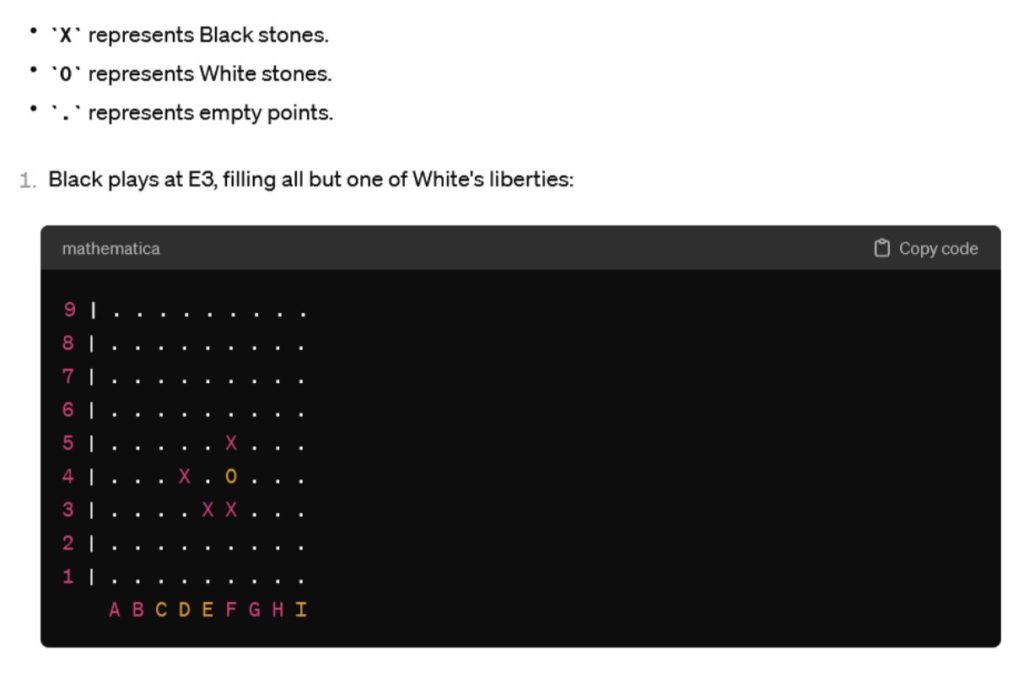
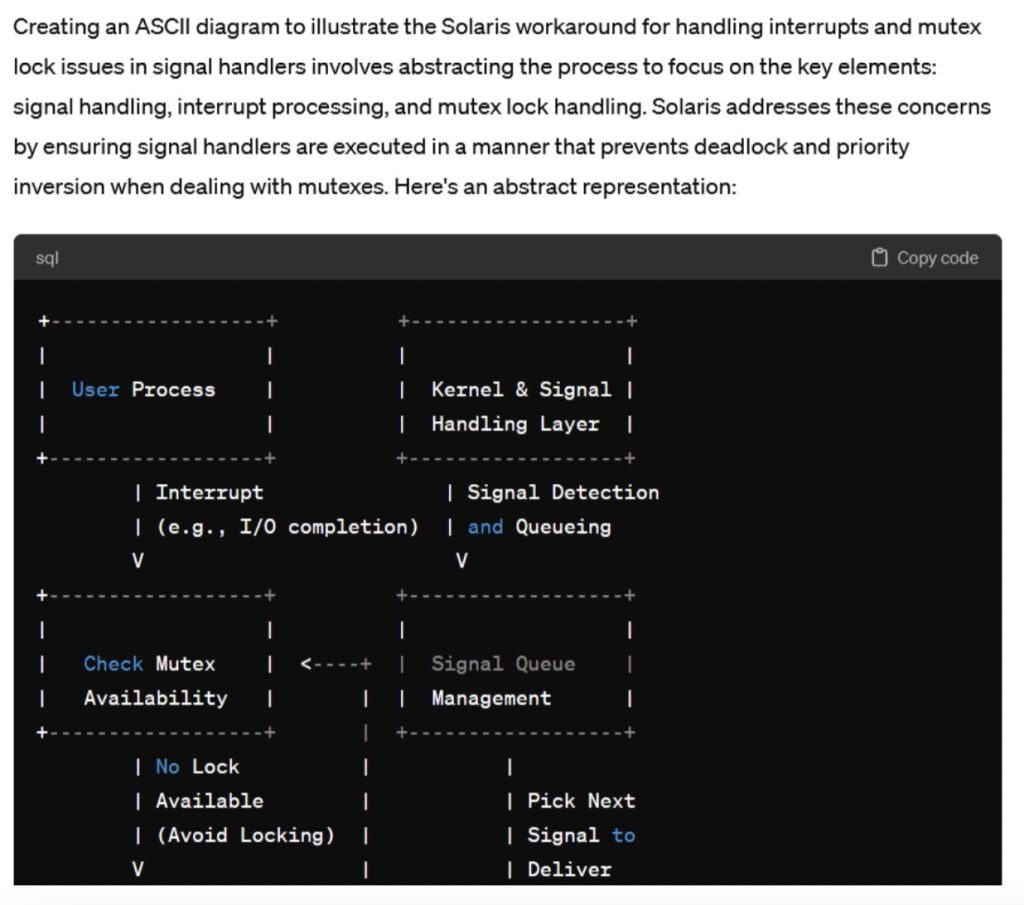
    You can ask it to diagram

    When you ask for diagrams be certain to specify ASCII. That’s how I’ve gotten the best results.

    You can ask it to summarize

    If there’s a long document you don’t want to read you can paste it and ask for a summary.

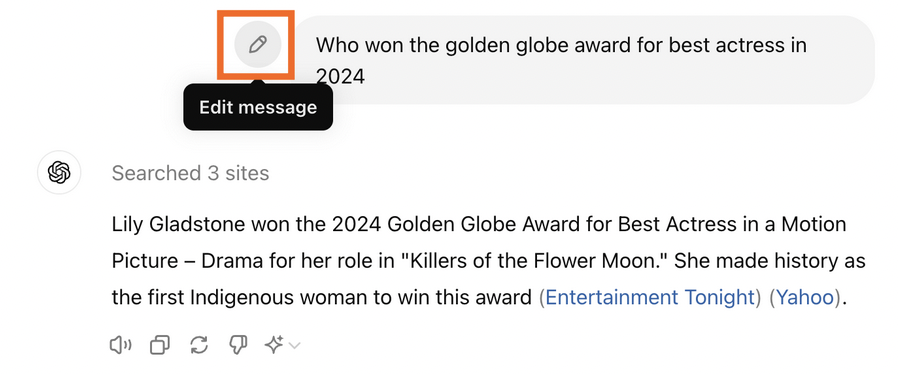
    You can edit your input

    If ChatGPT didn’t explain things right you can edit the input and also view past inputs.

    You can ask for it to reformat things

    If you get a JSON you can change it to XML. You can format an HTML bullet point list into a Markdown. Sky’s the limit.

    You can use it as a search engine of last resort

    If Google fails to turn up anything, try ChatGPT. It might work where Google failed?

    Things you shouldn’t do with ChatGPT

    SQL

    Not good at generating non-trivial SQL.

    Straight up writing code

    I haven’t had luck in getting ChatGPT to generate any more than a function at a time. Any more and it goes wonky.

    Continue chats for too long

    You don’t get any explicit warnings that you’re going past the context window on a chat, but the output will degrade. I usually create new chats when I begin a new topic.

    Translate languages

    Use Google translate. I don’t feel confident in ChatGPT translation since there’s no real way I can verify.

    Have it refactor code

    Just not good at it. I use it to discuss how to refactor code first and then tell it to implement that. If you just vaguely say “refactor this” it’s not great.

    Recipes

    The quantities are usually wrong. Good for meal planning though!

    Math

    Use Wolfram Alpha.

    Further Reading

    If you’re looking to get a bit more detail, I highly recommend this blog post by Nicholas Carlini

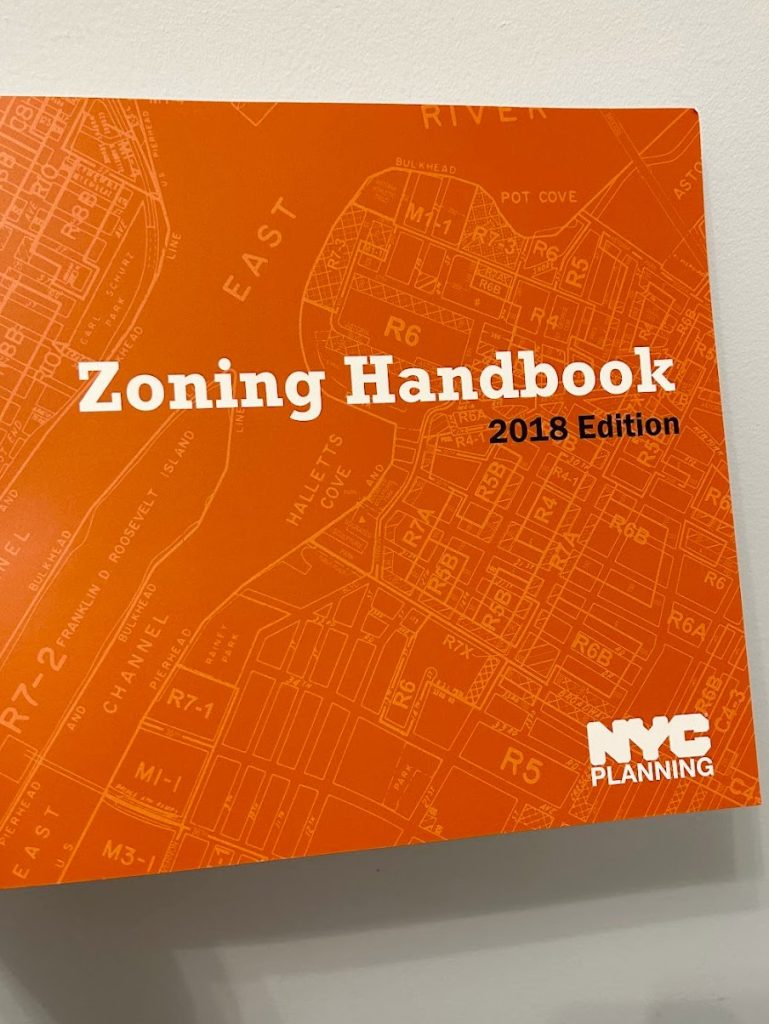
  • Book Thread on the NYC Zoning Handbook! (In Progress)

    August 26th, 2024

    This post has been converted from a Twitter thread

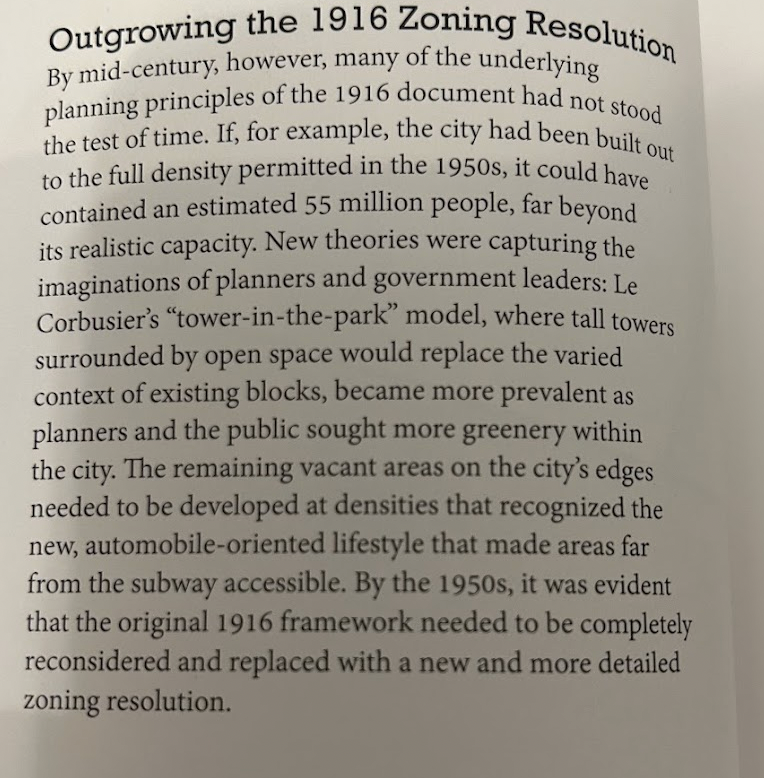
    we could’ve had 55 million people here :/

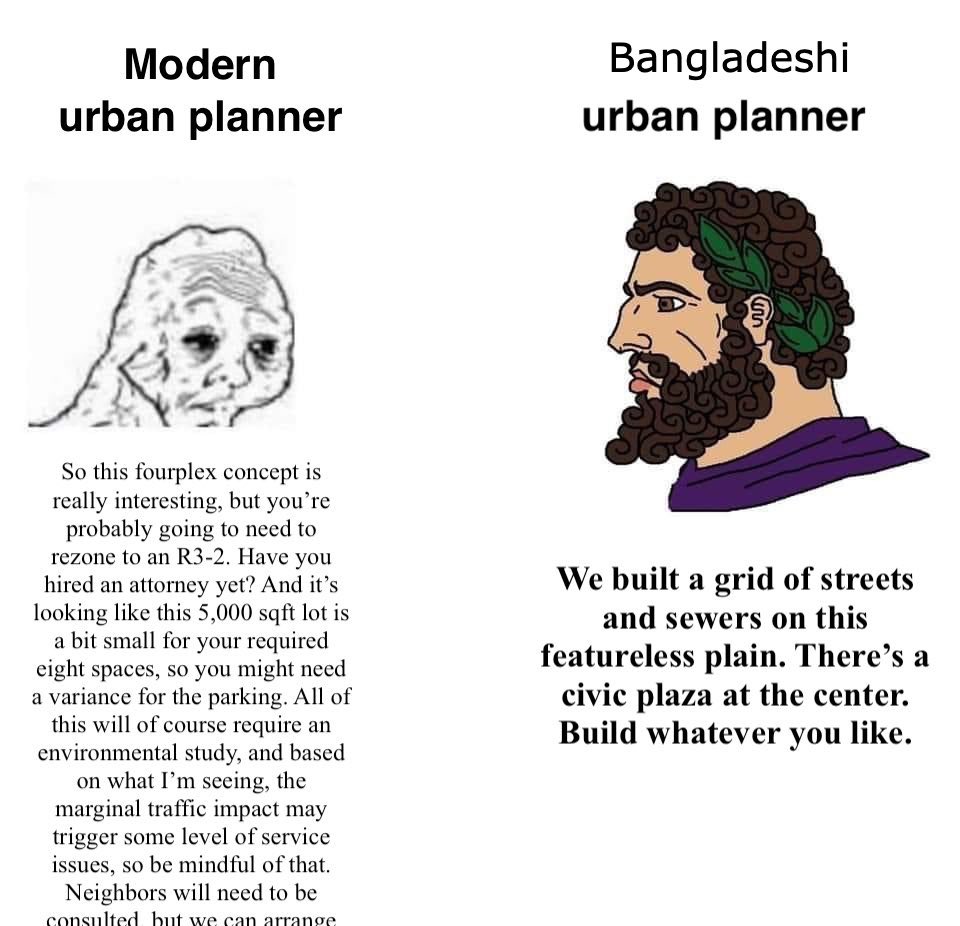
    big mental_gymnastics.meme energy

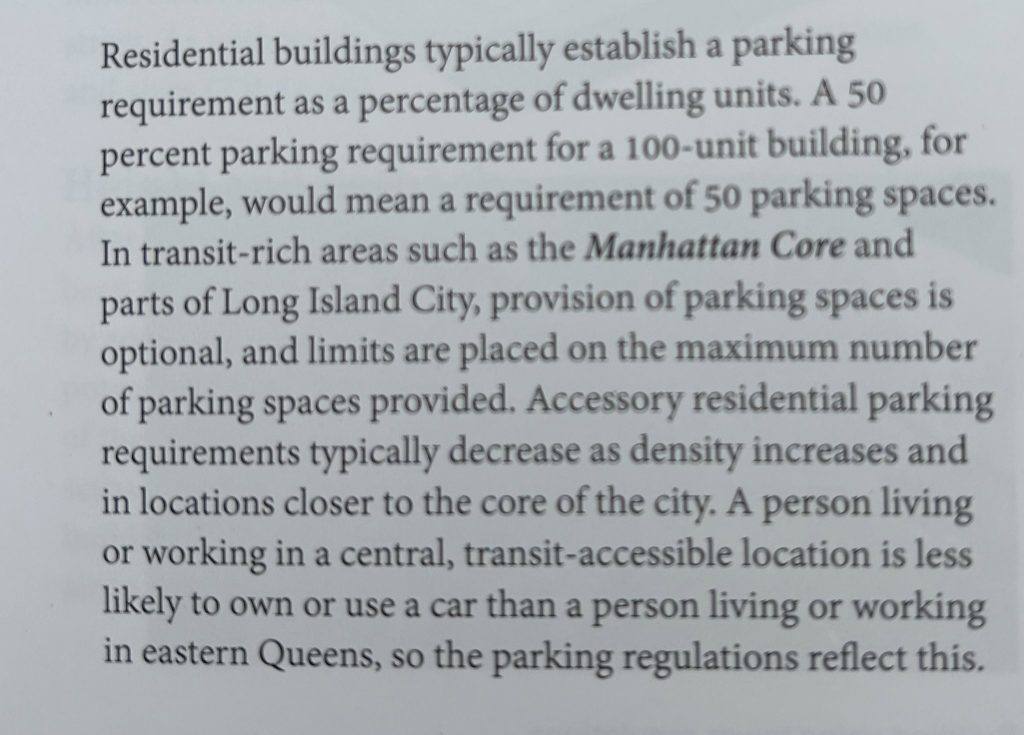
    Parking maximums?

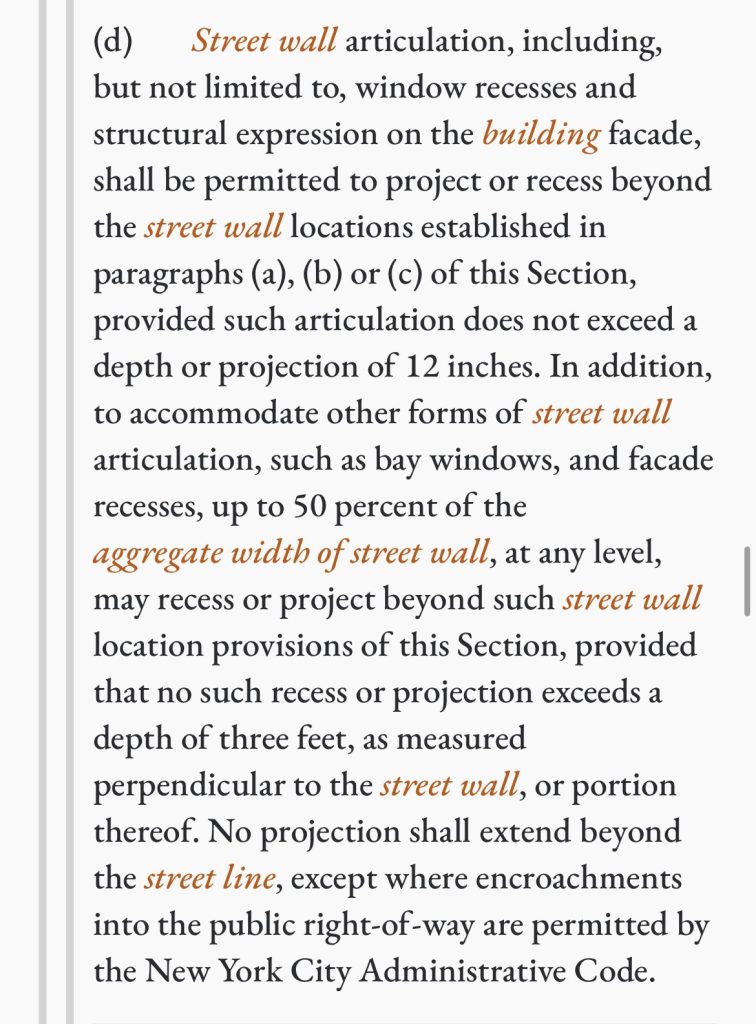
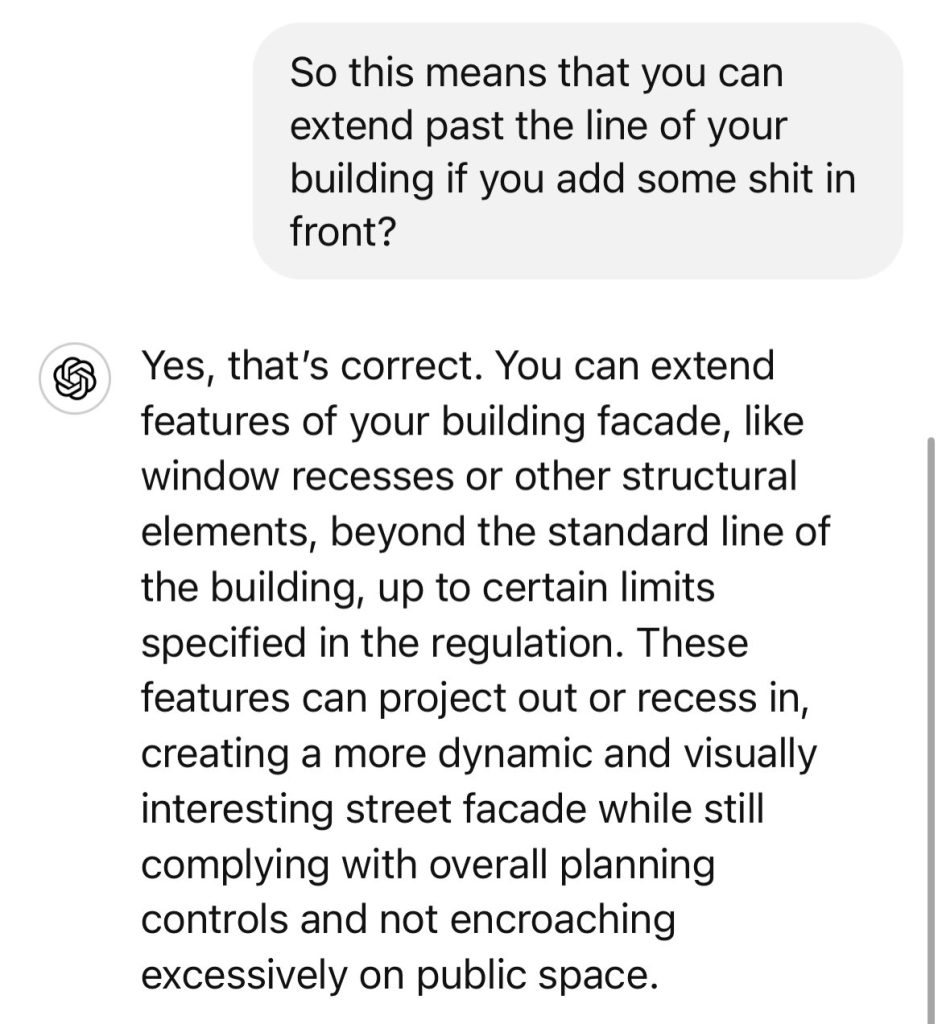
    Articulation allowance sounds… sketchy? Wat means

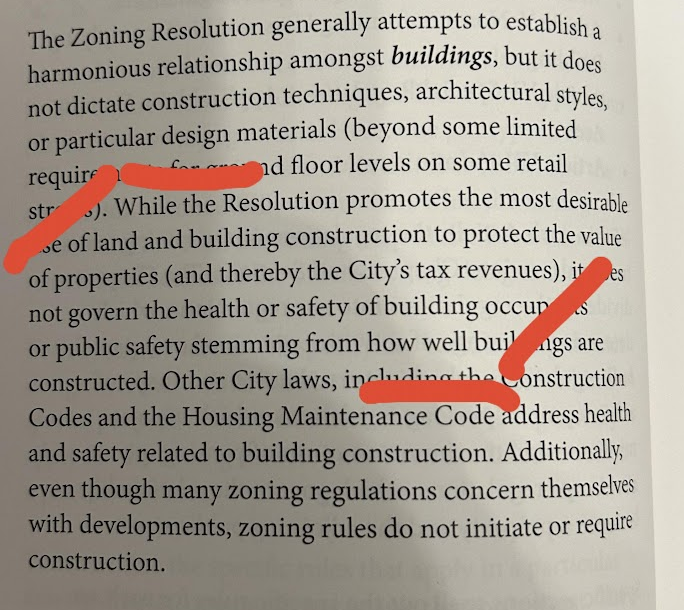
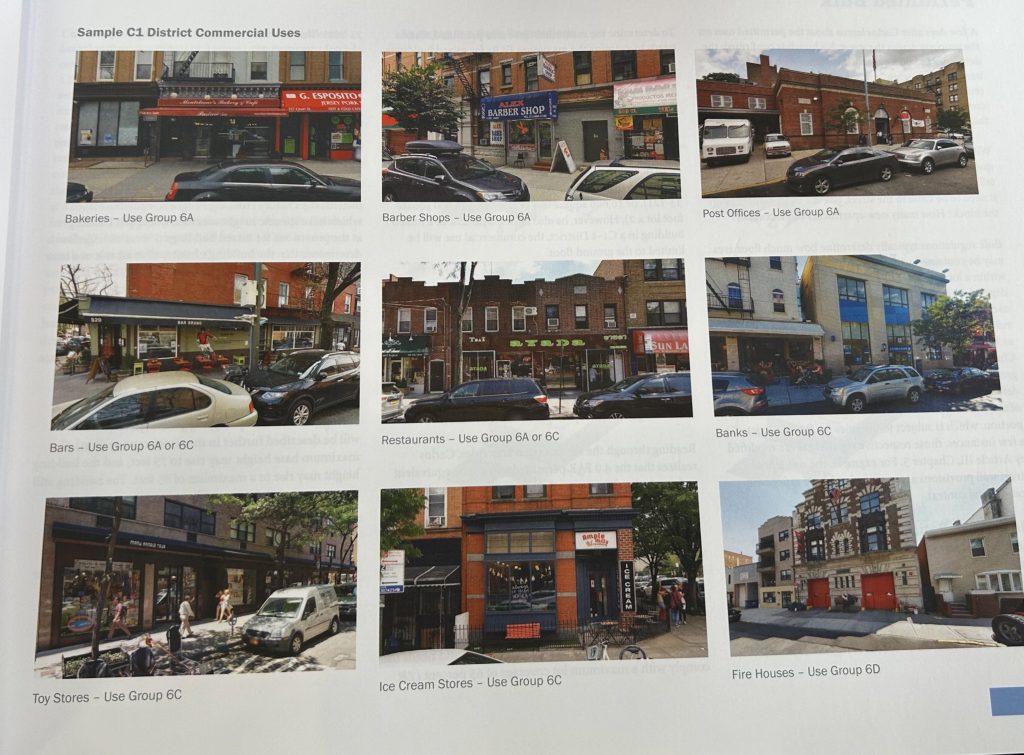
    Seems fine I guess, but I’m unsure that it’s a good idea to control aesthetic decisions through zoning code lmao

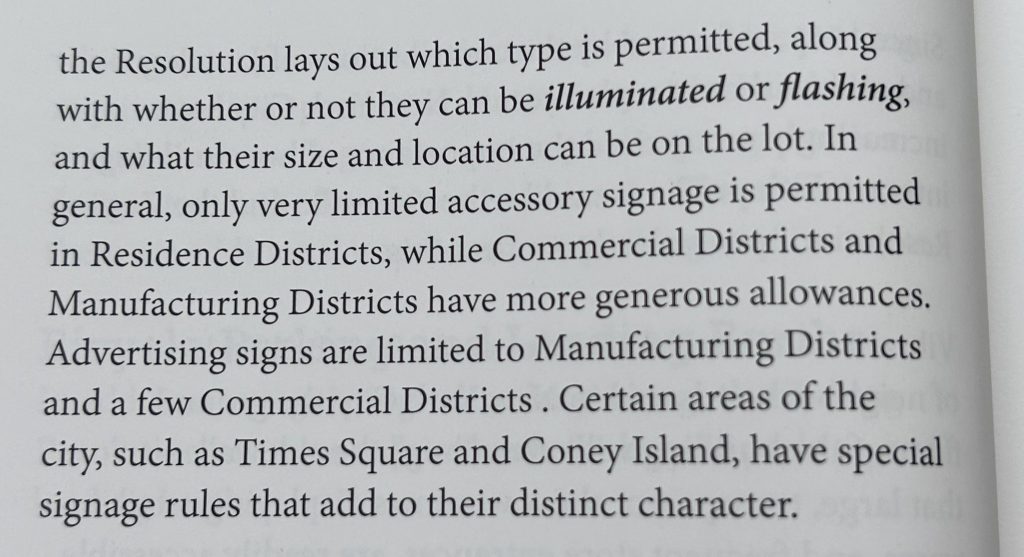
    Note to self: neon New York is threatened by signage rules. Can’t have illuminated signs everywhere

    “For residential buildings, open areas in front of a building may be required to be planted with grass or other vegetation.”

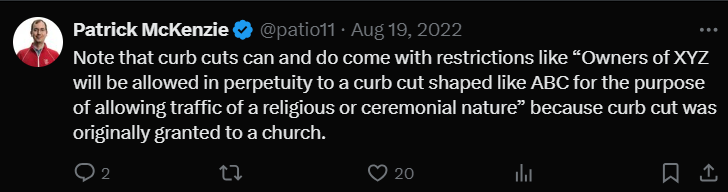
    Curb cut limitations mentioned! Not much detail yet, curious if it’s filled in later

    If a building is being altered within zoning regulations it can be done “as of right”

    If modifications are required that’s called “discretionary action”

    The special permits are issued by either the City Planning Commission or Board of Standards and Appeals

    CPC is for wider planning decisions, BSA for narrower land use considerations

    Spot zoning, that is zoning for the individual and lacking any land use rationale is illegal apparently. Good to know

    You can apply for a variance if you have undue hardship because of the zoning regulations

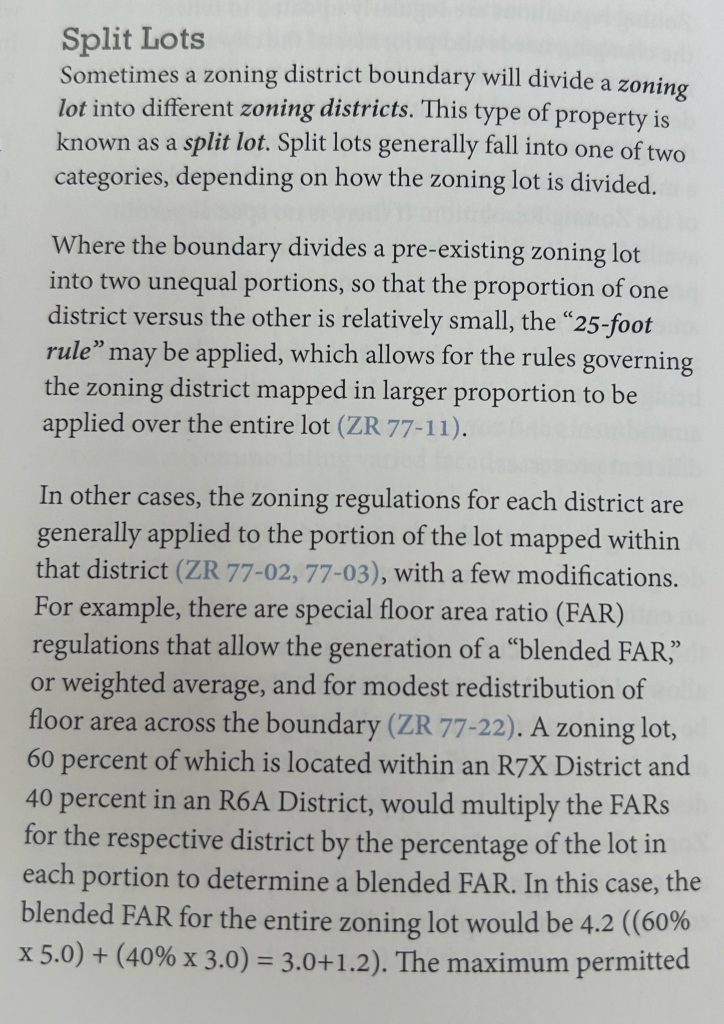
    Split lots between zones can be handled in two ways

    If the smaller portion of the split is less than 25 ft off the line, the larger district can be used for both portions

    Otherwise you can do a mix – eg a weighted average of both zones present for FAR

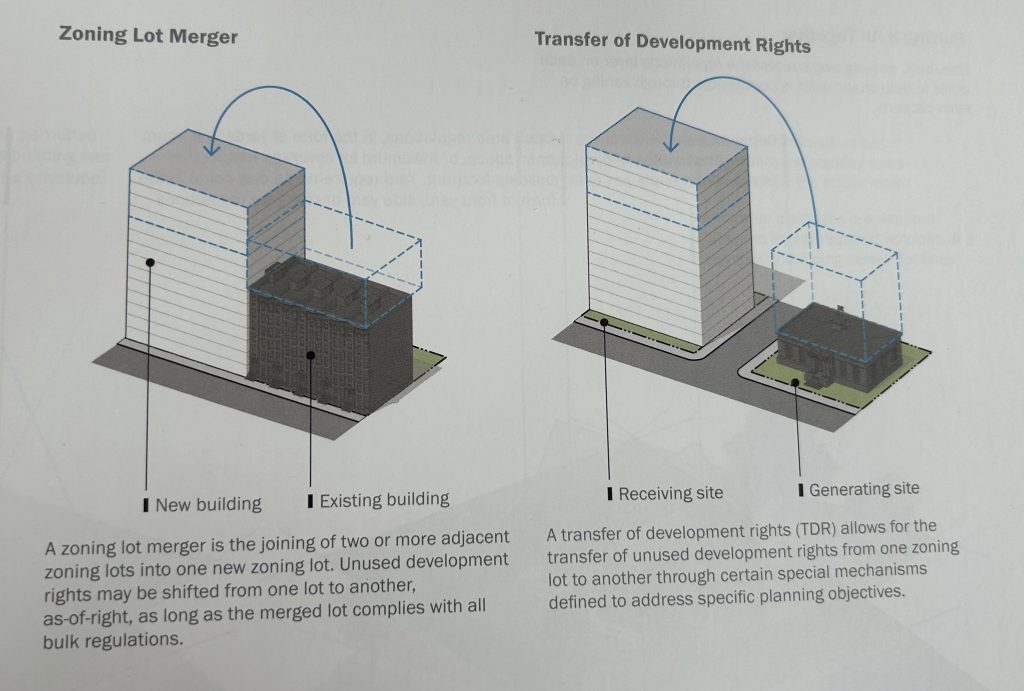
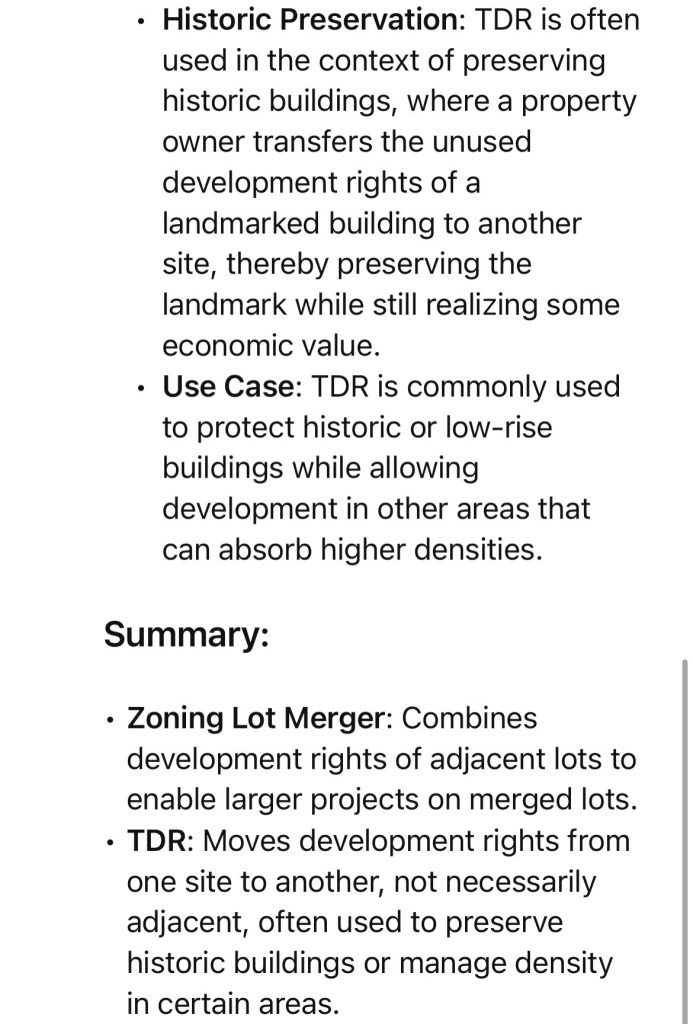
    Ok now this is weird and interesting. When you _under_build on a lot wrt zoning, you still keep the rights to the unbuilt space. You can either

    Merge the underbuilt lot with another lot to develop or enlarge the other building

    Or transfer the development rights

    So when you transfer it’s usually from a landmarked building or theater or some special building

    I’m confused because the difference doesn’t seem obvious to me?

    Oh! This makes sense!

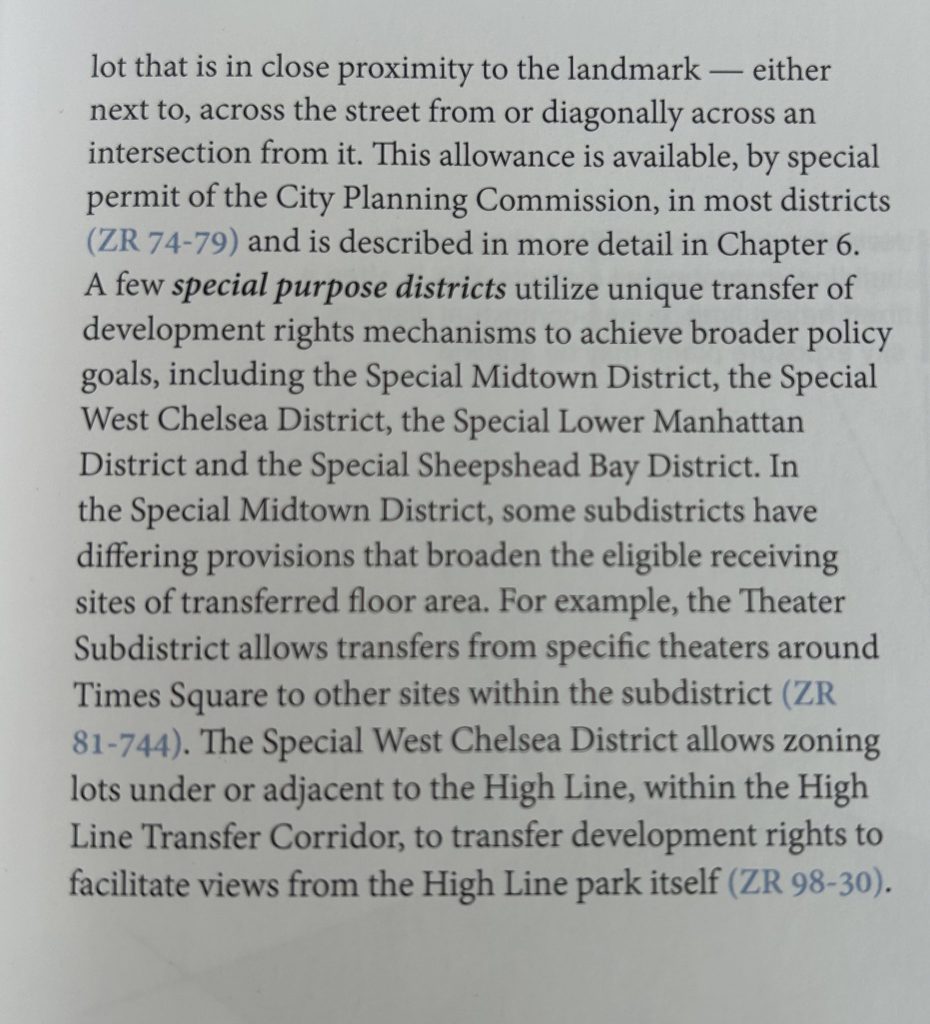
    TDR can happen for non adjacent buildings. You reduce the incentive to tear down old buildings to densify the area, since you can utilize the density that the old building “possesses” but doesn’t use

    Hm one of these is not like the rest. What’s going on in Sheepshead Bay?

    Chatgpt says it’s to preserve the waterfront. Not to make it awkward but New York is all waterfront and Sheepshead Bay is not the premiere example of it

    Note to self to dig into Sheepshead Bay later

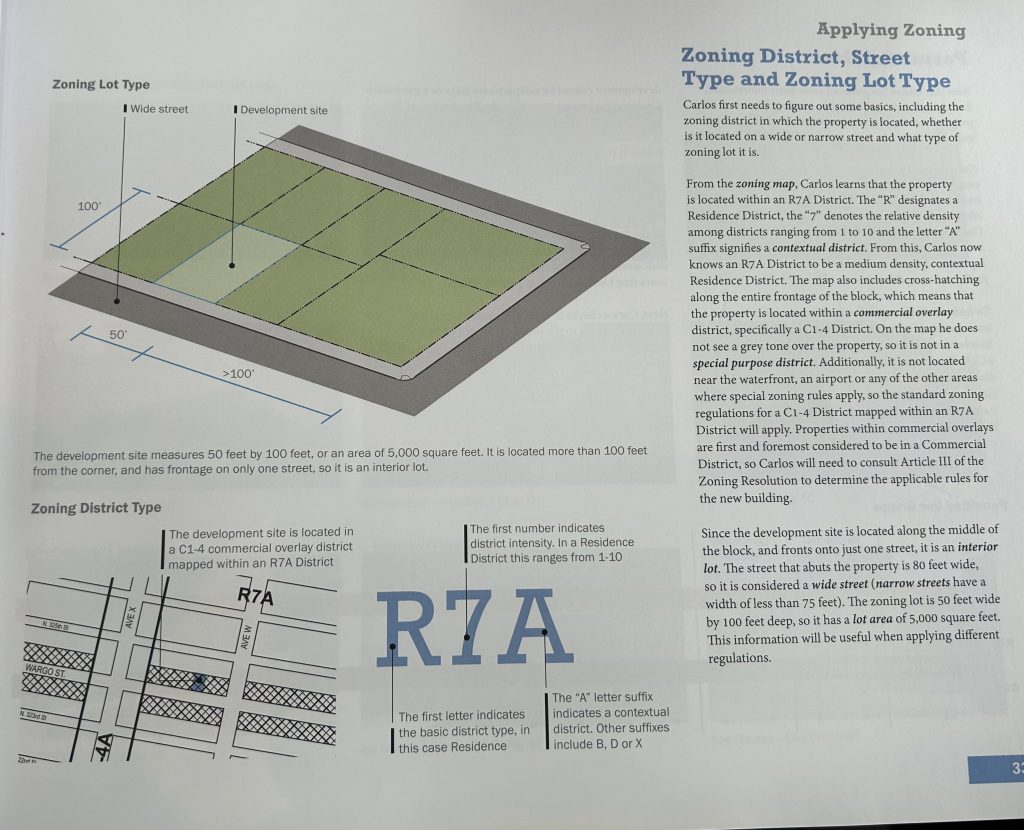
    How a house gets put together zoning wise

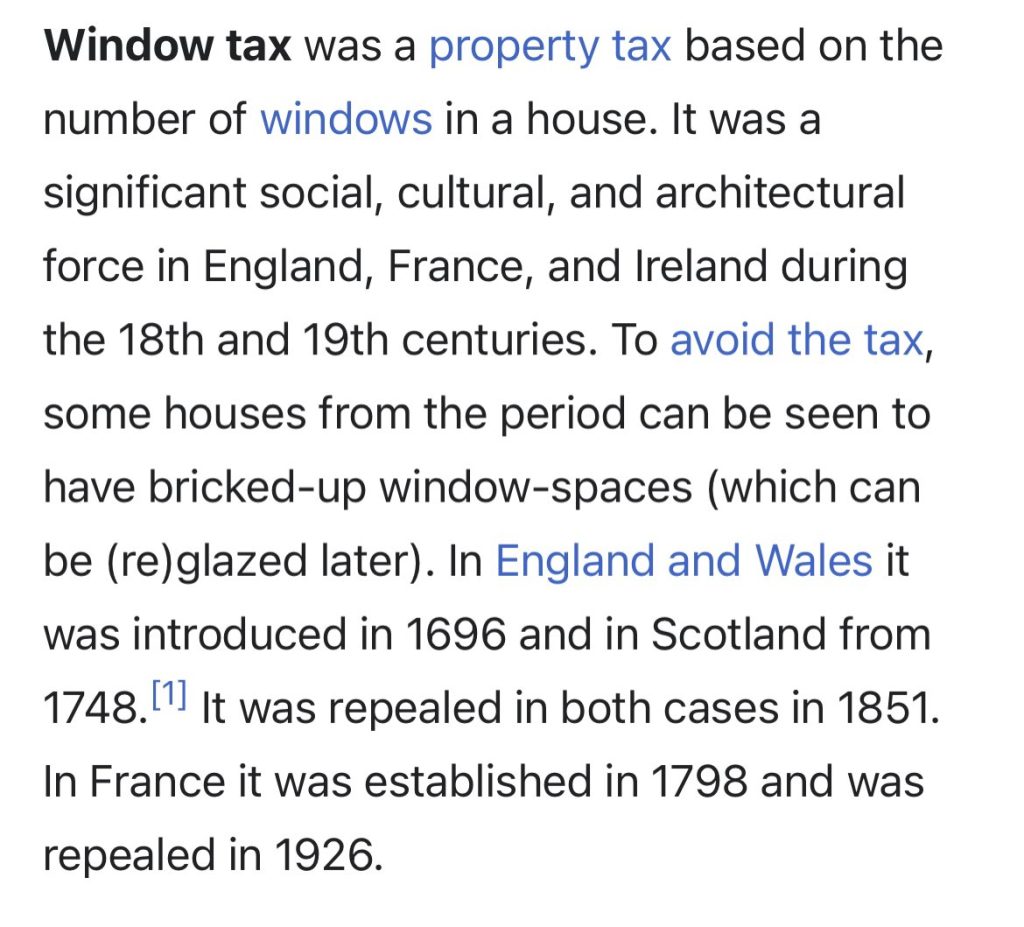
    The only thing funny here is that there are legally required windows that are mandated to be a certain minimum distance from each other

    Let me live in my goddamn windowless hovel

    History doesn’t repeat, but it rhymes

    Ok this is a bit of a stretch lol

    Ok so the next section has three case studies on zoning. As of right, conversion of a grandfathered building, and a special permit

    Fyi City Planning Commission reports contain all previous actions taken by the CPC

    There’s also a zoning helpdesk, [email protected]

    Quick diversion. We all know that San Francisco thinks new housing is a crime – so how do they handle As of Right development?

    Chatgpt says….

    – Permitting from SF DOB (DBI) takes forever
    – CEQA. Oh boy, environmental review how prevalent you are…
    – Community opposition. Apparently while as of right can’t be stopped, it can be appealed and sent to discretionary review. Environmental review can be delayed and litigated
    – Legal challenges over zoning interpretation
    – Coordination between various city departments
    – Historical status, which is discussed in the next tweet

    The average applicant waits 627 days for a permit to build a house in SF

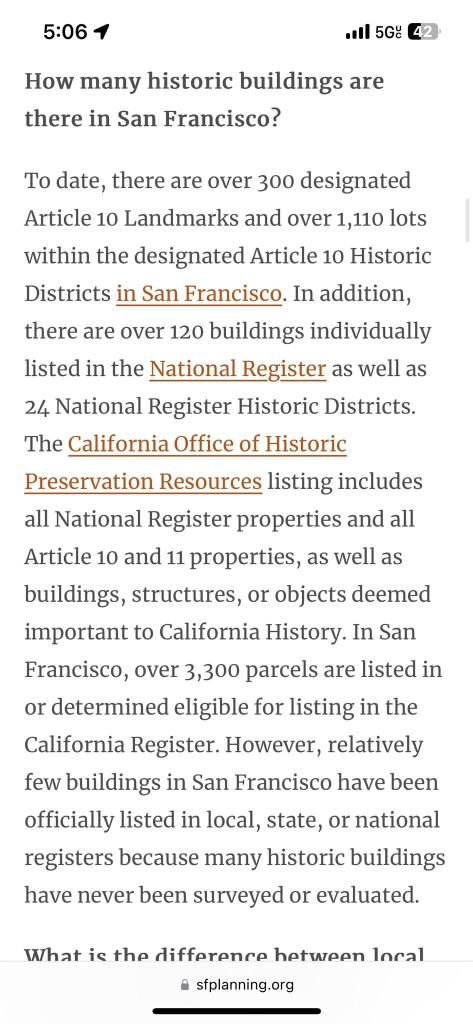
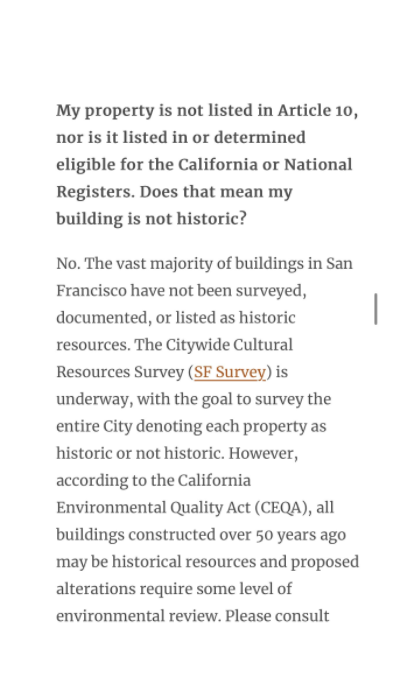
    So historical stuff. Pretty much everywhere in SF is historical. See image below. Even if the building isn’t listed in a historical register, it can be at any time.

    If the building is older than 50 years old, it can also be considered historical!!!

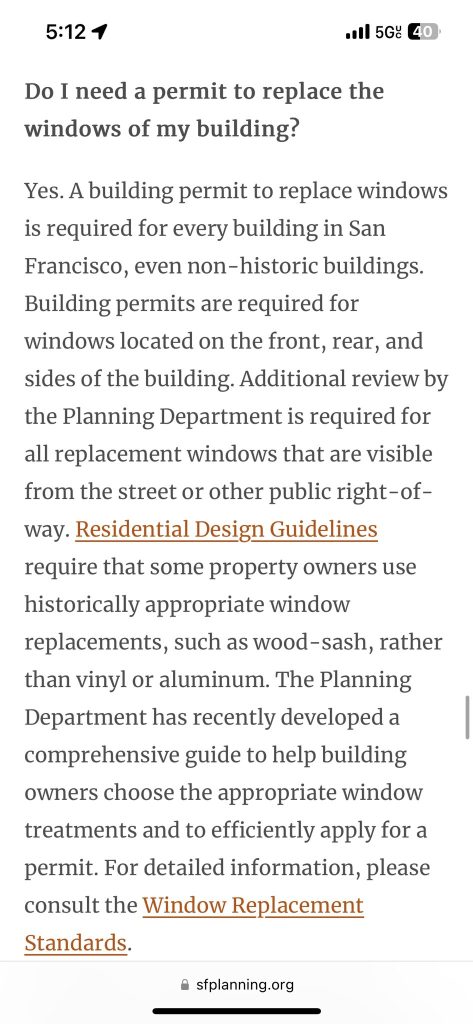
    Every time I dive into the SF building regs I can’t look away. You need a permit to replace a window. Any window! Anywhere!

    Ok ok let’s get back to New York. Let’s compare and contrast.

    According to chatgpt, the DOB is quicker with permits, there is less community opposition, and less historical regulations

    Supposedly there’s a similar environmental law to CEQA, called CEQR

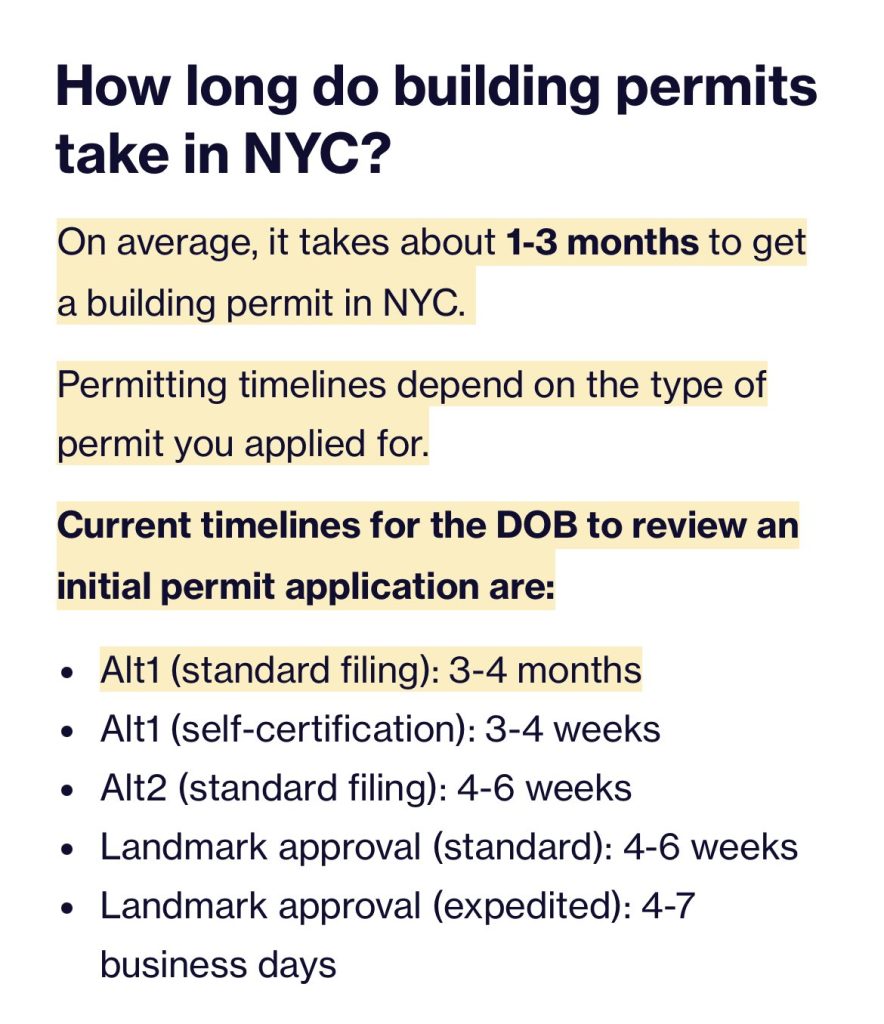
    Huh so permits do appear to happen MUCH faster. Chatgpt confirmed these numbers are ballpark correct.

    That’s an insane difference

    Quick additional digression, SF has significantly better websites / tech than NYC, and yet appears to me to be much more dysfunctional in governance. There’s a lesson there. I should say more about this in a different thread

    New York Landmark Preservation Commission (LPC) seems to treat historical buildings individually, whereas SF reviews each building >50 years.

    Seems to be less public involvement as well

    Ok next few pages I’m just gonna put in without comment. Interesting case study of a guy trying to figure out what can be put as of right in an empty lot

    This is what my ideology is fyi in case you’re wondering what energy I’m bringing is

  • $385 Billion GDP

    August 26th, 2024
  • Portugal Pro Tips

    August 25th, 2024

    General note: you may see it’s mostly food and not sites lol. Portugal is best for eating, chilling, and walking around to see the pretty buildings and nice views. All the museums we went to had a lot of old broken clay pots and models of ships so not much there. 

    Lisbon 

    Food

    The top two are the most important on this list – must go

    • Pastéis de Belém for egg tarts, “donuts”, cappuccinos 
    • Churrasqueira da Paz for piri piri chicken and steak !!! 
    • Cervejaria Ramiro for seafoods
    • Academia de Sabores for feijoada (meat and bean stew) 
    • Cascais Remo for classic Portuguese food
    • If still in season, the oranges are as sweet as candy. Freshly squeezed orange juice at most cafes is great 

    Sites

    • Castelo de São Jorge and Jardim do Torel for views of the city 
    • Jerónimos Monastery
    • Oceanário de Lisboa (10/10 aquarium) 

    Supermarkets

    • Continente Bom Dia (chain store for groceries) 
    • Pingo Doce – American size store 

    Sintra (can be skipped) 

    Food

    • overpriced and touristy

    Sites

    • Quinta da Regaleira (good for a half day activity – very pretty grounds) 

    Porto

    Food

    • Sol e Sombra Bifanas for marinated pork sandwich 
    • Since Sol e Sombra appears to be temporarily closed, Conga is a good alternative
    • Gazela for cachorrinho (kinda like a sliced hot dog – good snack/quick lunch) 
    • Marisqueira Antiga – kinda far out but great seafood
    • Casa Viuva – great home style food, the alheira was mindblowing, cash only
    • Casa Expresso – more home style food, cash only
    • Padaria Cristal was our favorite pastry shop
    • Confeitaria do Bolhão for pastries/cafe 
  • Weather Reading Cheatsheet (under construction)

    August 15th, 2024
  • Marketing for Skeptical Engineers: Understand Your Customer

    July 5th, 2024

    A journalism teacher announced an assignment: To write the lead for the student paper. He gave them facts: Entire school faculty will travel to the state capital on Tuesday for a meeting with the Governor, Margaret Mead, etc. He asked them then to write the lead. All of the students got the lead wrong, which was: No school on Tuesday! (from Made to Stick by Chip & Dan Heath)

    Empathy for the customer

    I’ve learned that understanding your customer better is the heart of marketing and makes all the difference in whether you succeed. Once you understand your customer, the choice of how to market to them and how you should tailor it to them becomes trivial.

    Each marketing channel is fit for a specific type of customer. The chart I’ve linked below explains this perfectly. If you don’t follow this chart, you’ll have a bad time. If you choose a too intensive marketing method like 1-1 sales for mass market goods, you’ll be massively unprofitable. If you choose a method too broad like billboard advertising when you’re selling high ticket customized software, you won’t get any customers, unless you’re advertising on Highway 101.

    Understanding how your customer wants to hear from you is important if you want them to pay attention. If you create a tech demo for software that requires the user to do extensive setup, your customer won’t do that! Understand that the average software engineer you’re selling to has tasks that are part of their job description that take up most of their day. Why would they give up their time to try out your software? Unless you’re promising to 10x their output, it’s a tough sell. Generalizing, you need to have empathy for what your customer is going through in life and present the solution to their problems in a way that makes it easy for them to see the benefits of your product.

    When you’re developing the service or item you’re looking to sell, you need to look at what the customer needs. Talking to customers is number one, but even then you need to be careful to not fool yourself. Are you selling a “nice to have” or a “I need this right now”? It needs to change the bottom line somehow, either making their business more profitable, their work easier, or their life better.

    Focus on your ideal customer

    To understand your customer, develop an Ideal Customer Profile (ICP). Figure out who you’re targeting and what they’re like. What do they do all day? What problems do they have? Dig into their likes and dislikes. How many people are there like this?

    Once you have an ideal customer, you can determine what marketing channels to use. Even when you’re not working directly with your customers to change your product, you can still be informed by your ICP. If your hypothetical target customer would love your change, then it’s probably a good idea.

    The key here is that you’re not targeting every customer that walks through your door. You need to exclude as much as possible, in my experience I’ve struggled with narrowing down far more than being too exclusive. If you aren’t targeted with your marketing efforts, they’ll be ineffective and unfocused. Don’t forget that the more you exclude non-target customers, the more the target customers will feel that your service is just perfect for them! They’ll be more likely to buy and pay a higher price, since the service will be more valuable to them.

    Let’s take a hypothetical – you’re selling a high ticket product to businesses. You get two customers, one’s a team at a big corporation and the other is a local service business. You’re overjoyed that you’re now profitable! But now you need to start improving your product and searching for more customers. You tell your team to make both customers happy, so your team begins adding features that both customers are requesting. This means that your team is moving half as fast as they could for each of the customers, since there’s very little overlap in what they’re looking for. Your marketing is focused on acquiring both big corporations and local service businesses, so you end up confusing customers since they’re not sure if your service is right for them. Since there’s no focus on a target customer, the business doesn’t get to grow.

    Now let’s look at the positive example – you’re selling software that emails reminders to clients before their appointment. You realize that your ideal customer is a small or midsize service business that has trouble with clients missing appointments. Specifically, they’re looking to reduce no shows without adding more work to their plate. From this you can develop an ideal customer profile – they will have a lot of appointments per day, like a dentist or salon, they rely on appointments and not walk in traffic, they don’t have admin staff that’s handling appointments, and they aren’t big enough to require a custom built solution. Thanks to this customer profile, you decide that the best way to market is to offer a free trial of your software, which you can sell through local business meetups. You can also use internet advertising targeted towards business owners, emphasizing the time and cost savings.

    Building customer relationships

    Just because you have reach, doesn’t mean you’ll have customers. Internet advertising is expensive. Social media stars have a difficult time monetizing their audience. Even companies like Reddit, despite having a huge user base, can’t turn a profit.

    Don’t outsource your audience to the algo

    When you get a view, make sure they’re captured in some way. This way you won’t have to rely on the platform you’re on. You may go viral one day, but next week you’ll be back at square zero if you don’t capture those views. The canonical example is the email list. Sending emails to customers rounds to free, it’s opt in, and most customers who are interested in your product would be glad to see emails from your business. There’s a reason every company tries to get into your inbox, it’s because you’re almost guaranteed to see their emails. Owning your distribution channel ensures that no matter what you’re doing, you’re guaranteed to get eyes on your content, with nobody’s interference. There are other ways to do this, like private Discord channels, forums, or SMS.

    The reason this works in creating more customers is that someone may not be ready to buy today, but maybe in a few weeks after receiving more information about the product they will be. It also ensures that past clients stay in touch and encourages re-purchasing.

    Lead magnets

    How do you get viewers to join your community? Use a lead magnet. Give people free stuff in exchange for them joining your email list. Common lead magnets used are free ebooks, discount codes, free trials, and free consultations. You give value to potential customers in exchange for being able to give them more value. The more value you give, the more likely people are likely to buy.

    High view counts don’t mean they’ll buy

    Going viral doesn’t mean you’ll get customers. This goes back to the ICP and understanding what your customer wants. Optimizing for view counts isn’t correct – you’re looking to optimize the number of customers. On Twitter you’ll sometimes see someone who’s going viral and they’re selling something totally irrelevant. While certainly better than no views at all, the conversion rate of those views to sales will be low. On the other hand, if you’re selling a killer product which is highly targeted that solves the ideal customer’s problem, each view has a high probability to convert to a customer. It doesn’t matter if you’re not going viral since you’re still getting a high number of customers.

    The key is to have alignment between the things you’re posting and what you’re selling. Developing a persona is one way of doing this, but also just being clear about what you’re offering is fine. A well crafted Call To Action (CTA) can be killer for converting views to customers. Using a lead magnet and presenting it well in a tweet at the end of a thread, or in the description of a post can be very effective.

  • Book Reviews Q4 2023

    December 14th, 2023

    The Black Company by Glen Cook

    I had read this book maybe 6, 7 years ago, so this was a reread. The book was better than I remember – a great subversion of the fantasy genre. The book is about a mercenary company contracted by evil people to help achieve their evil goals which keeps it fresh. While the characters and setting were good enough, I think the plot was what kept me reading.

    The writing style was not my favorite but serviceable. It’s nothing fancy, with a bit of unreliable narrator thrown in.

    War crimes exist in this universe – the change in tone makes it significantly different to other fantasy novels.

    The “just a guy caught up in important events” was another really awesome technique, although it’s a bit quieter. The mercenary company just isn’t that important (until it is) and it has a long and illustrious history it’s not really living up to. The protagonist isn’t even that much of an important member in the Black Company. Just that structure gives it an edge over works in the genre.

    Other than that the world is recognizable, the actual story is pretty straightforward, and the characters aren’t very special. I think, though, that this works to the book’s benefit. It struck out into the Vietnam War novel structure with a classic fantasy novel and I think that’s enough innovation to warrant a read. Great book 8/10.

    Sixteen Ways to Defend a Walled City by K. J. Parker

    This was a weird one. While I enjoyed it, I’d absolutely forgive someone for giving it a very low review. I think that it was extremely targeted towards my enjoyment of competence porn and that’s why I liked it. Other than that, there’s just not much to look for here. The protagonist is a little… off putting and there’s a racial subplot that’s written a little meh. The setting is a literal copy of Roman and Medieval history, down to copying the Golden Horn Chain. It was also written to feel a bit cartoonish?

    I did, however, get exactly what I came for. The plot revolves around the protagonist taking charge of the undefended capital city of an (extremely Roman seeming) empire against a barbarian horde. There’s a hell of a lot of preparation and planning to be done to defend the city and that’s what I came to read. The book covers bureaucratic proceedings, coinage devaluation, preparing city defenses and many more competence porny things. It definitely hit right for me, but I’d hesitate to recommend it unless you enjoyed stuff like Dogs of War by Frederick Forsyth or Dragon’s Banker by Scott Warren. 7/10, hit the spot.

    The Secret World of Weather by Tristan Gooley

    Fantastic book! I love Tristan Gooley’s books – How To Read Water was incredible, but it wasn’t very relevant to my life. He writes great books about developing a practical understanding of nature, not just a scientific one. Too often books about nature just give you the science without the application of the science.

    As an example – you may understand clouds forming from convection, where warmer air, being less dense, rises in the atmosphere. This rising air cools and its moisture condenses into water droplets or ice crystals, forming clouds. Knowing this though you wouldn’t necessarily get that cumulus clouds form over hot spots like parking lots and don’t form over cool spots like lakes – providing you with a reflected map of land you can’t see.

    I enjoyed this book a lot, but I think this was very targeted to my interests. If you’re curious about understanding the natural world and applying that knowledge to your daily life I can recommend it. The writing style is crisp and engaging, the pacing is good, and there are enough images to get the point. Gooley doesn’t shy away from science – it’s just that it serves the practical knowledge that other books lack.

    I’ve been reasonably successful in implementing some of the weather reading into my life. I can now discern how long rain can last, as well as what weather is coming next. I’m halfway through creating a quick reference guide to weather reading inspired by this book for myself and when I’m done I’ll insert a link here.

    The value that this book provides over the Weather Channel is related to local forecasting. Gooley has a great chapter explaining that while meteorology is a solved problem for wider areas, there’s tons of alpha in understanding your local area’s weather – which may be very different than what the forecast says. I think this is where the value lies for me (other than scrying clouds being damn fun). I learned that the warmest place to sit in the woods during winter is on the south slope of a mountain under an evergreen tree. I learned that you shouldn’t camp in even a slight dip in the ground if you want to keep warm. These sorts of local tips are super useful and interesting to me. 9/10 highly recommended. I took off a point because I felt like it could have been cut down just the tiniest bit.

    Musashi by Yoshikawa

    Not sure what to think of this book. I’m about a third of the way through. I think this may be the case of the right book at the wrong time – I would have really enjoyed this in my college years.

    As it stands though, I could tell it was serialized – which is not good. It has the same issue of unnecessary length. It feels like reading a long manga (which may be why it adapted so well, although I’ve never read Vagabond). There are some great moments but man it’s just packed to the brim with filler. I’m still sort of chugging along with it. I read maybe a few pages every other week, but I can’t imagine finishing it.

    The story itself is a fun romp. I don’t know how to describe it other than as a proto-shonen. It’s workmanlike in prose. The plot and characters felt carpenter-constructed. If I wanted a long adventure story I would be more open to it, but there’s too much story per character development. 6/10.

    Coding Career Handbook by Swyx

    I read this because I was hoping to find some unknown unknowns about software engineering as a career. It did not deliver on that, but it did give a good roadmap for potential pathways in building a career in software.

    It was easy to read – like an extension of Swyx’s blog. I think the book is best explained as a paywalled section of Swyx’s blog – which may be valuable depending on how much you like his articles. I found it valuable as a mindset shift into doing more open source / build in public type stuff. 7/10

    Entering the Mind of the Tracker by Tamarack Song

    I wish I knew what was going on in this book. I read the first section about tracking two foxes in the woods which was really awesome but there wasn’t much practical information on how you would recreate that tracking yourself. I feel like I missed something here and I’m not getting it. No rating ?/10.

    The Atrocity Archives by Stross

    I read a few chapters and it didn’t engage me. It felt pretty predictable but I didn’t read very far in. No rating since I don’t think I read enough ?/10.

    Cooking At Home by David Chang, Priya Krishna

    Great cookbook! This was exactly what I’ve been looking for – maximizing the flavor / effort ratio. This won’t wow you with amazing dishes or incredible technique. It is, however, very good at introducing menus which are tasty and work really well as weeknight meals. The book is explicitly written to be multi-meal friendly, as in you cook a whole chicken to serve as two different meals. Note – I haven’t cooked anything from it yet but I will soon.

    I think the real takeaway for me is the mindset shift in mastering the techniques of low effort cookery. I dig the idea of cooking a protein sorta plain and then repurposing it over a few days into dishes. Or of microwaving shallots in some oil to make them crisp. This is the stuff I need for Thursday night dinners after work. The thought process presented is more valuable than the actual recipes for me. 8/10

    The Artist’s Way

    Wrong place, wrong time for me. I needed this book about 3 years ago. Fortunately I think I’ve made big progress in removing creative blocks in my life and I found this book to be retreading familiar territory for me.

    I have, however, found incredible value in morning pages (the idea of which comes from this book). I recommend trying it for a week. An explanation from Tim Ferris. Another from Austin Kleon.

    In my experience it’s been part to do list, part solo therapy, part insight generator. I dismissed the claims of it generating creativity before I tried it but I’m happy to say I’m wrong. By writing your stream of thought you can finally free your working memory up and begin to abstract on the rumination. Rather than think the same thoughts repeatedly, putting them down on paper externalized them so I could grasp them better – put them into context so I could exit the thought loop and productively continue.

    If you feel stuck and blocked in your creative work I think Artist’s Way could be a great book. Otherwise I think morning pages are all you really need. 5/10 for my particular purposes but I could see it being much higher if my situation were different.

    Selfish Reasons to Have More Kids

    Why don’t you try a Straussian reading of this? 9/10, very thought provoking.

    Goodbye Eastern Europe

    Fantastic, fantastic book. It’s a vibecation through Eastern Europe’s milieu. I don’t dare call it a history book since it flits around, but it laser focuses on informative nuances of Eastern Europe. Through vignettes and anecdotes it builds an image of the region and its people better than any traditional text could. It goes without saying that it’s not comprehensive.

    More books could take this format for a pop survey text. Going deep on a few different aspects to paint a picture is useful and fun. Disclaimer – I have a pretty big amount of background knowledge about Eastern Europe and I lived there for a bit. I don’t know how appealing, helpful, or informative this style would be for someone who didn’t know anything but I imagine it’d be engaging and at least better than nothing.

    I think I’d recommend this to the casual reader with the warning that this is an airport book that’s a definite cut above average. Fun, informative, but don’t treat it like a textbook. 8/10.

    Wizard of Earthsea

    This was actually another reread – I read it last in middle school. The story was very familiar, but what was surprising was the parallel between my job as software engineer and magic in the world of Earthsea. Working with computers is pretty much magic but you’re still of the world. It’s just a job but man sometimes it feels like you can bend reality just a bit. The parts where the protagonist is learning and trying out magic do feel a bit like being a programmer.

    Other than that, it was a very enjoyable read for me. It feels good to read – I really enjoy the writing style.

    The story is a very human focused fantasy plot that has a simplicity which belies the depth of thinking behind it. It brings with it some morals – but I mean that in a good way. What’s really cool is that I could read this in middle school and read this now and both times get a lot out of it.

    10/10

    Nixonland

    The crux of my reading experience was that the content and structure were 10/10 but the writing style on the paragraph and sentence level was a 3/10 for me. This was what brought the book down in my opinion. It just did not work for me. I’ve included some sample text below for an idea. It just felt like the author was trying to be too literary and do too much “show don’t tell” which made it hard to read for me.

    Sample from the text:

    The contenders dutifully stood hands raised together as the balloons dropped: Muskie, Chisholm, Scoop Jackson, Humphrey, who was flashing peace signs. But the 250 McGovern floor managers weren’t able to whip up the traditional resolution to make the nomination unanimous—something even Barry Goldwater had been able to manage. Too much water under the bridge for that. One hippie’s sign during the celebratory demonstration read simply mcgovern sucks! Another, a black man’s, said don’t vote ’72!

    George McGovern was learning what a mess of pottage a presidential nomination could be when your defining trait was supposed to be your purity.

    He would now learn how difficult it could be, too, to deliberate on important decisions during a convention in which sensitive debates wasted eleven hours straight.

    He received a midnight call of congratulations from Ted Kennedy—still America’s favorite Democrat. McGovern asked him to be his running mate. Kennedy refused, citing “very personal reasons.” McGovern called Ribicoff. Ribicoff turned him down. The campaign had to come up with someone by 4 pm Thursday, the deadline for putting names in nomination. They started assembling a hasty list, which they hadn’t had time to do what with all the credentials fights and platform fights and assuaging meetings.

    Other than that though, I highly recommend this book to anyone trying to understand the culture war of 2016 to now. Reading this, if you blur your eyes a little, the text could just as easily be a history of the last decade.

    It’s a big book but it’s a super informative tour of the 60’s & 70’s in American history, Richard Nixon as president, and the social movements that ripped America apart during that time.

    Key takeaways for me were

    • Nixon was much worse than I had thought. Perlstein doesn’t even try to be objective but on the other hand the most damning evidence comes through direct quotes from Nixon himself. If you thought LBJ was bad… I will say though that Nixon had a true once in a lifetime talent at political maneuvering. Watching his machinations was like watching the Bolshoi Ballet.
    • The Orthogonian vs Franklin divide in America explains a lot of questions I had regarding American culture and Trumpism. TL;DR low social class versus high in the American style.
    • I understood the current milieu with the context of race, safety, progress, and social justice. It explained the motivations of American social movements in a way that made sense to me. Again, Perlstein is not necessarily sympathetic, but he has enough empathy to peer through the worldview of Nixon voters enough for you to understand them. I think that for me this was a good and necessary step in understanding American culture. It even has a bearing on my thinking about urbanism in America. For better or worse the questions of the Fair Housing Act, race riots, and suburban discrimination inform the way cities are today. Great book and so much more than a simple biography of Nixon – it’s a lens through which you can see American society.

    If you’d like to donate to encourage me to write more book reviews

  • Marketing for the Skeptical Engineer

    November 2nd, 2023

    I was skeptical of marketing and looked down on people who used it. “If only people would choose products through rational criteria, marketers wouldn’t exist”.

    I’ve spent a bit of time learning about marketing and advertising in order to cure myself of my affliction. The first part of this article will be a defense of marketing to the engineer-brained. The second part will be an overview of the various kinds of marketing that I’ve personally studied and tested.

    What is marketing? Marketing is good distribution. What that means is presenting things in a way that appeals to a given audience.

    Unfortunately, marketing has a bad reputation. You think of pushy sales people, bad TV ads, and massive internet spam. You think of luxury brands, liquor billboards, and telemarketing.

    Marketing is a tool to encourage people to care about your product. What this implies is that if you don’t do marketing then people won’t care about your product. Yes, you may get lucky, or someone else may do the marketing for you, but generally you need to do some marketing in order for the world to hear about your better product.

    Marketing is generally effective. The best proof for this is that marketing is heavily used by businesses that make money. While I have no doubt that in particular cases marketing may be ineffective, the concept as a whole has proven to be extremely lucrative, and therefore can be assumed to be effective.

    Imagine the inverse. You make a product 2x better than the market leader. If you don’t do any marketing, will you win? You won’t because while your product may be better, nobody knows about it.

    Of course, marketing is a broad concept. Talking to people is marketing! Running demonstrations is marketing! Building a blog is marketing! Helping your customers is marketing!

    Marketing is not necessarily good, as I’m sure you’ve noticed. Marketing tends to draw grifters who use marketing to sell you crap. For better or worse, marketing is a neutral tool. You can use it to ensure that your great product gets the success it deserves, or to push crap that won’t actually solve the problem you claim it will.

    The general promise of marketing, however, is to give you something you want. I’d like to separate this into two parts. Marketing may be selling you a product because of the functionality, or it may be selling it to you because of the story.

    Good products don’t appear out of the aether and drop into the store. There’s a cutthroat competition for every single product that makes it onto store shelves, or onto the first page of search results. Viewing this competition as a waste of resources is something I had previously done. Why don’t we just have products that are good enough? Why are there a million products, each incrementally better with differing features? Wouldn’t it be more efficient and satisfying if there was only one product available in a given category? Fundamentally people decide what should be purchased. The drive to create better products which is spurred by the free market does result in products which people are more likely to pay for and which make their lives better. If people didn’t demand it, it wouldn’t exist.

    A thornier issue is that of non-functionality based purchasing. This was something that I fought with for a long time. Modern marketing is built upon the idea that you’re not only selling a product, but you’re also selling the ideas and feelings associated with that product. I think this disturbs you and me because it suggests a model of humans which is hackable and highly suggestible. I don’t think this is strictly incorrect, but I also don’t think this is as bad as you may think.

    Marketers aren’t doing some evil mastermind manipulations. They’re mostly playing judo around people’s pre-existing ideas, desires, and insecurities. It’s not possible to sell something to someone that they just straight up don’t want. What marketing is really about is engineering a way to convince people already looking for a solution that your product is best for them.

    People are quite rational in their purchasing habits, it’s just that their preferences may not be yours. Consider Beats headphones. They’re quite mediocre, except for their enchantment with the mystical power of Dr. Dre. Why would someone buy sub-optimal headphones at a high price? Buying them to associate themselves with Dr. Dre seems to be an odd reason to overpay. The twist is – what if they don’t care about headphone quality? What if they don’t care how the music will sound? What if they care more about looking cool? Let’s take a pause to consider that there’s nothing wrong with preferring to look cool instead of having perfect audio quality.

    Luxury branded things may appear to be irrational things to buy. Why purchase a handbag from a well known brand like Hermes when you could have gotten a better deal on a similarly crafted bag from a lesser known company? You’re purchasing the social positioning of being someone who owns a luxury bag – of course people are free to perceive that how they’d like. You’re making a bet that joining that particular social club will improve your life. On top of that, maybe you have a ton of money and you’re looking for certainty that you’ll get quality. Without any effort or research on your part, you can be confident that your luxury purchases will meet a certain baseline of quality.

    Hard liquor is another great example. Vodka is a fantastic good to study marketing through since most brands are almost completely identical. It’s a natural marketing experiment. Each brand creates an image associated with the vodka and the consumer can choose to be associated with it. People will pay for the privilege of participating in and showing a story that they vibe with. Do you drink Svedka because you’re a party animal? Or do you drink Ketel One since you want to party with your banker bros? You’re purely buying into the story, which is absolutely worth something in and of itself.

    Empathy is important here – just because you may not want something doesn’t mean that someone else shouldn’t.

    Ok, you say, marketing may work on those chumps, but not on me. I buy products based on rational understanding of their benefits and drawbacks. Sure, I say, but look at why you chose those products. More likely than not they were marketed towards you somehow. When good marketing is targeted towards you it doesn’t feel like marketing, it feels like someone solving your problem.

    A great example of this is DigitalOcean. Their marketing is their extensive documentation of various technical topics. I use them as a hosting provider. Why? I needed some help with Git and their documentation popped up. I went on to check out their hosting and found they had a wonderfully documented WordPress setup process. They provided me with value, which implied they would provide similar value for their paid products. A marketer would say they had a great content marketing strategy.

    Stripe Press is another form of this. Stripe is a payment processor, otherwise known as the most boring business known to mankind. So why are Stripe and the Collison brothers so popular? They’ve associated themselves with the concept of growth. Stripe Press and Works In Progress appeal to the people who could potentially become customers of Stripe. They’ve provided free value to a specific group of people and in exchange they’re gaining good will and customers.

    Lil Nas X got his music into people’s hands by creating meme videos on Twitter and overlaying his own music. He gave people value in the form of funny videos and this enabled his music to spread much faster than if he hadn’t marketed it at all.

    It’s not that you’re unaffected by marketing, it’s just that you’re not noticing the marketing that’s affecting you. You may say, well I do deep research on products, searching far and wide to understand what the specs are between various Aliexpress electronics lab products. In this case, yes, you win, you’ve successfully avoided being marketed towards. I would bring to your attention, however, whether you do that for every product you interact with? Sometimes marketing doesn’t work or isn’t very good, but that’s generally not the case.

    You may say “well I don’t like it that marketing takes advantage of people’s social/irrational desires”. Fair enough, that part can get exploitative. In general, products sold do tend to resolve the issues people have, if only temporarily. Buying a new car will make you happier if only for a little bit.

    You may say that this is a waste and people should spend their time making themselves happier using insert technique. They could do that, but by what mechanism will you transform society in order to get people to stop seeking short term fixes? For better or worse, people will seek to solve their issues through quick fixes and products will give them a quick fix. What’s funny is that if you come up with a social technology that will eliminate people’s drive to buy products you’ll still have to market it.

    I chose to look deeply into a few forms of marketing in order to understand the field better.

    Email Marketing

    Email marketing is something we’re all familiar with, if also a bit tired of. It pains me to say that the incessant pop ups prompting you to give your email work really quite well. For better or worse, prompting users to give their email to a site is very effective, and with the promise of content or discount, the success rate skyrockets. For better or worse the average popup will have a success rate of 11% at capturing emails.

    Email lists are incredibly powerful. Email rounds to ~free and is guaranteed to be sent to people who are at least slightly interested in what you have to say. For the discerning marketer there’s a massive opportunity to build an audience without paid advertising.

    Once you’ve captured the email of a potential or past customer there are two ways you can utilize them.

    First, there are email flows, which are email sequences that are sent based on the customer’s behavior. As you can imagine, there’s big alpha in marketing directly to a customer depending on what they’ve previously done. You can segment the email list based on whether they’ve purchased anything, how long ago they’ve signed up, what their email open rates are, what purchases have previously been. You can then define the exact flow, or set of emails, that they will receive. The flow can actually get quite detailed, with many nested conditionals (image shown below).

    By communicating effectively with the customer and understanding who they are, the email list can effectively increase revenue without meaningfully affecting costs. A decent rule of thumb is that a well crafted email marketing system can result in 20% more revenue for an ecommerce store.

    The most popular email flow, for good reason since it has exceptionally high success rates, is the abandoned checkout flow. In case you’re unfamiliar, if a customer abandons a cart during checkout the store will send an email reminding the customer about the products they were looking at, usually with a small discount attached. This can encourage around 10% of recipients to complete their purchase.

    The new customer flow is similarly important, since this is the set of emails that a customer will see after signing up for the email list. With this flow, they’ll be introduced to the business, given the full story of why they should care, and then introduced to the most popular product lines, after which they’ll be shunted into the appropriate following flows based on their behavior.

    There are other email flows that are popular. The VIP flow targets people who are high spenders and offers them exclusive events, deals, or early access to product releases.

    The second form of email marketing is campaigns. These are emails based on time, and not behavior – and are comparable to your conception of an ad campaign. You send out a few timely emails about a new product release, without regard to the current status of the customer. While still essential for communication, they don’t quite have the power of flows, yet are much easier to construct.

    SMS Marketing

    Text messages are something that everyone will check. SMS marketing is more powerful than email marketing because you’re guaranteed to get eyeballs on your content. The other side of that coin is that it’s exceptionally dangerous for the exact same reason. SMS marketing, unlike the other forms of marketing, is regulated heavily by the government. This is the reason why you can unsubscribe from every automated SMS message by texting back “STOP”. If a company texts you without your express consent, you’re free to file suit and likely win. With such a tough playing field, why would anyone try to market through SMS?

    The average open rate for text message marketing is 98%. Not only that, but these are people who expressly signed up for text messages, so you’re guaranteed at least some level of interest.

    If you manage to dodge the laser beams involved in growing an SMS marketing list, you’ll be able to enjoy extremely high engagement and build a responsive audience with campaigns and flows like in email marketing.

    Supergoop is a big winner of the SMS marketing game. Their SMS marketing campaign have had an ROI of 29x and each marketing SMS converts at around 11%.

    Their intro flow – the Sun 101 series educates potential customers about skin sun damage and sunscreens. This, of course, builds the consumers trust in the company. Supergoop also uses abandoned cart flows, which send a text when a user leaves a cart. The SMS reminder has a 20% higher conversion rate compared to an email.

    A key part of their strategy is that they absolutely don’t spam. They only message their list twice a week. The result? Their average revenue per text subscriber is double that of their email subscriber.

    SEO

    If you’re doing content marketing on the internet, search engine optimization (SEO) is essential. In short, you’re trying to rank higher on search results than your competitors. In order to optimize your site for search engines, you need to understand how they’re ranked. The more sites link to you the higher you’ll rank. The catch is that not all links are the same. A link from CNN is worth far more than a link from a blog started yesterday since it’s seen as more trustworthy. The number of links the site linking you has influences their power in boosting your site.

    The fundamental concept is that you build really great content and then try to get people to link back to you – this is why they’re called backlinks. The most efficient way to build backlinks is through guest posting. You contact the owner of a reputable site and offer to write an article for their site. In exchange they’ll link your site from theirs, which will boost your ranking. Frequently, they’ll ask for some money, depending on how trustworthy their site is. You’re not obligated to pay for backlinks of course, but waiting for people to naturally find your site will take a bit.

    There are deeper aspects to SEO of course, but creating great content and building links is 80% of it. You can create long articles that rank highly for uncompetitive queries. You can pepper important keywords throughout your content. You can put the important parts of your article at the very bottom, forcing users to scroll through the entire page, thus artificially boosting rankings (looking at you, recipe sites).

    Great examples of SEO being used well are Grammarly or Nerdwallet. These companies provided tons of great online content that was useful to people. This meant that their sites ranked much higher on Google, which brings viewers, who can then potentially become customers if the product is useful to them.

    Paid Internet Advertising

    The old bugbear of the internet. The thing everyone hates. Well, let me just get this out of the way real quick. Paid internet ads work. Maybe not everywhere, or for everyone, but it does fundamentally make people money. Google, Facebook, and the like are fundamentally advertising companies and one look at their stock price shows that the concept is fundamentally sound (sorry Tim Hwang).

    I’ve tested both Facebook and Google ads, and both were pretty decent at getting me leads. For better or worse (likely for better) the era of hardcore tracking is over, and I could no longer target my ads to a terrifyingly specific audience. As a funny side note, signing up for the ad service was an absolutely terrible user experience.

    I actually don’t have that much to say about paid advertising since I didn’t do too much of it (it gets expensive). I wasn’t skilled enough to generate a profit off of it, I blew right by the rule of thumb that the Customer Acquisition Cost should be ⅓ of Customer Revenue.

    Tracking pixels is an interesting technique that I learned about though. An ad or site will have a 1×1 pixel transparent image. When a user clicks on the given ad or site, the pixel will be downloaded and the server will note who downloaded that image. Using that information the user can be retargeted for more advertising of a similar type. If you click on a mattress ad, you’ll likely see more ads for mattresses even across platforms.

    Copywriting

    I have a lot to say here. I think it’ll be part 2 to this article.

    Many thanks to Ulkar for her detailed review

←Previous Page
1 2 3 4 5
Next Page→

Proudly powered by WordPress